What Does Air Conditioner Cost in 2026? A Practical Guide
Discover the true cost of air conditioning in 2026, including central, window, and ductless options, budgeting strategies, how to compare quotes, and maintenance costs.


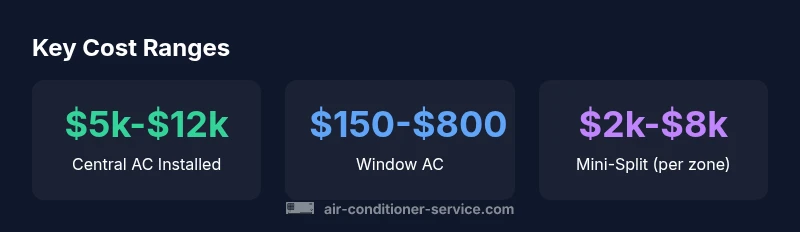
On average, a new central air conditioning system installed costs between $5,000 and $12,000, depending on unit size, efficiency, and installation complexity. Window units are much cheaper, typically $150 to $800, while ductless mini-splits generally run $2,000 to $8,000 per zone, plus installation. Prices vary by region, brand, and whether you’re replacing an existing system or installing into a new space, with labor often a large share of the total.
Understanding the Cost Landscape
To answer the question what does air conditioner cost, you must understand it as a total ownership price, not just the sticker price. According to Air Conditioner Service, installed costs vary widely by system type, size, efficiency, climate, and installation complexity, and include equipment, labor, permits, and potential ductwork. This total-cost perspective helps homeowners avoid sticker shock and plan for future energy bills. In practice, your final number will reflect both the upfront purchase and the ongoing costs of operation and maintenance over the unit’s expected life. When budgeting, think in terms of a lifecycle cost rather than a single checkout amount. This approach also makes it easier to compare quotes from different installers and to weigh whether a more expensive unit would actually save money through energy efficiency.
Key Cost Drivers
Several factors drive air conditioner costs. The system type (central, window, or ductless) is the largest determiner of upfront price. Efficiency ratings (SEER for central and EER for smaller units) push upfront costs higher but typically lower operating costs over time. Home size and climate determine capacity needs, while installation complexity—such as whether ductwork exists or must be added—significantly affects labor. Permits, disposal fees for old equipment, and any required upgrades to electrical service also contribute. According to Air Conditioner Service, planning around these drivers helps homeowners forecast total project cost and avoid surprises when the crew begins work.
Central AC: Price Ranges and What Affects Them
Central air setups are popular for whole-home cooling. Costs vary with system size, efficiency, and whether the house has existing ducts. A higher SEER rating reduces operating costs but raises upfront price. Labor intensity grows if ductwork must be added or modified, or if the installation requires attic or crawlspace access. Local building codes and permit requirements can add time and expense. In many homes, the decision between a two-stage or variable-speed compressor also influences price, as does the choice of outdoor condenser unit and indoor evaporator coil. These choices shape both upfront investment and long-term energy bills.
Window AC Units: A Budget-Friendly Option
Window air conditioners offer a straightforward, budget-conscious cooling solution. They require minimal installation time and no ductwork, which keeps costs down. The price bands reflect cooling tonnage, energy efficiency, and feature sets like programmable thermostats or remote control. While window units are tempting for renters or as a supplemental cooling option, they typically provide less comfort, uneven cooling, and higher operating costs per BTU compared with properly sized central systems. For those weighing value, the lower upfront cost is clear, but consider long-term energy use and maintenance.
Ductless Mini-Splits: Flexibility and Costs
Ductless mini-splits combine zoning flexibility with relatively simple installation, especially in homes without ductwork. Per-zone installation costs cover the indoor units, outdoor condenser, and line sets. While per-zone prices are higher than a single window unit, the ability to cool individual rooms or zones can lead to significant energy savings and comfort gains. Longevity and performance depend on refrigerant handling and proper sizing. When planning, include indoor unit placement that minimizes electrical runs and maximizes airflow, as these choices influence both price and comfort.
Cost of Replacement vs New Installation
If you’re replacing an old system, the cost structure shifts. You’ll likely face disposal fees, removal of old equipment, and potential upgrades to electrical service or ductwork. In some cases, upgrading to a higher-efficiency model can yield long-term savings that justify the higher upfront price. New installations, by contrast, may require more extensive ductwork and structural considerations. In both scenarios, obtaining multiple quotes and ensuring each contractor factors in duct condition and building permits is essential to avoid unexpected expenses.
Hidden Costs to Expect
Some costs are easy to overlook. Permits may be required by your city, and some jurisdictions require electrical upgrades for higher-capacity units. Ductwork inspection or modification can add labor time, especially in older homes. Accessories like smart thermostats, air purification, or humidity control can add to the upfront price but may reduce energy use and improve comfort. Finally, plan for seasonal price fluctuations: demand spikes in peak cooling season can raise installation rates.
How to Budget and Compare Quotes
Begin with a baseline assessment of your home’s cooling needs: square footage, ceiling height, window orientation, and heat load. Obtain at least three formal written quotes that itemize equipment, labor, ductwork, permits, and warranties. Ask for a dedicated energy efficiency assessment and a clear estimate of annual operating costs. Compare not just the price but the predicted energy use and warranty terms. A sound comparison includes the expected lifecycle cost, not just the initial expense.
Financing and Savings Opportunities
Many homeowners finance HVAC projects through lender programs or contractor offers. Look for options that include low-interest periods and favorable terms. Energy efficiency incentives, rebates, and tax credits may be available in your area for high-SEER units or heat pumps. While incentives can reduce upfront costs, ensure you understand any eligibility criteria and how they apply to your total project price.
Maintenance and Total Cost of Ownership
Beyond installation, ongoing maintenance affects the total cost of ownership. Regular filter changes, coil cleaning, and annual inspections help preserve efficiency and prolong equipment life. Costs for routine maintenance are typically modest, but neglect can lead to reduced performance and expensive repairs. When evaluating quotes, factor in estimated annual maintenance to compare true long-term value between options.
Practical Scenarios and Next Steps
If you live in a climate with mild summers, a window unit or small multi-zone mini-split might suffice, with a modest upfront investment. In hotter regions or multi-story homes, central air or a multi-zone ductless solution may deliver better comfort and energy savings over time. Use the lifecycle-cost approach, gather multiple bids, and consider future home improvements when choosing a system. The next step is to schedule an in-home assessment and request detailed, itemized quotes.
Cost comparison of common AC systems
| System Type | Typical Installed Cost (USD) | Best For | Notes |
|---|---|---|---|
| Central AC (split system) | 5,000-12,000 | Homes needing whole-house cooling | Requires ductwork; price varies by SEER and size |
| Window AC | 150-800 | Single-room cooling | Low upfront cost; limited cooling capacity |
| Ductless mini-split (per zone) | 2,000-8,000 | Zoned cooling or additions | No ducts; professional installation required |
| Smart/energy-efficient upgrades | 300-2,000 | Upgrade efficiency | Can raise upfront cost but reduce operating costs |
Common Questions
What is the average cost to install central air conditioning?
Central AC installation costs vary with system size, efficiency, ductwork, and local labor rates. Expect a range that reflects these variables. Always request a detailed, itemized quote that includes equipment, labor, permits, and any duct modifications.
Central AC installation costs vary by system size and duct work. Get a detailed quote that lists equipment, labor, and permits.
Do window air conditioners cost less upfront than central AC?
Yes. Window units have far lower upfront costs and simpler installation, but they offer less cooling capacity and can be less energy-efficient per BTU compared with properly sized central systems.
Window units are cheaper to buy and install, but may cost more to run per BTU and don’t cool large spaces well.
How do efficiency ratings affect total cost?
Higher efficiency ratings raise upfront costs but typically reduce annual energy bills and maintenance costs, improving long-term value. When comparing quotes, consider projected energy savings over the system’s lifetime.
More efficient models cost more upfront but save on energy over time.
Are rebates or incentives available for new AC units?
Many regions offer rebates or incentives for energy-efficient units. Eligibility varies by device type and efficiency, so check local programs and factor potential credits into your budgeting.
There are often energy-efficiency rebates; check local programs for eligibility.
Is a ductless mini-split worth it for an older home?
Ductless systems offer zoning and flexible installation, which can be ideal for older homes lacking ducts. However, installation costs can be higher, and proper sizing is essential for comfort and efficiency.
Ductless can be great for older homes with no ducts, but sizing matters.
“Cost is driven by the system type, efficiency, and installation complexity, so plan for the full lifecycle rather than just the upfront price.”
The Essentials
- Get multiple quotes to compare installed costs.
- Consider total cost of ownership, not just upfront price.
- Factor in energy efficiency and potential rebates.
- Budget for installation, permits, and possible ductwork.
- Choose the right system type for your space and climate.