Air Conditioning Unit Cost: What to Expect in 2026
Explore realistic cost ranges for central, ductless, and window AC units, plus factors that impact price, hidden costs, financing, and when replacement makes sense in 2026.


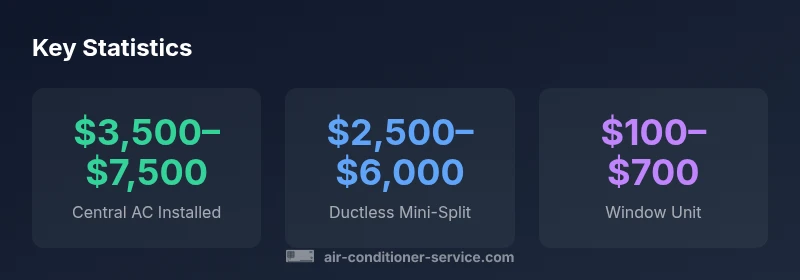
Air conditioning unit cost depends on type, efficiency, and installation complexity. For typical installs, central systems run roughly $3,500–$7,500 installed, ductless mini-splits about $2,500–$6,000, and window units roughly $100–$700 per unit; lifestyle and home layout can push costs higher due to ductwork, electrical upgrades, or permits.
What drives air conditioning unit cost
Air conditioning unit cost is driven by multiple interrelated factors, including system type, cooling load, climate, efficiency, and installation complexity. According to Air Conditioner Service, the cost dynamics hinge on matching equipment size to the home’s cooling needs, choosing reliable compressor technology, and routing refrigerant lines without leaks. Energy efficiency, measured by SEER, significantly affects upfront price but reduces long-term operating costs. If a home requires new or upgraded ductwork, electrical panel changes, or permits, installation becomes more expensive and time-consuming. This reality means homeowners should evaluate not just the sticker price, but the total cost of ownership over 10–15 years. In practical terms, investing in a properly sized, high-efficiency system often yields meaningful energy savings that offset higher initial costs over time, especially in hot climates or homes with poor insulation.
Cost ranges by system type and scenario
Choosing the right system is the single biggest driver of air conditioning unit cost. Here is a practical breakdown you can use when budgeting:
- Central air conditioning (split-system with ducts): Typical installed cost range is $3,500–$7,500. This category includes equipment, labor, permits, and basic ductwork where needed. The price varies with home size, existing ductwork condition, and local labor rates.
- Ductless mini-splits (one or more zones): Typical installed cost range is $2,500–$6,000 per zone. Efficiency levels, indoor unit count, and whether additional electrical work is required influence price.
- Window units: Typical installed cost range is $100–$700 per unit. These are the most affordable option for cool-only spaces or supplemental cooling in smaller rooms. Multi-unit setups can still add up if many rooms are served.
Markets with higher construction costs or stricter permitting can push these numbers higher. Conversely, older homes with ready-to-use ducts may reduce costs for central systems. It’s also common for installers to offer package deals that include a thermostat, basic wiring, and basic start-up checks, which can improve overall value.
Hidden costs to budget for
When estimating air conditioning unit cost, don’t overlook ancillary expenses that can add to the bottom line:
- Ductwork modifications or repairs to accommodate a new system or to improve efficiency.
- Electrical upgrades, upgraded breakers, or panel capacity adjustments to safely handle increased load.
- Permits and required inspections, which vary by jurisdiction and can add to labor time and fees.
- Refrigerant line sets, condensate drainage, and potential re-routing of outdoor unit lines.
- Old equipment removal, disposal fees, and potential retrofit items like new thermostats or zoning controls.
A thorough bid should itemize these costs so you can compare apples to apples across contractors. Air Conditioner Service notes that transparently itemized quotes help homeowners understand the true air conditioning unit cost, not just the headline price.
How to estimate costs for your home
Estimating air conditioning unit cost begins with understanding your home’s cooling needs. Follow these steps to arrive at a realistic budget:
- Get a professional load calculation (often called a Manual J) to determine the correct system size. Oversized or undersized units waste energy and money.
- Decide on system type (central, ductless, or window) based on budget, space, and long-term goals.
- Compare efficiency ratings (SEER for central systems; HSPF for heat pumps) and relate them to anticipated energy savings in your climate.
- Obtain at least 3 written quotes that break out equipment, labor, ductwork or electrical work, and permits.
- Consider installation timing and local permitting, which can affect start dates and total cost.
- Explore rebates, taxes, and financing options that can reduce upfront costs and improve payback periods. Documentation from manufacturers and local programs can sometimes steer you toward incentives that lower air conditioning unit cost overall.
Financing, incentives, and warranties
Financing options and manufacturer warranties can meaningfully impact the affordability of a new cooling system. Look for options such as low-interest financing, rebates for energy-efficient models, and extended warranties that cover major components like compressors. Many local utilities and state energy programs offer incentives for high-efficiency systems and smart thermostats. When evaluating quotes, factor warranty terms, service plans, and what is covered (compressor, fan motors, refrigerant leaks) to understand the long-term value. Air Conditioner Service emphasizes verifying eligibility for incentives and reading the fine print on labor coverage, as warranty limitations can shift costs if issues arise after installation.
Maintenance and lifecycle costs
Regular maintenance can extend the life of your air conditioning unit and protect your investment. Budget for annual or biannual tune-ups, filter replacements, and coil cleaning. Proper maintenance helps maintain efficiency, which can reduce monthly operating costs and delay the need for expensive replacements. A well-maintained system commonly lasts longer and runs more reliably, reducing the likelihood of costly emergency repairs. In the long run, investing in proactive maintenance reduces the total cost of ownership, especially for high-efficiency models that rely on clean components to maintain performance.
Replace vs repair: a practical decision guide
When a unit nears the end of its life, you’ll face the choice to repair or replace. As a general rule, if repair costs approach 50% or more of the replacement cost within a 12-month period, replacement often makes more sense. Consider the system’s age (many residential units last 10–15 years with proper care), efficiency, and reliability. If you frequently experience failures, high energy bills, or increasing refrigerant issues, replacement may offer better long-term value than repeated repairs. A professional assessment can help determine whether your current unit can be safely and economically repaired or if a newer, more efficient model would deliver better payoff over time.
Cost ranges by system type
| System Type | Typical Installed Cost Range | Notes |
|---|---|---|
| Central AC | $3,500–$7,500 | Includes equipment, labor, permits |
| Ductless Mini-Split | $2,500–$6,000 | Per zone; may require electrical upgrades |
| Window Unit | $100–$700 | Per unit; suitable for single-room cooling |
Common Questions
What factors influence air conditioning unit cost?
System type, efficiency, installation complexity, and local labor rates all influence price. Ductwork needs, electrical upgrades, and permitting can add substantial costs. A professional load calculation helps ensure you’re not paying to oversize or undersize the system.
Cost depends on the system type, efficiency, and installation complexity. Get a load calculation to know what you truly need.
Is it cheaper to replace an old unit versus repairing it?
Repairs can be cost-effective for minor issues, but frequent failures or aging components often make replacement more economical. Consider the expected remaining life, energy efficiency improvements, and potential rebates when deciding.
If repairs are frequent or the unit is old, replacement can offer better value.
Do I need permits for installing a new AC system?
Most jurisdictions require permits for major HVAC work or equipment replacement, especially central systems. A licensed contractor typically handles permit applications as part of the service.
Permits are common for major installs; your contractor usually handles them.
How long does installation typically take?
Single-zone central or ductless installs often take 1–2 days, depending on ductwork, electrical upgrades, and access. More complex retrofits or multiple zones can extend this timeline.
Most installs take 1–2 days, with variations for complexity.
Are there hidden costs I should expect?
Yes. Hidden costs can include ductwork repairs, electrical upgrades, permit fees, refrigerant line work, disposal, and thermostat upgrades. Ask for a fully itemized quote to avoid surprises.
Watch for ductwork, electrical upgrades, permits, and disposal fees.
What kind of energy savings can I expect from high-efficiency units?
High-efficiency units reduce operating costs, especially in hot climates and with regular maintenance. Savings depend on climate, usage, and how well the system is sized and installed.
High-efficiency systems save energy when sized and installed correctly.
“Choosing the right-sized system and ensuring professional installation deliver better long-term value than chasing the lowest upfront price.”
The Essentials
- Start with a proper load calculation to size the system correctly
- Balance upfront cost with long-term energy savings
- Get multiple quotes with explicit line-item details
- Account for ductwork, electrical upgrades, and permits
- Explore rebates and financing to reduce the effective cost