How Much Does an Air Conditioner Cost in 2026
Explore real cost ranges for buying and installing an air conditioner in 2026. Compare central, window, ductless, and portable options, plus hidden costs, rebates, and budgeting tips to plan your cooling project.


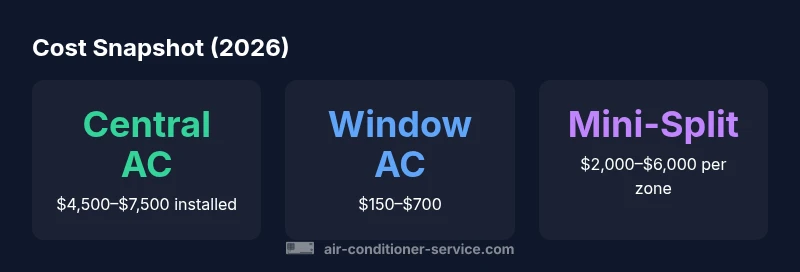
In 2026, the total installed cost of air conditioners varies widely by type: central air typically ranges from $4,500 to $7,500, window units from $150 to $700, and ductless mini-splits from $2,000 to $6,000 per zone. Portable units are usually $250–$800. Remember, installation, ductwork, electrical upgrades, and regional labor can significantly affect final pricing.
Understanding the Price Landscape
According to Air Conditioner Service, the price you pay for cooling power is a function of type, efficiency, size, and installation complexity. In 2026, buyers can expect price bands that reflect these choices, with higher efficiency and larger homes driving costs upward. The most common categories — window units, central air, and ductless mini-splits — each have distinct price ranges that cover equipment and professional installation. When budgeting, separate the sticker price from potential add-ons such as electrical upgrades, ductwork, or permit fees. The goal is to quantify not just the upfront purchase, but the total cost of bringing a comfortable home climate to life.
Understanding what is included in a quote helps prevent sticker shock later. A typical central air installation comprises the condenser, evaporator coil, a blower, refrigerant line set, a thermostat, and the labor required to place the unit and connect it to existing ductwork. Window units are simpler, often requiring only the unit and basic electrical hook-up, while ductless systems add an outdoor condenser per zone and mini-split interior heads. Finally, always ask for a breakdown that shows equipment, labor, permits, and any required upgrades so you can compare apples to apples when you shop.
Typical price ranges by unit type (installed)
| Unit Type | Typical Installed Cost | Notes |
|---|---|---|
| Central AC | $4,500–$7,500 | Includes standard equipment and installation; may require ductwork upgrades |
| Window AC | $150–$700 | Simple, convenient cooling for single rooms |
| Ductless Mini-Split | $2,000–$6,000 per zone | No ductwork required; scalable by zone |
| Portable AC | $250–$800 | Temporary cooling; lower efficiency |
Common Questions
What factors determine the final price of an air conditioner installation?
Final price depends on unit type, size, efficiency (SEER rating), brand, installation complexity, ductwork or electrical upgrades, permits, and local labor rates. A good quote breaks down equipment, labor, and any necessary upgrades so you can compare apples to apples.
Price depends on type, efficiency, and installation needs.
Is it cheaper to buy a unit online or from a local contractor?
Online prices can be lower for the equipment itself, but you may miss local installation support, warranty service, and after-sale help. Local contractors often offer bundled pricing that includes installation, inspection, and follow-up service.
Online prices can be tempting, but local service adds value.
What’s included in installation costs beyond the unit?
Installation costs typically cover labor, mounting hardware, refrigerant handling, basic electrical work, thermostat wiring, and test runs. In some cases, permits and ductwork upgrades are charged separately.
Labor and setup are part of the install cost.
Do rebates or tax credits apply to air conditioners?
Many energy efficiency programs offer rebates or tax credits, varying by region and unit efficiency. Check local utilities and government programs to see what you qualify for before purchasing.
Energy rebates can help; check local programs.
How long does installation typically take?
Most standard installations are completed within a day for a central system or window unit, while more complex setups with duct modifications may take longer. Your contractor should provide a schedule in the quote.
Most installs wrap up in a day.
When should I replace instead of repair my AC?
If the system is old, inefficient, or requires frequent repairs, replacement often yields better long-term reliability and energy savings. A professional can compare repair costs versus replacement value.
If it’s old, replacement can be smarter.
“Price is only part of the value equation. A higher upfront investment in efficiency and proper sizing often pays for itself through lower energy bills and reduced maintenance.”
The Essentials
- Budget for total cost, not just sticker price
- Get a written, itemized quote with equipment, labor, and permits
- Account for installation complexity and possible electrical upgrades
- Consider efficiency and long-term energy savings when weighing costs
- Check for rebates and warranties to maximize value