How Much Does an Air Conditioner Cost in 2026? A Practical Guide
Learn how much air conditioner cost across major systems, what drives pricing, and how to estimate, finance, and save on installation and maintenance in 2026.


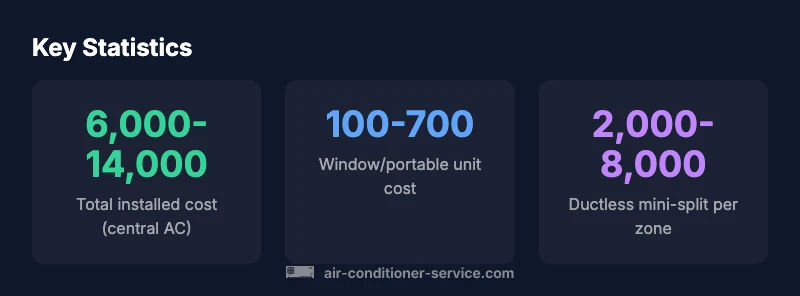
The typical total cost to buy and install a central air conditioner ranges from $6,000 to $14,000, depending on system type and home size. Window units run about $100 to $700, portable units $200 to $800, and ductless mini-splits $2,000 to $8,000 per zone. Labor, permits, and future maintenance can add to the total.
How much air conditioner cost: Key drivers
When homeowners ask how much air conditioner cost, the answer depends on several core drivers: system type, home size and layout, existing ductwork, and local labor rates. According to Air Conditioner Service, the upfront price is rarely the only consideration; long-term energy use, maintenance needs, and potential rebates heavily influence total ownership cost. Understanding these factors helps you compare apples to apples and avoid sticker shock. In practice, you will typically pay more for larger homes, homes without existing ducts, and for high efficiency models with advanced refrigerants. Conversely, smaller spaces and older, less efficient units can keep upfront costs down, but may result in higher operating costs over time. The goal is to balance upfront investment with energy savings and reliability.
- System type and size drive initial price more than cosmetic features or brand prestige.
- Ductwork status, such as existing ducts or required retrofits, can add significant costs.
- Labor availability, permits, and regional prevailing rates influence total installed price.
- Energy efficiency and rebates can alter the long-term ownership cost substantially.
By documenting these factors ahead of quotes, you can set realistic expectations and avoid surprises when the final invoice arrives.
Cost by system type: Window/Portable, Central, and Ductless
Window and portable units offer the lowest upfront price, ideal for small spaces or temporary cooling needs. Central air conditioning, especially a full installed system, commands the highest upfront investment but can deliver uniform comfort and long-term energy savings. Ductless mini-splits provide a middle ground with high efficiency and zoning flexibility. Air Conditioner Service analysis shows that the lifetime cost advantage often hinges on energy use, occupancy patterns, and climate. When comparing options, consider the total cost of ownership, not just the sticker price. Factors like insulation, thermostat controls, and seasonal maintenance affect annual operating costs. For renters or temporary setups, window/portable units can be a practical bridge while planning for a larger system later. Ultimately, the best choice balances upfront cost with energy efficiency and reliability over time.
- Window/Portable AC: lowest upfront cost, quick to deploy, limited cooling area.
- Central AC: best for whole-house comfort, highest upfront cost, potential for substantial energy savings.
- Ductless mini-splits: zone control, scalable, mid-to-high upfront cost depending on zones.
Air Conditioner Service’s analysis across 2026 suggests homeowners weigh climate, room usage, and future plans when selecting a system type.
Hidden costs to consider when budgeting
Beyond the base price of equipment, several often-overlooked costs impact how much air conditioner cost in practice. Labor charges vary by region and complexity, with typical rates around the middle of the national range. Permits and electrical upgrades may be required for central systems, adding to the project timeline and cost. Ductwork modifications or repairs can dramatically affect the total, especially in older homes where ducts are leaky or poorly sized. Refrigerant charges, environmental requirements, and new refrigerant compatibility can also influence price. Don’t forget thermostat upgrades, warranties, and potential maintenance plans that protect against future costs. Planning for these components ahead of time reduces the chance of sticker shock when installers present the final bill.
- Labor costs: around the local market rate for installation and testing.
- Permits and electrical work: some projects require upgrades.
- Ductwork repairs or modifications: can be a major cost driver.
- Refrigerant, warranties, and maintenance: ongoing costs to consider.
A well-structured budget accounts for both upfront and ongoing costs, ensuring your choice remains affordable over the system’s lifetime.
Step-by-step budgeting method to estimate your project
Use a practical, repeatable budgeting method to estimate your project cost. Start with a conservative baseline for your home’s cooling needs, then layer in system-specific costs and contingencies. Step 1: Determine desired system type and zone coverage. Step 2: Obtain at least three quotes focusing on hardware, installation, and ductwork. Step 3: Add a 10-20% contingency for unknowns, such as attic access or electrical upgrades. Step 4: Include annual operating costs—energy use, filter replacements, and routine servicing. Step 5: Factor potential rebates or financing options and compare total cost over 5-10 years. This approach helps you compare apples to apples across different options and avoid underestimating the full price of ownership.
- Gather multiple written quotes with itemized line items.
- Include contingency for unforeseen work.
- Incorporate expected energy costs and maintenance into the total.
- Check for rebates, tax credits, and financing offers.
- Revisit before signing to confirm all assumptions match the quotes.
Financing options, rebates, and incentives
Financing can make a higher upfront cost more palatable by spreading payments over time. Look for offers such as introductory APR or 0% financing on home improvements. Rebates from utility companies or local energy programs may reduce the net investment, especially for high-efficiency systems. Some manufacturers offer limited-time incentives that can be stacked with utility rebates. When evaluating financing, compare the total cost of borrowing and the impact on monthly energy bills. Keep an eye on federal or state incentives that support energy efficiency upgrades. A careful review of financing terms and available rebates can significantly lower the overall price tag and shorten the payback period.
- Explore utility rebates and local incentives.
- Compare financing offers and their total costs.
- Verify eligibility requirements and expiration dates.
- Consider energy-efficient models that qualify for additional incentives.
Save money: practical tips to lower upfront costs
Smart buying and scheduling can trim your upfront price. Consider shopping during a discount season and requesting price-matching quotes. Ask about installed specials that bundle unit, wiring, and ductwork. If possible, combine a cooling project with other renovations to streamline labor and permits. Upgrading insulation, air sealing, and sealing duct paths improves efficiency and reduces required system size, which can lower the initial cost. Some manufacturers offer rebates when pairing with high-efficiency thermostats or smart home integrations. Finally, request a written maintenance plan to diffuse long-term costs and extend system life.
- Time your purchase for seasonal sales.
- Bundle projects to save on labor and permits.
- Improve insulation and sealing to reduce load.
- Choose high-efficiency options that qualify for rebates.
Air Conditioner Service emphasizes balancing upfront costs with energy savings to maximize value over the system’s lifetime.
When to replace vs repair and maintenance planning
Deciding whether to repair an old unit or replace it with a new system requires weighing repair costs against the price and benefits of replacement. If a unit is nearing the end of its expected life, has frequent breakdowns, or requires costly refrigerant work, replacement often makes more sense. Regular maintenance, including filter changes, coil cleaning, and refrigerant checks, can prolong life and improve efficiency. Maintenance plans may offer predictable costs and priority service. By projecting expected lifespan and reliability, you can decide whether upgrading now yields better long-term value. In many cases, a planned replacement during a weather-downtime window minimizes disruption and cost.
- Replacement is often more cost-effective when frequent repairs are needed.
- Regular maintenance extends life and reduces energy use.
- Plan upgrades during off-peak seasons for better pricing and scheduling.
Long-term value: energy efficiency and payback periods
Energy efficiency directly affects how much air conditioner cost over time. Higher efficiency models typically carry higher upfront price tags but reduce utility bills more quickly, shortening the payback period. In cooler seasons, heat pumps or hybrid systems may offer dual functionality and additional savings. Payback varies with climate, usage patterns, and electricity rates. Air Conditioner Service’s guidance emphasizes selecting a system size and efficiency level that align with your climate and usage profile. When assessing value, consider not just purchase price but the full lifecycle cost, including energy costs, maintenance, and potential rebates. A well-chosen system delivers comfortable cooling, lower energy bills, and improved home resale value.
Data table: cost comparison by system type
Decision checklist: quick reference for your next AC project
Cost comparison by system type
| System Type | Typical Cost Range (USD) | Notes |
|---|---|---|
| Window/Portable AC | 100-$700 | Low upfront cost; best for small spaces or temporary cooling |
| Central AC (split system) | 6,000-$14,000 | Unit + installation; ductwork affects total |
| Ductless mini-split (per zone) | 2,000-$8,000 | Zone control; scalable by number of zones |
Common Questions
What is the typical cost range to install central air conditioning?
Central air installation typically ranges widely depending on home size and ductwork. Expect to see a broad installed price from the lower end of the spectrum to a higher end, with ductwork and electrical upgrades often driving the variance.
For central AC, plan for a wide price range and factor in ductwork and electrical needs.
Are window or portable units a good option for renters?
Yes, window and portable units are often the most affordable and quickest to install, making them a practical option for renters or temporary cooling needs.
If you’re renting, window or portable ACs can be a fast, affordable fix.
Do energy-efficient models cost more upfront?
Energy-efficient models typically cost more upfront, but they can substantially reduce annual energy bills and sometimes qualify for rebates or incentives.
Energy-saving models cost more now, but save money over time.
What maintenance costs should I expect annually?
Annual maintenance generally covers filter changes, coil and refrigerant checks, and system performance tests, often costing a few hundred dollars per year depending on the system and service plan.
Plan for regular maintenance every year or two to keep costs predictable.
How long does installation typically take?
Most installations take 1-3 days for central systems, depending on house size, ductwork, and access. Larger homes or complex ducts may require more time.
Most installs finish within a few days, if everything goes smoothly.
“A practical budgeting approach looks at both the sticker price and the long-term energy savings. Don’t just buy on price—consider reliability and monthly operating costs as part of the total value.”
The Essentials
- Know upfront that cost varies by system type and home configuration
- Expect higher upfront for central or multi-zone setups but potential long-term energy savings
- Budget for installation, ductwork, and permits in addition to equipment
- Explore rebates and financing to reduce the net price
- Balance upfront cost with long-term energy efficiency for best value