What Do Air Conditioners Cost? A 2026 Practical Guide
Discover what air conditioners cost in 2026, from window units to central systems. Learn price ranges, factors that affect cost, installation, energy savings, and smart buying tips.


Air conditioner costs vary widely by type, size, and installation. For a typical household, expect a broad spectrum from affordable window units to full central systems, with installed prices often ranging from a few hundred dollars to several thousand. The exact amount depends on unit efficiency, installation complexity, and regional labor rates. Air Conditioner Service notes that planning ahead helps maximize long-term value.
Price ranges by type
Prices for air conditioners are driven by unit type, BTU capacity, and installation needs. Prices vary by region and retailer, but a useful starting point helps homeowners plan. According to Air Conditioner Service, for many homes the smallest upfront cost comes from window-mounted units, which typically cost between a few hundred dollars to around six hundred dollars for the unit alone. If you include installation, the price can rise, especially if you need to retrofit mounting points or adjust electrical circuits. Portable air conditioners tend to sit in a similar price band, often between a few hundred and about a thousand dollars when you factor in basic installation or setup. Central air systems, by contrast, carry a much higher upfront price: the equipment itself plus professional installation commonly lands in the several-thousand-dollar range, depending on house size and ductwork. Ductless mini-splits, which offer zoned cooling, fall between these extremes, with per-zone costs typically in the mid-to-high thousands when labor and refrigerant lines are included. The Air Conditioner Service team found that the exact cost hinges on efficiency ratings (SEER), cooling capacity, and whether existing ducts can be reused. In short, pricing is highly variable, and a precise quote requires a professional assessment of your space.
Factors that influence total cost
Several factors influence the total cost beyond the sticker price of the unit. Efficiency matters: higher SEER ratings reduce operating costs but often come with higher upfront price. Capacity must match the space; too small or too large units cost more to run and may require additional equipment. Brand and warranty terms can add to or reduce long-term costs. Labor availability and local permit requirements add another layer of expense. Ductwork condition matters for central systems; if ducts are leaky or missing, retrofits add to both cost and energy waste. Refrigerant charging and new copper lines can add to the material bill. If old equipment needs removal, disposal fees can apply. Finally, regional factors such as climate, building codes, and contractor competition influence quotes. Air Conditioner Service emphasizes getting a detailed, written estimate that itemizes equipment, permits, labor, and any possible add-ons.
Installation costs and what affects labor
Installation costs combine the price of the unit with skilled labor to install, connect, and test the system. Central air typically requires ductwork, electrical upgrades, and sometimes attic or crawlspace access, which can significantly add to price and project duration. In some homes, retrofitting existing ducts or relocating registers is necessary, increasing both material and labor costs. Ductless mini-splits reduce ductwork needs but require careful line runs and zoning configuration, which also influences labor time. For window and portable units, installation is minimal, but you may still incur labor if you hire a professional for electrical work or mounting. Regional labor rates, contractor availability, and seasonal demand all push costs up or down. A clear, itemized estimate that separates equipment, installation, permits, and removal of old units helps avoid sticker shock later.
How to compare quotes and avoid hidden fees
To compare quotes effectively, request written, itemized bids from multiple technicians or companies. Ensure every quote breaks out: (1) the equipment cost, (2) installation labor, (3) ductwork or electrical work, (4) required permits, (5) disposal or removal of old equipment, and (6) any added accessories. Ask whether the price includes a basic warranty and whether extended warranty options are available. Be wary of quotes that omit permit fees, mandatory inspections, or refrigerant disposal. Check for seasonal promotions and ask about financing or payment plans. Finally, confirm the timeline and get a cancellation policy in writing. A careful comparison often reveals differences that can add hundreds or thousands of dollars to the final bill.
Energy efficiency and long-term cost
Higher-efficiency air conditioners can reduce operating costs over time, but the upfront price is higher. The long-term savings depend on usage, climate, and electricity rates. In many homes, upgrading to a higher SEER unit can lower monthly energy bills by a meaningful margin, with the payback period varying from several years to over a decade depending on local electricity prices and usage patterns. When evaluating cost, consider not just the purchase price but also projected energy costs, maintenance intervals, and the cost of potential refrigerant recharges. Energy Star-certified models are designed to balance upfront price with ongoing savings, helping you maximize value over the system’s life.
Financing, incentives, and warranties
If upfront cost is a concern, look for financing options, rebates, and incentives that reduce the initial outlay. Many programs tier rebates by efficiency level and system type, and some utilities offer low-interest financing for eligible installations. Read warranty terms carefully: a longer warranty may lower risk but could come with higher upfront costs. Maintenance plans and service agreements can also help manage expenses by spreading costs and reducing the risk of expensive repairs. Always document warranties, installation dates, and serial numbers for future service.
Real-world scenarios: home size and usage
- Small apartment or single-room cooling: a window unit or compact portable AC often suffices, with total installed costs typically at the lower end of the range.
- Medium-sized home with limited ductwork: consider a ductless mini-split or a compact central system; expect mid-range costs with flexible zoning.
- Large home with whole-house cooling: central air with ductwork or a multi-zone split system may be the most cost-effective long-term option, but it also carries the highest upfront price.
- Retrofit projects: if your home lacks ductwork, a ductless system can provide fast, scalable cooling with moderate installation costs.
Maintenance costs after purchase
Maintenance costs are a recurring consideration. At a minimum, plan for annual inspections, filter changes, and coil cleaning. Some service plans cover routine tune-ups and minor repairs, which can help prevent bigger, costlier failures. Refrigerant leaks or compressor issues, when they occur, are typically more expensive to repair and may drive longer-term costs. By staying on a regular maintenance schedule, you minimize energy waste and prolong the life of your investment. Air Conditioner Service recommends budgeting a small annual amount for maintenance to avoid surprises.
Quick buying steps and timing
- Assess cooling needs based on room size and climate.
- Gather 3-5 written quotes with itemized costs.
- Compare efficiency ratings (SEER) and warranty terms.
- Plan for installation time and potential ductwork changes.
- Choose a model that balances upfront price with long-term energy savings.
- Schedule installation during shoulder seasons to potentially save on labor costs.
Cost comparison by air conditioner type
| Model Type | Typical Cost Range | Installation Difficulty | Notes |
|---|---|---|---|
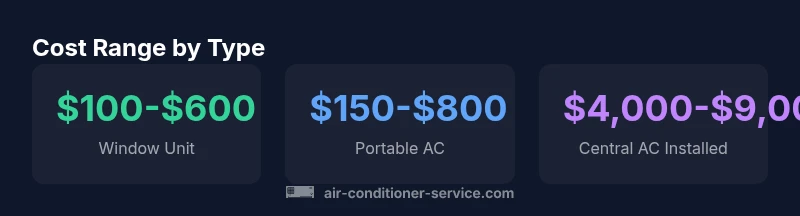
| Window AC | $100-$600 | easy | Best for single rooms |
| Portable AC | $150-$800 | moderate | Move between spaces |
| Central AC installed | $4,000-$9,000 | high | Whole-house cooling with ducts |
| Ductless mini-split per zone | $2,500-$7,500 | moderate | Zoned cooling with minimal ducts |
Common Questions
What is the typical cost to replace central AC?
Replacing central air usually involves both equipment and labor. Expect a broad range depending on unit size, duct condition, and labor availability. A written quote that itemizes components helps you plan for both upfront and ongoing costs.
Replacing central AC can vary a lot, depending on the system size and the ductwork. Get a written quote that breaks out parts and labor.
Do installation permits add to the price?
Yes, many installations require local permits and inspections, which add to the cost. Some contractors include these in the quote, others bill separately. Always confirm permit inclusion in writing.
Permits can add to the price. Make sure your quote covers any permit and inspection fees.
Are there affordable options for renters?
Renters can often opt for window units or portable ACs as lower-cost solutions. If a lease allows, consider temporary ductless options and negotiate upgrading when you renew the lease.
Renters usually have affordable, flexible options like window or portable units. Check lease terms before installing.
Can I finance an AC purchase?
Many providers offer financing or payment plans. Look for options with low interest or promotional periods, and compare total costs over the life of the loan.
Yes, financing is often available. Compare plans to find the best overall value.
How long does installation typically take?
Most residential installations take from a few hours to a full day depending on system type, ductwork, and electrical upgrades. Plan for a follow-up check after commissioning.
Most installs take a few hours to a day. Expect a follow-up check after setup.
Do high-efficiency models always save money?
High-efficiency models can reduce operating costs, but savings depend on usage, climate, electricity rates, and initial costs. Evaluate payback period before choosing.
High-efficiency can save money, but it depends on how you use the unit and energy costs where you live.
“Choosing the right AC isn’t just about sticker price; it’s about long-term comfort and operating costs.”
The Essentials
- Know your space before buying: size matters.
- Budget for both unit and installation costs.
- Energy efficiency pays off over time.
- Get multiple, itemized quotes to avoid hidden fees.
- Check for warranties and financing options.