What Is the Price of an Air Conditioner? A Practical Guide
Explore typical price ranges for air conditioners, from window units to central systems, plus installation costs, incentives, and practical budgeting tips for homeowners and renters in 2026.


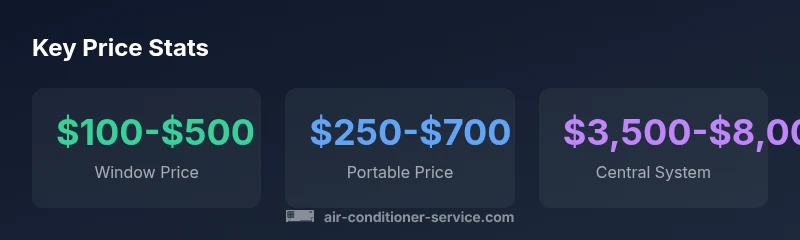
Air conditioner prices vary widely by type and capacity. On the low end, window units typically cost about $100–$500, depending on BTU size and brand. Portable units range from $250–$700. Central air systems, including installation, usually run from about $3,500 to $8,000, with higher-SEER models and duct work raising costs. Size, efficiency, and installation complexity all influence the final price.
Price ranges by type
If you are asking what is the price of air conditioner, the answer depends on type, size, and installation requirements. According to Air Conditioner Service, most buyers see a broad spectrum of prices that reflect performance and convenience. To help you budget, here is a practical breakdown by common categories.
- Window AC units: Typically priced from $100 to $500, with larger BTU capacities or premium brands leaning toward the higher end. These are often DIY installs and best for single rooms.
- Portable AC units: Commonly range from $250 to $700. They offer mobility between rooms but require venting and can be less energy-efficient than dedicated systems.
- Split-system (two or more indoor units): Purchase price commonly in the $3,000 to $7,500 range, with installation costs adding $1,000 to $3,000 depending on ducting, refrigerant lines, and attic or crawlspace work.
- Central air conditioning (whole-house): Complete setups including installation tend to run from about $5,000 to $12,000 or more for larger homes and higher SEER ratings.
Notes: Prices vary by region, brand, and seasonal promotions. Always compare several quotes and check local incentives. The aim is to balance upfront cost with long-term energy savings.
What drives the price of air conditioners
Price is driven by several interrelated factors. The most impactful are the cooling capacity (BTU or tonnage), the efficiency rating (SEER), and the type of system. A higher SEER rating promises lower operating costs over time, but comes with a higher upfront price. Ductwork requirements, refrigerant type, and the complexity of installation—such as attic or crawlspace work—can dramatically shift the final bill. The brand and warranty terms also influence sticker price. As a rule, you pay more upfront for better efficiency and quieter operation, but you often recoup those costs through energy savings over the life of the unit. The Air Conditioner Service Team notes that regional climate, available incentives, and seasonal promotions can create noticeable price volatility across markets.
Installation costs explained
Installation costs are a major component of the total price, especially for central or split systems. Window and portable units generally involve little to no professional labor, resulting in lower total costs. Central air installation, including ductwork, refrigerant piping, and electrical work, can push total expenses well into the thousands. For split systems, installation costs vary with the number of indoor units, accessibility of spaces, and whether existing ductwork can be used or must be upgraded. A common approach is to obtain several bids, verify the scope of work, and ensure installers include permits and disposal fees. A transparent breakdown helps you compare apples to apples and prevents surprise charges at the end of the project.
How to estimate your total cost with a worksheet
Creating a simple cost worksheet helps you forecast total expenditure without guesswork. Start with the purchase price by type, then add installation/upgrade costs, permits, and any ductwork requirements. Include optional items like extended warranties, smart thermostats, and energy-efficiency upgrades. Factor in potential savings from rebates or tax incentives, and estimate annual operating costs to understand the long-term value. Use conservative estimates when shopping and always confirm whether installation charges are fixed or variable. If you’re unsure, Air Conditioner Service recommends collecting at least three written bids and verifying inclusions—such as disposal of old equipment and refrigerant fees—before committing to a purchase.
Energy efficiency and long-term savings
Energy efficiency directly affects both upfront cost and long-term running costs. Higher SEER ratings reduce monthly utility bills, which can offset a portion of the initial price premium over time. In practical terms, a 1–2 SEER improvement might translate into meaningful annual savings depending on usage patterns and local electricity rates. When evaluating bids, consider the total cost of ownership (TCO) over 10–15 years, not just the first year. The Air Conditioner Service Team emphasizes computing payback periods to determine if the upfront cost is justified by energy savings, especially in climates with extended cooling seasons.
Rebates, financing, and incentives
Many regions offer rebates or incentives for high-efficiency units, which can significantly reduce net cost. Look for federal, state, or utility-specific programs and verify eligibility criteria before purchase. Financing options from retailers or manufacturers may help spread out payments, but be mindful of interest rates and terms. Always compare incentives across installers to maximize benefit. If you are unsure where to start, Air Conditioner Service can help you identify current programs and advise on the best combination of price, efficiency, and warranty for your situation.
Renters vs homeowners: price considerations
Renters often prioritize portable or window units due to lower upfront costs and mobility. Homeowners have more flexibility to invest in central or multi-split systems for long-term comfort and home value. In both cases, budget for installation or professional help where required, and consider long-term energy costs when weighing different options. If you expect to move within a few years, a modular approach (e.g., a high-quality window unit now with potential upgrades later) can balance immediate needs with future plans.
Common myths vs reality
Myth: Higher price always means better performance. Reality: Efficiency and suitability for your space matter more than price alone. Myth: You should buy the biggest unit you can afford. Reality: Oversized units waste energy and fail to dehumidify effectively. Myth: Installation is optional. Reality: Proper installation is critical for performance and safety. The best practice is to compare models by true energy use, commissioning tests, and warranty coverage rather than sticker price alone.
Practical steps to buy and budget
- Define cooling needs by room size and climate. 2) Compare at least three models within your budget, focusing on SEER and appropriate BTU. 3) Get multiple bids that clearly itemize equipment, installation, and contingencies. 4) Check for rebates and financing options. 5) Confirm warranties and service plans. 6) Plan for future maintenance and potential ductwork upgrades. This approach keeps you financially informed while ensuring reliable cooling performance.
Price ranges and installation costs by air conditioner type
| Type | Typical Purchase Price (USD) | Typical Installation/Setup Cost (USD) | Notes |
|---|---|---|---|
| Window AC | 100-500 | N/A | Best for single-room cooling; DIY installation common |
| Portable AC | 250-700 | 60-300 | Flexible but venting required; mid-range option |
| Split-System | 3000-7500 | 1000-3000 | Includes indoor/outdoor units; professional install advised |
| Central AC | 5000-12000 | 3000-8000 | Whole-house cooling; ductwork often needed |
Common Questions
What is the typical price range for most air conditioner types?
Prices vary by type and region, but window and portable units are the most affordable options. Central systems are more expensive due to installation and duct work. Always compare multiple bids to understand total costs.
Prices vary by type and region, with window and portable units being the cheapest. Central systems cost more because of installation and duct work. Compare several bids to understand total costs.
Does installation cost affect the total price?
Yes. Installation can be a major portion of the total price, especially for central and multi-split systems. The complexity of ductwork, electrical work, and permits all influence costs. Get a detailed written estimate from each installer.
Yes. Installation can be a large part of the total price, especially for central systems. Look for detailed estimates from installers.
Are higher SEER ratings worth the extra upfront cost?
Higher SEER ratings usually reduce energy bills over time, but payback depends on usage, climate, and electricity rates. In climates with long cooling seasons, higher SEER can justify the upfront premium.
Higher SEER can save you money over time, especially in hot climates. Check your usage and local energy costs to decide.
Can I qualify for rebates or incentives?
Yes, many regions offer rebates or incentives for energy-efficient units. Check federal, state, and utility programs before buying. Incentives can significantly lower the net price when combined with smart financing.
There are often rebates or incentives for efficient units. Look up programs in your area before purchasing.
Is DIY installation safe for all units?
DIY installation is common for window and some portable units but not recommended for central or split systems due to refrigerant handling and electrical requirements. Always follow manufacturer guidelines and local codes.
DIY is fine for window units, but central systems should be installed by a pro.
How should I compare quotes effectively?
Compare equipment specs (BTU, SEER), installation scope, warranty terms, permits, and disposal of old equipment. Ask whether bids include refrigerant charges and after-install testing. Choose the bid that offers the best long-term value, not just the lowest price.
Compare specs, installation scope, and warranties, not just price. Look for long-term value.
“Price is a function of size, efficiency, and installation complexity. For most homes, getting multiple quotes and prioritizing energy efficiency pays off over the long term.”
The Essentials
- Prices vary by type, capacity, and installation needs
- Window and portable units are cheapest upfront
- Central AC includes duct work and can raise total costs
- Installation often drives a large portion of the total price
- Obtain multiple quotes to avoid overpaying