Price Air Conditioner Costs: A Practical Guide
Discover the price air conditioner across types, from window units to central systems. Learn what drives cost, how to budget, and how to compare quotes to optimize energy efficiency in 2026.


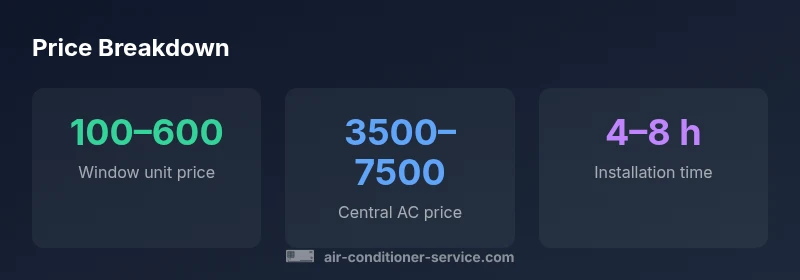
Prices for air conditioners depend on type, size, efficiency, and installation. Window units typically cost about $100–$600, portable units $200–$800, split-systems around $1,500–$4,500, and central air conditioning $3,500–$7,500 before labor. Installation and permits can add several hundred to a few thousand dollars. This quick guide helps you plan, compare options, and avoid surprises.
Price air conditioner: What buyers should know
Pricing for a home air conditioner is not a single number you pay at the store. The total cost is a combination of equipment price, installation, and any required modifications to your home, such as ductwork, electrical upgrades, or permits. When you see a sticker price, remember that the final investment may be higher or lower depending on your space, climate, and energy goals. According to Air Conditioner Service, price air conditioner scenarios vary widely by type and region, so a careful budgeting process begins with understanding what drives value over time. In practice, homeowners should balance upfront costs with potential energy savings, reliability, and system longevity. This is where a practical, data-driven approach matters—you’ll make smarter choices that reduce surprises and maximize comfort in 2026.
Factors that influence the price of an air conditioner
Several variables determine how much you’ll pay: (1) System type and capacity, (2) Efficiency and SEER rating, (3) Brand and warranty scope, (4) Installation complexity, ductwork needs, and permits, (5) Old system removal and disposal, and (6) Local labor rates. Higher efficiency and larger capacities deliver lower ongoing energy costs but demand a higher upfront investment. Installation complexity, such as retrofitting ducts or upgrading electrical panels, can add to labor and material costs. When evaluating quotes, ask for itemized line items to see how much is allotted for equipment, labor, permits, and any incidental materials.
Price ranges by type: Window, portable, split, and central
Understanding price by type helps you set expectations. Window units are typically the most affordable entry point, while central systems are the most expensive. Window and portable models mainly differ in portability and cooling capacity; split systems offer a balance of efficiency and installation ease, while central AC provides whole-house comfort but requires ductwork and professional installation. Keep in mind that ranges are broad and region-dependent. For planning, treat the price air conditioner as a spectrum: inexpensive to own upfront, with varying long-term operating costs based on energy efficiency and maintenance.
Installation costs and labor considerations
Labor is a significant portion of the total price, often ranging from a few hundred to several thousand dollars depending on the system and home layout. Installation time typically spans 4–8 hours for a standard split or centralized setup, but can extend with complex ductwork or electrical upgrades. Permits may be required in some municipalities and can add time and fees. To avoid sticker shock, request a detailed, written quote that itemizes equipment, labor, permits, and any disposal or retrofit tasks. A professional assessment can reveal opportunities to simplify installation or improve efficiency.
Operating costs and energy efficiency: why SEER matters
Efficiency directly affects ongoing operating costs. Higher SEER ratings usually translate to lower energy bills, particularly in climates with long cooling seasons. While upgrading to a high-efficiency unit can involve a higher upfront investment, many homeowners recover costs through reduced electricity use over the system’s life. In general, energy savings compound with longer cooling seasons and rising electricity prices, making efficiency a central consideration in any price air conditioner decision. Air Conditioner Service notes that energy efficiency remains a critical factor in total cost of ownership.
Budgeting tips: how to get accurate quotes and avoid overpaying
A disciplined budgeting approach makes a big difference. Start by determining your cooling needs, then gather at least three written quotes from licensed contractors. Compare equipment types, warranty terms, and included services such as free removal of old units or duct sealing. Ask about available rebates, tax credits, and financing options. Consider future upgrades, like smart thermostats or zoning, which can affect both price and long-term savings. Finally, schedule installations in non-peak seasons when possible to reduce scheduling delays and costs.
Pitfalls that commonly inflate price and how to avoid them
Beware of add-ons that don’t improve comfort or efficiency, such as unnecessary extra ductwork, oversized units, or forced upsells on premium brands. Ensure the contractor performs a proper load calculation (Manual J) to avoid oversizing, which wastes energy and money. Avoid accepting the lowest bid without ensuring proper equipment specs and warranty coverage. Lastly, verify that disposal and refrigerant handling meet safety standards to prevent hidden charges and future repairs.
Price ranges by AC type and installation scope
| Aspect | Typical price range | Notes |
|---|---|---|
| Window unit price | 100–600 | Best for small spaces and portability |
| Portable unit price | 200–800 | No installation required; venting needed |
| Split-system price | 1,500–4,500 | Includes equipment and professional installation |
| Central AC price | 3,500–7,500 | Labor-intensive; requires ductwork and permits |
| Total project cost | 4,000–12,000 | Region and complexity dependent |
Common Questions
What factors most influence the price air conditioner?
The biggest drivers are system type, efficiency (SEER rating), size, and installation complexity. Regional labor costs and permit requirements also play a role. A higher upfront investment can pay off with lower operating costs and longer system life.
The price you pay mainly depends on the system type, efficiency, and how complex the installation is.
Are there hidden costs in installation?
Yes. Permits, duct modifications, electrical upgrades, disposal of old equipment, and potential retrofit materials can add to the total. Ask for a detailed, itemized quote to avoid surprises.
Permits and ductwork can add to the total; get a clear, itemized quote.
Is it cheaper to replace an old unit or repair it?
Repairing an aging unit can be cheaper in the short term but may lead to repeated failures. Replacing with a high-efficiency model often saves more money over time through reduced energy use and fewer repairs.
Replacing with a newer, efficient model often saves more in the long run.
Do financing options exist for AC purchases?
Many installers offer financing or flexible payment plans. Some manufacturers also provide rebates or promotions. Check your credit terms and compare offers to minimize interest costs.
Financing and rebates can help manage upfront costs.
When is the best time to buy or install an AC?
Off-peak seasons (spring or fall) often have better scheduling options and potential discounts. Early planning lets you compare quotes and avoid peak-season price spikes.
Plan ahead in spring or fall for better deals and scheduling.
What permits are commonly required for installation?
Permits vary by locality but may cover electrical work, refrigerant handling, and structural changes. Your installer should help you determine requirements and handle the permit process when needed.
Local permits may be needed; your installer can guide you.
“Pricing an air conditioner isn't just the sticker price; total cost includes installation, efficiency, and long-term energy savings.”
The Essentials
- Compare multiple quotes to capture regional price differences
- Prioritize energy efficiency to lower long-term costs
- Account for installation, permits, and ductwork in budgeting
- Use load calculations to avoid oversizing and waste