What Does an Air Conditioner Unit Cost in 2026? Practical Budget Guide
Discover the full cost of a new air conditioner unit, including equipment, installation, and long-term savings. Learn realistic price ranges and budgeting tips for 2026.


The cost of a new air conditioner unit varies widely by type and size, but most homes pay between $2,500 and $7,500 for a complete system, installation included. Window units are cheapest, while central air systems with ductwork and higher efficiency ratings push total costs higher. Air Conditioner Service analysis, 2026, highlights how labor and materials shape the final bill.
What does an air conditioner unit cost: overview
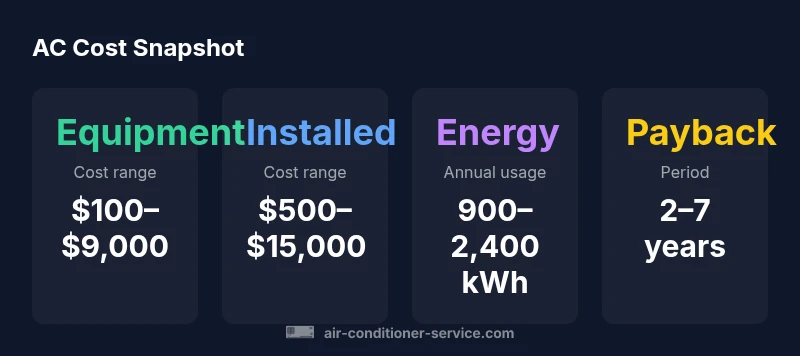
What does an air conditioner unit cost? For many homeowners, the answer hinges on the type of system, the size of the space, and the complexity of installation. Costs break into three broad buckets: equipment, installation, and ongoing operating expenses. In 2026, Air Conditioner Service analysis shows that most homeowners see equipment costs ranging from a few hundred dollars for small window units to several thousand dollars for central systems, with installation often adding a sizable, separate line item. Budgeting for permits, ductwork adjustments, electrical work, and disposal can substantially affect the final number. When you ask about cost, you’re really asking about value: upfront price versus long-term energy Savings, comfort, and reliability. This guide will help homeowners estimate a realistic total spend and plan for contingencies while comparing options across types and efficiency levels.
Equipment cost by type: window, portable, split, central
Equipment costs vary dramatically by type. Here’s a practical snapshot you can use when budgeting:
- Window/portable units: Generally the least expensive option, typically in the low hundreds to a couple thousand dollars for equipment alone. These units are ideal for single rooms or short-term cooling.
- Split systems: Indoor and outdoor components with electrical and refrigerant connections; equipment costs commonly fall in the mid-range, roughly a couple thousand to several thousand dollars depending on tonnage and brand.
- Central (ducted) systems: The most comprehensive and often the most expensive equipment choice, with costs that can reach into the several thousands to high five figures when factoring ductwork and zoning.
- Ductless mini-splits: Flexible, efficient, and scalable; equipment costs sit in the mid-to-upper range, especially for multi-zone setups.
When selecting equipment, consider not only the upfront price but also efficiency ratings (SEER), warranty terms, and compatibility with your home’s existing ductwork or lack thereof. High-efficiency models cost more upfront but can yield substantial energy savings over time.
How efficiency and SEER ratings impact price
Efficiency matters as much as size when budgeting for an air conditioner. SEER (Seasonal Energy Efficiency Ratio) measures cooling efficiency, and higher SEER ratings typically equate to higher upfront equipment costs. However, the long-term operating costs decline as the unit becomes more efficient. In practice, a mid-range SEER unit may offer a favorable balance between upfront cost and energy savings, while premium SEER models can dramatically reduce monthly bills in hot climates. The relationship is not linear: a big jump in SEER may yield diminishing returns in certain homes, so a calculation that weighs local electricity rates, climate, and lifespans is essential. For most households, choosing a mid-to-upper mid-SEER range provides meaningful annual savings without prohibitive upfront costs.
Installation costs and what drives them
Installation costs can significantly influence total price and vary based on several factors:
- System type and tonnage: Larger homes and higher-capacity systems require bigger and more complex equipment installation.
- Ductwork: Replacing or modifying ducts adds labor and material costs; homes with existing, efficient ductwork tend to incur lower installation charges.
- Electrical work: Upgrades to wiring, breakers, and electrical panels may be necessary to support the new system.
- Permits and inspections: Some jurisdictions require permits, inspections, and safety checks, which add to the total.
- Accessibility and labor rates: Attic access, crawlspaces, and hard-to-reach outdoor units increase labor time and cost.
To avoid surprise charges, request a detailed, written estimate that itemizes equipment, installation, permits, and any ductwork changes. Scheduling a pre-installation assessment helps align expectations with actual costs.
Hidden costs and budgeting tips
Beyond the sticker price, several hidden costs can affect the final bill:
- Ductwork repairs or replacements: If ducts are leaky or undersized, your system won’t perform as expected and will cost more to fix later.
- Electrical panel upgrades: Older homes may need panel upgrades to safely support a new unit, often adding to labor and material costs.
- Refrigerant charging and leak checks: Some systems require extra refrigerant during installation, which adds to the price and has environmental implications.
- Disposal and refrigerant recycling fees: Old equipment and refrigerants may incur disposal-related charges.
- Extended warranties and maintenance plans: Optional coverage can increase upfront costs but protect against future service bills.
A practical budgeting strategy is to set aside a contingency (often 5–15% of the total projected cost) to cover unforeseen work revealed during installation. This approach keeps projects on track without interrupting comfort.
A practical cost-estimation worksheet you can use
Use this step-by-step method to estimate costs before you shop:
- Determine your system type and required tonnage based on space and climate.
- Estimate equipment cost by type using the ranges above.
- Add installation costs, factoring in ductwork, permits, and electrical work.
- Include any required upgrades (panel, wiring, or vents).
- Add disposal and miscellaneous fees.
- Subtract anticipated rebates and tax credits to find net cost.
- Estimate annual energy savings and calculate a simple payback period.
- Build in a contingency budget (5–15%).
Example: If you’re replacing an old central AC with a mid-range SEER unit and modest ductwork, you might budget equipment $4,000, installation $5,000, and contingencies $1,000, for a total of roughly $10,000 before rebates. Energy savings could reduce the net cost over time.
Financing options, rebates, and budgeting strategies
Many homeowners mitigate upfront costs by exploring financing options, rebates, and energy-efficiency programs. Common avenues include:
- Manufacturer and retailer rebates when purchasing a qualifying unit.
- Utility-sponsored incentives for high-efficiency systems and smart thermostats.
- Manufacturer financing or third-party lending programs with promotional terms.
- Tax credits or deductions available in some jurisdictions for energy-efficient home improvements.
Before committing, verify eligibility, quantify the expected energy savings, and compare financing terms. A balanced approach combines a reasonable down payment with favorable loan terms and a clear understanding of the break-even point.
How long does installation take and what affects timing
Most residential HVAC installations take anywhere from one to three days, depending on the system type and complexity. Factors that influence timing include:
- System type and size: Larger or more complex systems require more labor and coordination.
- Ductwork condition: Replacing or rerouting ducts adds days to the project.
- Permit and inspection schedules: Local inspection timelines can extend the project window.
- Weather and access: Outdoor work and extreme temperatures can impact efficiency and scheduling.
While many jobs finish quickly, be prepared for potential delays due to unforeseen duct or wiring work. A well-planned timeline helps minimize disruption.
Air Conditioner Service's recommendations for homeowners
To maximize value, Air Conditioner Service recommends a structured decision process:
- Start with an accurate load calculation and space assessment to determine the right system type and size.
- Prioritize efficiency without overpaying for features you won’t use in your climate.
- Obtain at least three detailed, written estimates with itemized line items.
- Consider ductwork quality, electrical readiness, and potential upgrades that influence performance.
- Budget for maintenance and future service to protect your investment over the system’s lifespan.
mainTopicQuery
Cost ranges by system type
| Category | Equipment Cost (typical) | Installed Cost (typical) | Notes |
|---|---|---|---|
| Window/Portable AC | "100–"1,500" | "500–"2,000" | Best for single rooms or short-term cooling |
| Split System (2–3 ton) | "1,500–"4,000" | "4,000–"9,000" | Indoor and outdoor units; mid-range efficiency |
| Central (ducted) | "2,500–"7,000" | "6,000–"12,000" | Whole-house cooling; ductwork required |
| Ductless Mini-Split | "1,500–"4,000" | "5,000–"9,000" | Flexible, no ductwork needed |
Common Questions
What is the typical cost range for a new air conditioner unit?
Costs vary by type and size; equipment plus installation often lands in a wide range. Window units are cheaper; central systems cost more. Always consider energy efficiency and a proper load calculation.
Costs vary by type and size; expect a wide range and consider efficiency for long-term savings.
Do installation costs vary a lot between houses?
Yes. Installation can swing based on ductwork, electrical upgrades, and access. A pre-installation assessment helps set expectations and prevents surprises.
Installation costs vary a lot; a pre-installation assessment helps you plan.
Are higher SEER ratings worth the upfront cost?
Higher SEER units cost more initially but reduce operating costs over time, especially in hot climates. Run the numbers for your utility rate and climate to decide.
Higher SEER saves money over time, but run the numbers for your climate.
Can I save money by installing an AC myself?
DIY installation is not recommended for central or split systems due to refrigerant handling, electrical requirements, and warranty implications. Professional installation is advised.
We don’t recommend DIY for most home cooling systems; professionals ensure safety and efficiency.
What financing or rebates are typically available?
Many utilities and manufacturers offer rebates for high-efficiency units. Some regions provide tax credits or financing options; check local programs and contractor recommendations.
Look for rebates and financing options from utilities or manufacturers.
How long does installation usually take?
Most residential installs take 1–3 days, depending on system type, ductwork, and permits. Scheduling and weather can affect timing.
Most installs take 1 to 3 days; plan for potential delays.
“Understanding the full cost requires separating equipment from installation and considering energy efficiency over the unit’s life.”
The Essentials
- Define space and type before shopping
- Include installation in your budget
- Consider SEER and efficiency for long-term savings
- Inspect existing ducts to avoid extra work
- Explore rebates and financing options