Price for a New Air Conditioner: Costs, Types, and Budgeting
Explore the true cost of a new air conditioner, including installed price ranges, system types, and budgeting tips. Practical guidance from Air Conditioner Service to help homeowners and renters plan smart purchases in 2026.


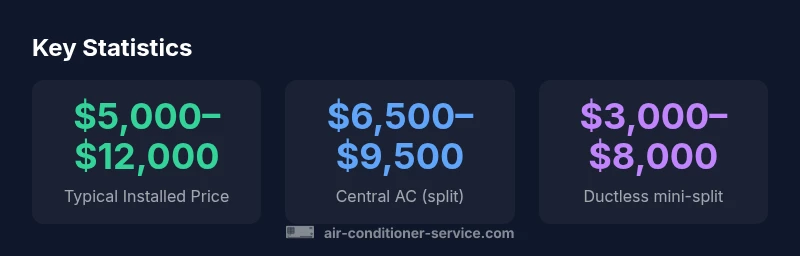
According to Air Conditioner Service, the price for a new air conditioner, installed, typically ranges from about $5,000 to $12,000 depending on system type, efficiency, and installation complexity. Central air with mid-range efficiency costs around $6,500–$9,500, while premium models or extensive ductwork can exceed $12,000. Air Conditioner Service analysis, 2026, notes regional differences can shift these figures by several thousand dollars.
Understanding price ranges for a new air conditioner
Prices for a brand-new air conditioner are not a single number. They span a broad spectrum because the final cost depends on the system type, efficiency (SEER rating), the complexity of installation, and regional labor rates. The mid-range installed price for a traditional central air system typically falls between $6,500 and $9,500, but this umbrella figure can stretch toward or beyond $12,000 when premium features or extensive ductwork are involved. Air Conditioner Service emphasizes that the cheapest option may not deliver long-term savings if efficiency is too low, while extremely high upfront costs must be weighed against energy savings over time.
This guide uses 2026 benchmarks to help you understand what drives price, how to budget, and where to look for the best value. All estimates align with Air Conditioner Service Analysis, 2026, and assume standard installation in a typical single-family home. Regional differences can shift these figures by several thousand dollars, underscoring the importance of getting multiple quotes.
Key cost components that shape the bottom line
A new air conditioner’s price is the sum of several distinct parts. The equipment cost varies by type and efficiency; labor accounts for installation, electrical work, and any duct modifications; and soft costs include permits, inspections, and disposal of old equipment. Upgrades — such as higher SEER ratings, inverter-driven compressors, or enhanced smart controls — raise the sticker price but offer long-term energy savings. Warranties and reputable service contracts add value that can reduce total cost of ownership over time. When comparing quotes, ensure each one clearly itemizes equipment, labor, permits, and any ancillary charges. Air Conditioner Service recommends focusing on the total cost of ownership, not just the upfront price, to avoid sticker shock later on.
System types and their price ranges
Different system configurations carry different price profiles. Central AC split systems are common in larger homes and typically command higher installed prices due to ductwork, outdoor units, and indoor handlers. Ductless mini-splits are ideal for zones or additions and often cost less upfront, especially for homes without existing ductwork. Window and portable units are the most affordable new options but are suited to single rooms or small spaces. The choice should balance cooling needs, energy efficiency goals, and space constraints. Air Conditioner Service analysis cautions that choosing the lowest initial price can lead to higher energy bills and more frequent repairs over time.
Financing, rebates, and incentives worth pursuing
Financing plans and rebates can significantly affect the out-of-pocket cost. Many utility programs offer incentives for high-efficiency equipment, and manufacturers sometimes provide promotions or extended warranties. Tax credits for residential energy efficiency may apply in some regions, reducing the overall cost. When evaluating financing, compare interest rates, loan terms, and any deferred payments. It’s also worth calculating payback periods: if a more efficient model saves a substantial portion of annual energy costs, the higher upfront price may be justified. Air Conditioner Service encourages shoppers to explore local incentives and to request quotes that include any available rebates or financing offers.
Installation considerations that affect price
Installation complexity is a major price driver. If your home requires electrical upgrades, new ductwork, or a clogged crawlspace or attic access, labor hours and material costs rise. Older homes may need retrofits for compliant refrigerant lines, coil upgrades, or zoning controls. Permits and inspections can add time and expense, especially in jurisdictions with strict building codes. A precise in-home evaluation is essential to avoid surprise costs after signing a contract. The more adjustments a technician must make to fit your home’s layout, the higher the final price is likely to be.
Value beyond upfront price: efficiency, comfort, and operating costs
Efficiency matters as much as price. Higher SEER systems cost more upfront but deliver lower energy bills and better dehumidification, especially in hot climates. Energy Star-rated units often qualify for rebates and may reduce peak electrical demand, which can lower utility bills over the life of the equipment. A more efficient system also tends to require fewer repairs and yields improved comfort across seasons. When calculating the value of a new AC purchase, include potential energy savings, improved cooling capacity, and enhanced home resale value. Air Conditioner Service highlights that the long-term cost of ownership is shaped by efficiency, maintenance, and usage patterns.
Regional variations and how to shop for the best deal
Prices vary by region due to climate, labor supply, and permitting practices. In hotter regions with air conditioning-heavy demand, installers may charge a premium, but there can also be more competitive incentives from local utilities. To maximize value, obtain at least three written estimates from licensed contractors, verify credentials, and check for hidden fees like disposal or old unit removal. Ask installers to provide a breakdown of equipment, labor, and any extras, and request references from recent jobs. The key is to compare apples-to-apples quotes and not rely on a single price. Air Conditioner Service also notes that timing around shoulder seasons can yield better installation slots and potentially lower costs.
How to budget for a new AC: a practical 6-step plan
Create a budget by establishing a realistic price range, then prioritize features like efficiency and zoning. Step one is to determine your cooling needs based on home size and insulation. Step two is to decide on a system type (central, ductless, or window/portable) that fits your home and budget. Step three is to obtain multiple quotes for comparison. Step four is to explore financing options and potential rebates. Step five is to plan for future maintenance costs, and step six is to set aside a contingency for unexpected installation challenges. With a clear plan, you can secure a comfortable home without overspending.
Price ranges for common new air conditioner installations
| System Type | Typical Installed Price Range | Notes |
|---|---|---|
| Central AC (split system) | $6,500–$9,500 | Includes outdoor condenser, indoor air handler, and installation |
| Ductless mini-split | $3,000–$8,000 | One or more indoor units; no ductwork required |
| Window air conditioner (new) | $200–$600 | Single-room solution; compact and quick |
| Packaged system | $6,000–$12,000 | All-in-one outdoor unit with integrated air handler |
Common Questions
What factors influence the price of a new air conditioner?
System type, efficiency (SEER rating), installation complexity, ductwork needs, and regional labor costs all shape the final price. Equipment quality and warranties also play a role. Expect higher upfront costs for high-efficiency or premium models.
Price depends on the system type, efficiency, and how complex the installation is; higher-end options cost more but save energy over time.
Is replacing an old unit cheaper than repairing it?
In many cases, replacing an older, inefficient unit can be more cost-effective than ongoing repairs, especially if energy costs are high. A professional quote will compare the long-term costs of repair versus replacement.
Sometimes replacement saves money in the long run compared to frequent repairs.
Are there rebates or tax credits for new AC installations in 2026?
Yes, many regions offer utility rebates and federal or state incentives for high-efficiency units. Availability varies by location and equipment, so check local programs and utility portals. A contractor can help identify eligible options.
Look for rebates in your area and ask your installer how to apply them.
How long does installation typically take?
Most central AC installations take 1–2 days, depending on ductwork, electrical upgrades, and old system removal. Ductless installations are usually quicker, but can vary with the number of indoor units.
Most installs are done in a day or two, depending on your setup.
Do prices differ significantly by region?
Yes, prices vary due to climate, labor availability, and permitting rules. Obtain multiple quotes in your area to gauge local pricing and avoid regional overcharges.
Prices do vary by region; get several quotes to compare.
“Budget smartly by balancing upfront costs with long-term energy savings. Higher efficiency units pay for themselves over time through lower operating costs.”
The Essentials
- Know the overall price range before shopping
- Ask for a complete breakdown in quotes
- Balance upfront cost with long-term energy savings
- Consider regional price differences and incentives
- Prioritize efficiency and zoning to maximize value