Cost of a New Air Conditioner: A Practical Guide for Homeowners
Explore the cost of a new air conditioner, including installed price ranges, factors impacting the total, and smart ways to save. Learn from Air Conditioner Service's analysis to budget confidently.


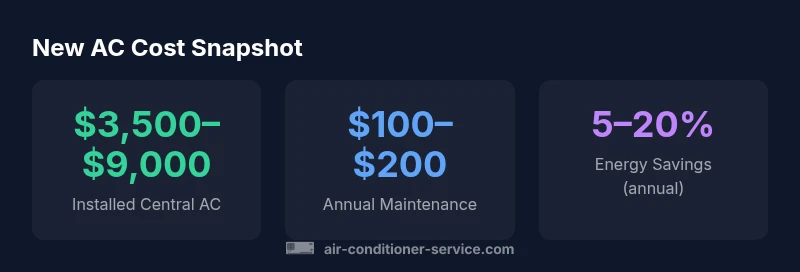
Typical installed cost for a new central air conditioner ranges from $3,500 to $9,000, depending on system type, home size, and whether ductwork is included. According to Air Conditioner Service, those costs reflect equipment efficiency, brand choices, and local labor rates, and quotes should always include installation, permits, and potential duct work. This upfront range helps homeowners plan for a major home improvement project with confidence.
Understanding the cost of new air conditioner: a broad range
Pricing for a new air conditioner varies widely across homes and regions. The installed cost for a central air conditioning system typically ranges from $3,500 to $9,000, with larger homes or high efficiency units on the higher end and ductwork replacement driving final numbers. According to Air Conditioner Service, this broad range reflects differences in equipment type, SEER rating, and local labor costs, as well as the need for permits and possible duct modifications. Homeowners should anticipate quotes that bundle equipment, installation, and any required retrofits.
Breaking down the cost components: equipment, labor, and extras
The total price of a new air conditioner breaks down into three broad buckets: the equipment itself, the labor to install it, and ancillary costs that often catch homeowners by surprise. Equipment can account for 40–70% of the installed price, depending on energy efficiency and brand. Labor costs vary by region and contractor experience, while extras such as permits, electrical work, refrigerant lines, and duct modifications can add significantly. Budget for an allowance for unexpected issues that might arise during installation.
How size, efficiency, and climate influence price
Size and climate play a major role in price. Smarter sizing ensures comfort and efficiency, while higher SEER ratings increase upfront costs but reduce long-term energy bills. When budgeting for the cost of a new air conditioner, homeowners should consider the tradeoff between initial price and ongoing operating costs. Smaller, efficient systems may appear cheaper at purchase but could underperform in extreme heat, leading to higher energy usage and more frequent servicing.
Central AC vs. ductless pricing dynamics
Central air conditioning with ductwork is the most common choice for many homes and often offers the best balance of initial cost and comfort. Ductless mini-splits, while flexible for additions or homes without ductwork, can be more expensive per zone and require multiple outdoor units. If you need to replace ducts or reconfigure the existing distribution network, expect a sizable price increase. In some renovations, retrofitting can trigger permit requirements and insulated ductwork to maximize efficiency.
Hidden costs to budget for before you commit
Always consider the non equipment items in your cost estimate. Permits, electrical upgrades, and potential drain line or refrigerant charging charges can add to the total. Labor quality matters; discounted installs may save money upfront but lead to higher maintenance costs later. If your home has unusually long refrigerant lines, sloped ductwork, or allergies to dust, additional filtration or sealing might be recommended. These items should appear in the final quote so you can compare apples to apples.
A practical approach to estimating costs for your home
Start by measuring your home cooling load or having a licensed technician perform a load calculation. Use this to request multiple written quotes that include equipment specifics such as SEER rating, branding, and the required ductwork. Ask for an itemized breakdown showing equipment price, labor, permits, and any extras. Compare quotes on like for like units and consider total cost of ownership, not just upfront price. Use a checklist to verify warranty terms and service availability.
Financing options and rebates to soften the upfront price
Many homeowners finance new AC installations to spread the cost and protect cash flow. Look for manufacturer rebates, utility incentive programs, and potential tax credits depending on your location. Some lenders offer promotional rates for energy efficient equipment, while others provide deferred payment options. A well structured financing plan, combined with energy savings estimates, helps you evaluate the true value of a new air conditioner and avoid budget stress.
Choosing the right contractor: quotes, timing, and red flags
The contractor selection is as important as the unit itself. Seek licensed, insured professionals with a track record of reliable installations and clean record for complaints. Request written quotes from at least three contractors and verify inclusions such as permits, electrical work, duct modifications, and post installation testing. Red flags include unusually low bids, vague scopes of work, and resistance to providing references or documentation of compliance with local codes.
The value of warranties, maintenance plans, and long term savings
A solid warranty and a proactive maintenance plan should be part of any purchase decision. Warranties vary by manufacturer and installer, and maintenance plans can lower the risk of unexpected breakdowns and improve efficiency over time. While maintenance costs add to annual expenses, the improved reliability and efficiency can translate into lower long term operating costs. When evaluating value, consider the combined effect of upfront price, energy usage, and maintenance obligations.
Cost ranges for common AC installations
| Category | Estimated Cost Range | Notes |
|---|---|---|
| Central AC (split system) | $3,500–$9,000 | Includes standard installation and basic equipment |
| Ducted upgrade | $6,000–$12,000 | Duct replacement may add to cost |
| Ductless mini-split (per zone) | $2,000–$8,000 | Cost varies by number of zones and outdoor unit count |
| Labor-only retrofit | $1,000–$3,000 | If no equipment replacement |
Common Questions
What factors influence the cost of a new air conditioner?
Several elements drive the cost: the equipment's size and efficiency, SEER rating, brand, whether ductwork needs upgrading, local permit fees, and labor rates. The total cost reflects both upfront price and ongoing operating costs.
Factors include system size, efficiency, ductwork needs, and local labor.
How does SEER rating affect price and savings?
Higher SEER ratings typically increase upfront cost but reduce energy use, leading to lower bills over time. The break-even point depends on climate, electricity prices, and usage patterns.
Better efficiency costs more upfront but saves on energy bills.
Are there hidden costs in installation?
Yes. Permits, electrical upgrades, duct modifications, refrigerant charging, and disposal fees can add to the final bill. Ensure the quote lists all items.
Permits and extra work can add to the price.
How long does installation typically take?
Most installations take a few hours for smaller homes, while larger homes with complex ductwork can extend into a full day. Schedule installation with time buffers.
Most installs take several hours to a full day.
Should I finance or pay upfront?
Financing can help manage cash flow and allow you to compare total cost of ownership. Look for options with low or zero-interest introductory periods and favorable terms.
Financing helps spread the cost and compare long-term value.
What rebates or incentives exist for new AC?
Rebates and incentives vary by location and utility programs. Check manufacturer rebates, utility programs, and local tax incentives to reduce upfront costs.
Look for rebates and incentives to cut upfront costs.
“Investing in a higher efficiency air conditioner can pay off over time through lower operating costs and fewer repairs. A clear, updated quote that includes installation, permits, and potential ductwork helps homeowners compare options more effectively.”
The Essentials
- Budget for total installed cost, not just equipment price.
- Ductwork, permits, and electrical upgrades can significantly affect total price.
- Compare like-for-like quotes and verify inclusions (warranty, service, installation scope).
- Higher efficiency can save money over time, despite higher upfront costs.
- The Air Conditioner Service team recommends shopping around and considering total cost of ownership.