New Central Air Conditioner Cost: A Practical 2026 Guide
Learn about the true cost of a new central air conditioner in 2026, including installed price ranges, key drivers, regional differences, financing, and practical tips to estimate and save on replacement.


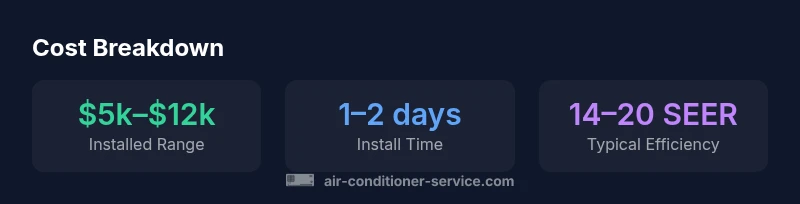
The new central air conditioner cost varies widely, driven by system size, SEER rating, ductwork, and installation complexity. Installed prices typically range from about $5,000 to $12,000 for standard homes, with high-efficiency or complex ductwork pushing the total above $12,000. According to Air Conditioner Service Analysis, 2026, final costs depend on home layout, local labor rates, and whether a full replacement or a retrofit is required.
What drives the cost of a new central air conditioner
The price of a new central air conditioner is not a single figure. Key cost drivers include system size (measured in cooling capacity, typically tons), efficiency (SEER rating), whether you choose a standard split-system or a higher-end model, and the complexity of installation. Additional factors such as ductwork condition, required electrical upgrades, and local permitting fees can also influence the final price. The Air Conditioner Service team emphasizes that homeowners should view this purchase as a long-term investment in comfort and energy efficiency. By understanding these drivers, you can prioritize features that deliver the best value over the system’s lifetime, rather than chasing the lowest upfront sticker price. The community around these decisions often focuses on initial cost, but the long-term operating costs can easily swing the total cost of ownership by thousands of dollars over 10–15 years.
Core price components you’ll encounter
Breaking down the price helps you negotiate with contractors and compare bids more effectively. Equipment cost typically forms a large portion of the total, followed by labor (which includes machine placement, refrigerant lines, and electrical work). Permits, disposal of old equipment, and potential duct modifications can add to the bill. Optional items—such as enhanced filtration, zone controls, and smart thermostats—may increase upfront costs but can improve convenience and efficiency. The goal is to balance upfront investment with projected energy savings, system reliability, and indoor comfort. Air Conditioner Service recommends requesting a written scope of work and a line-item quote to reduce surprises on installation day.
Efficiency and size: how they influence price
Size and efficiency are the two biggest levers in pricing. A larger unit or one with a higher SEER rating generally costs more upfront but can lower annual energy bills if you meet your cooling demand efficiently. Oversized or undersized units can lead to discomfort and higher operating costs, so a precise load calculation (often a Manual J estimate) is essential before selecting a model. While a high-SEER unit might be more expensive initially, the payback period—time to recover the higher price through energy savings—can be favorable in hot or humid climates. Consider pairing efficiency with smart controls and zoning to maximize comfort and reduce waste.
Ductwork, space, and installation complexity
Even the best unit can underperform if ductwork is leaky or poorly designed. Duct length, number of branches, and existing duct condition influence both performance and cost. In homes with insufficient space for the outdoor condenser or indoor plenum, contractors may need space modifications, concrete pads, or protective enclosures. In some cases, substantial duct repairs or replacements are necessary to realize the full efficiency of a new system. Budget for these contingencies and discuss them upfront with your installer to avoid cost surprises during the project.
Regional differences and contractor variability
Prices vary by region due to labor markets, permit requirements, and climate-driven demand. Urban areas tend to have higher labor rates, while rural regions may offer lower bids but longer wait times. The same model can have different installed costs across cities, so obtaining multiple bids is essential. When evaluating quotes, ensure each bid includes a complete scope, components, warranties, and a clear timeline. Air Conditioner Service notes that while the sticker price matters, the total cost of ownership—encompassing energy use, maintenance, and reliability—drives long-term value.
Financing, incentives, and long-term value
Many homeowners finance a new central air conditioner with low-interest loans or manufacturer promotional programs. Local incentives or utility rebates may apply based on efficiency and installation type. While incentives reduce upfront costs, it’s important to assess long-term value: the comfort level, potential energy savings, and reliability. Always compare financing terms, total loan costs, and any maintenance plans attached to the quote. A strategic approach to financing can make a higher-efficiency system affordable without sacrificing essential features.
Planning your project: estimating and quoting wisely
To estimate your project without overcommitting, start with a home energy assessment or a pre-installation load calculation. Ask contractors to provide a detailed, markup-free bid with line-item costs for equipment, labor, permits, and ductwork. Obtain at least three bids and verify each is based on the same load calculation and equipment specification. Don’t hesitate to request references and confirm warranties on both equipment and installation. By creating a standardized comparison, you’ll identify the best value rather than the lowest price.
Maintenance and lifecycle costs: the ongoing picture
Maintenance costs are a smaller but steady annual consideration. Regular filter changes, coil cleaning, and refrigerant checks help maintain efficiency and prolong equipment life. A neglected system often costs more in energy use and early component failures. When planning the total cost, estimate maintenance between 5–10% of the initial price annually, and factor in potential repairs. A well-maintained system not only performs better but also reduces the likelihood of expensive, unexpected outages.
Cost ranges by central air system type
| System Type | Installed Cost Range | Typical SEER | Notes |
|---|---|---|---|
| Split-System Central AC (standard efficiency) | 5,000-8,000 | 14-16 SEER | Standard ductwork; common entry point |
| Split-System Central AC (high efficiency) | 7,500-12,000 | 17-20 SEER | Higher upfront, larger energy savings |
| Packaged System / Centralized unit | 6,000-10,000 | 14-16 SEER | Single outdoor unit for smaller homes |
| Ductwork upgrades (if needed) | 2,000-5,000 | N/A | Cost to improve airflow and efficiency |
Common Questions
What is the average cost to install a new central air conditioner?
Typical installed costs range widely by size and efficiency. A standard replacement often falls within a broad range, varying by region and contractor. Always request a line-item quote to understand what drives the total and to compare apples-to-apples bids.
Costs vary by size and efficiency; get a line-item quote and compare bids.
Do I need duct work replaced when upgrading my system?
Not always. If your ducts are in good condition and properly sealed, you may only replace the outdoor unit. If ducts are leaky or undersized, upgrading ductwork can improve performance and reduce overall costs by avoiding energy waste.
Ducts may or may not need replacement; better sealing helps energy use.
How long does installation typically take?
Most installations take 1–2 days for standard setups, with additional time if ductwork or electrical upgrades are needed. Larger homes or complicated layouts can extend the schedule.
Most jobs take 1–2 days, longer if ductwork is involved.
Are financing options and incentives available?
Yes. Many local programs offer rebates or low-interest financing for energy-efficient units. Availability varies by location, so check with your installer and local utility for current offers.
Financing and rebates are commonly available—check locally.
What maintenance affects future costs the most?
Regular filter changes, coil cleaning, and refrigerant checks help sustain efficiency and prevent costly repairs. Neglecting maintenance typically raises operating costs and reduces system lifespan.
Keep up with regular maintenance to save energy and extend life.
How should I compare quotes effectively?
Ask for identical scopes and equipment specs across bids, request warranties, and verify contractor qualifications. A side-by-side comparison helps you see true value beyond the upfront price.
Use identical scopes and check warranties when comparing bids.
“Pricing for a new central air conditioner isn’t just the sticker price; it reflects energy savings, comfort, and long-term reliability.”
The Essentials
- Know your main cost drivers before choosing equipment
- Efficiency matters: higher SEER costs more upfront but saves energy
- Ductwork quality can make or break performance and price
- Get multiple bids with the same scope to compare fairly
- Consider financing and incentives to improve affordability