Cost of a central air conditioner: what homeowners should know
A comprehensive guide to the cost of central air conditioners, including installed price ranges, key cost drivers, regional differences, and practical strategies to save. Based on Air Conditioner Service Analysis, 2026.


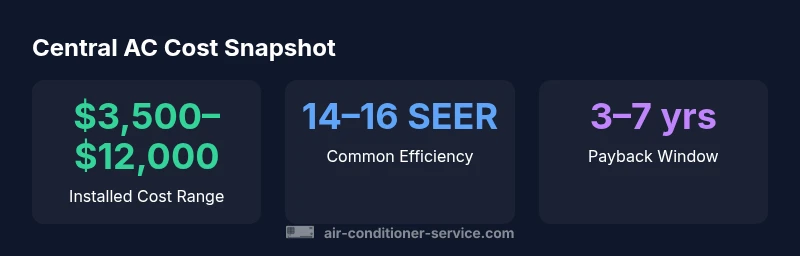
The cost to install a central air conditioner typically ranges from about $3,500 to $12,000, including equipment and professional installation. Higher-efficiency models, duct work upgrades, or complex installs push prices toward the upper end. Regional price differences, permits, and system size can further influence total cash outlay. According to Air Conditioner Service Analysis, 2026, homeowners should budget for both upfront costs and long-term operating expenses when planning.
What the cost covers
When planning a central air conditioning project, the total price isn’t just the equipment sticker price. The installed cost includes the outdoor condensing unit, indoor air handler, refrigerant lines, electrical work, and any required ductwork modifications. Permits and inspection fees, disposal of old equipment, and labor to install or rerun ducts can add significantly to the bottom line. The exact number depends on your home’s size, existing ductwork condition, and local labor rates. In practice, most homes see a broad range in total cost, reflecting differences in climate, insulation, and how much ductwork must be upgraded or replaced. Air Conditioner Service analysis indicates the primary price driver is system efficiency (SEER) paired with the scope of the installation. A basic setup often lands on the lower end of the range, while premium, high-efficiency configurations and substantial ductwork work push costs higher.
Cost ranges by efficiency and configuration
Efficiency and configuration play a pivotal role in price. A basic central air system with standard efficiency and a simple install may fall toward the lower portion of the cost spectrum. Higher-efficiency models (with greater SEER ratings) and multiple-speed or variable-speed systems command higher upfront prices but can reduce operating costs over time. Two-stage or variable-speed configurations typically cost more upfront but offer improved humidity control and comfort. The data suggests that the installed price gap between entry-level and premium configurations can be substantial, but energy savings over the life of the unit can narrow the difference for some homes. Lifestyle, climate, and electricity rates all interact to determine actual value.
Additional upfront and ongoing costs
Beyond the base equipment, several add-ons can raise the total outlay. Ductwork repairs, relocations, or upgrades to accommodate a larger system can add thousands. Upgrading electrical service or adding a new outdoor pad or sound attenuation features may add modest to significant costs. Don’t forget maintenance—annual coil cleaning, filter changes, and refrigerant checks are ongoing costs that affect long-term value. In many cases, a well-maintained high-efficiency system pays for itself over time through lower energy use and fewer costly repairs.
Installation timing, permits, and regional pricing differences
Install timing and regional factors matter. In some regions, permit fees are higher, and lead times for equipment can fluctuate seasonally, affecting both price and scheduling. Labor rates vary by region and contractor, which can tilt the total price by several hundred to several thousand dollars. If you live in an area with extreme summers, larger systems and more robust ductwork are common, driving up both equipment and installation costs. On the flip side, shoulder seasons can yield lower labor rates and faster scheduling.
Estimating your cooling needs and system size
A correctly sized system is essential to avoid overspending or underperforming. Oversized units cycle too often, wasting energy and reducing comfort; undersized units struggle during peak heat. Start with a professional load calculation (Manual J) and an assessment of insulation, window orientation, and shading. A properly sized system reduces energy bills and improves comfort, even if it means a higher upfront price. Prepare a short list of questions for your contractor about load calculations, duct design, and recommended SEER ratings.
Strategies to lower total cost without compromising comfort
Smart planning can reduce upfront costs without compromising performance. Compare multiple contractors to obtain several bids and check references. Ask about bundled services, financing options, and seasonal promotions. Consider a mid-range SEER rating that balances price and efficiency for your climate. If ductwork is old or damaged, replacing or rehabilitating ducts during the same visit can prevent expensive future repairs. Finally, explore rebates or tax incentives for energy-efficient upgrades, which can substantially offset the upfront investment.
Air Conditioner Service verdict and next steps
Choosing the right central AC system is about balancing upfront cost with long-term value. A well-planned purchase, installed by a qualified contractor, reduces energy waste and extends equipment life. The Air Conditioner Service team believes that the best approach is to size correctly, choose a reliable brand with solid warranty coverage, and factor in maintenance plans. With deliberate planning, homeowners can achieve reliable cooling at a manageable total cost.
Cost ranges by central AC configuration
| Configuration | Typical installed cost range | Notes |
|---|---|---|
| Central AC (single-stage) | $3,500–$7,000 | Standard efficiency, basic comfort |
| Central AC (two-stage) | $4,500–$9,000 | Better humidity control, improved comfort |
| Variable-speed central AC | $5,500–$12,000 | Premium efficiency and comfort |
| Ductwork improvements | $1,000–$6,000 | Essential if ducts are damaged or undersized |
Common Questions
What factors most influence the cost of a central air conditioner?
The largest cost drivers are the system’s efficiency (SEER rating), size relative to your home, ductwork condition, and installation complexity. Regional labor rates and permit fees also play a role. A thorough load calculation helps prevent oversizing and ensures you pay for the right capacity.
The main cost drivers are efficiency, system size, and ductwork needs. Regional labor rates and permits also affect price.
Is it cheaper to replace an old unit or repair it?
If the existing system is over a decade old or requires frequent repairs, replacement with a higher-efficiency model often yields better long-term savings. A professional cost-benefit analysis should compare ongoing repair costs against a new installation and anticipated energy savings.
Often, replacing an old unit with a newer, efficient model saves more money over time than frequent repairs.
How long does installation typically take?
Most central AC installations take 1–3 days, depending on ductwork, electrical upgrades, and permitting. Complications like damaged ducts or the need for a new electrical service can extend the timeline.
Most installs finish in 1 to 3 days, depending on the ductwork and electrical work required.
Will I have additional costs like permits or duct repairs?
Yes. Permits, duct repairs, and potential upgrades to electrical service or the outdoor unit foundation can add to the total. Getting a detailed, written scope from your contractor helps you anticipate these costs.
Permits and duct repairs can add to the price; get a written scope to plan ahead.
What maintenance costs should I budget annually?
Expect periodic professional checkups, refrigerant top-offs if needed, and filter changes. Annual maintenance typically costs a few hundred dollars, depending on the service plan and local rates.
Budget for annual tune-ups and occasional part checks; it helps prevent bigger problems later.
Are there tax credits or rebates for central AC?
Rebates and credits depend on local programs and available federal incentives. Check with local utility providers and government programs for current offerings and eligibility.
There can be rebates or credits; check local programs and federal incentives for current offers.
How should I estimate cooling needs before buying?
Ask for a professional Manual J load calculation that considers insulation, windows, climate, and occupancy. This ensures you size the system correctly for comfort and efficiency, avoiding oversize costs.
Get a proper load calculation to size the system correctly.
“In practice, total cost depends on components and installation complexity; plan for the full price including labor and permit fees.”
The Essentials
- Define your budget with upfront and long-term costs
- Choose efficient SEER ratings for long-term savings
- Expect ductwork to significantly affect total price
- Get multiple quotes and compare installation timelines
- Check for rebates and incentives