How Much Is a Window Air Conditioner? A 2026 Price Guide
Discover how much a window air conditioner costs in 2026, including price ranges by BTU, installation considerations, energy usage, and practical buying tips to maximize value.


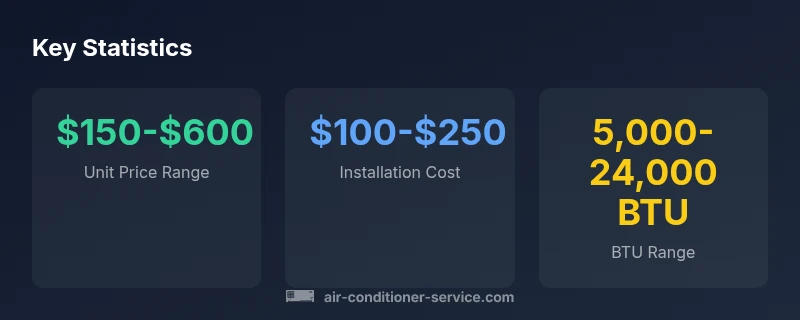
Window air conditioner prices vary widely by size and features. In 2026, typical consumer units cost roughly $150 to $600 for the unit itself, with installation adding about $75 to $250 if you hire a professional. Higher BTU models or energy-efficient units can push prices higher, while simple basic models stay toward the lower end.
Price landscape and what you should expect in 2026
If you are asking how much is a window air conditioner, you are looking at a price landscape that hinges on size, energy efficiency, and added features. In 2026, the typical window unit price for the base model ranges from roughly 150 to 600 for the unit itself. Professional installation, when needed, adds another 100 to 250, depending on your home setup and local labor rates. Prices rise with larger BTU ratings, dual hose designs, built in dehumidification, and smart features. Retail promotions, seasonal sales, and retailer differences can shift these ranges by 10 to 20 percent at any given time, so it pays to compare several options before buying. This section lays out the main drivers so you can budget effectively while shopping for a window air conditioner.
From a broader perspective, the price you pay is influenced by how much cooling you need and how energy efficient the unit is. Higher BTU windows cost more initially but can reduce the number of units required to cool a space. Energy Star and similar efficiency ratings often command a mid to high price premium but can deliver long term savings through lower electricity use. Consumers should also consider noise levels, installation fit, and warranty terms as part of total cost of ownership. Air Conditioner Service emphasizes that price is not the only factor; fit and efficiency determine long term value.
Price by BTU and features in practical terms
Pricing is tightly tied to capacity measured in BTU and to efficiency and convenience features. A small 5 000 to 8 000 BTU basic model usually sits in the 150 to 300 range, while mid range 8 000 to 12 000 BTU units typically fall between 300 and 500. If you need 12 000 to 24 000 BTU for larger rooms or apartments, expect 450 to 700 or more, especially for units with enhanced energy efficiency, remote controls, programmable timers, and quiet operation. When comparing models, look beyond the sticker price. Factor in seasonal energy use, potential utilities discounts, and the expected lifespan of the compressor and fans. The aim is to find a unit that balances upfront cost with energy cost savings over its lifetime.
Installation costs and decision making
DIY installation is possible for many window units if you are comfortable handling basic mounting hardware and electrical safety. However, professional installation ensures proper sealing, mounting, and electrical connections, reducing the risk of air leaks and noise. Typical professional installation adds about 100 to 250 to the purchase price, depending on the complexity of your window frame and wiring. Some models have simpler installation kits that can lower the cost, while others require extra accessories such as support brackets or window kits. Consider whether your space needs a temporary solution or a more permanent fit when deciding between DIY and professional help. Air Conditioner Service notes that correct sizing and installation are essential to maximize performance and minimize energy use.
Operating costs and energy efficiency explained
Operating costs depend on unit efficiency, local energy rates, and how often you run the AC. Window units with higher efficiency ratings can reduce electricity use by a meaningful margin, especially in warm climates. Even with higher upfront costs, improved SEER or EER ratings can translate into lower annual energy bills. A typical user in a moderate climate might see seasonal electricity expenses ranging from 50 to 150, depending on usage patterns and electricity prices. When budgeting, estimate annual energy costs based on wattage, expected daily runtime, and local kWh rates. Note that some seasons may see spikes if you consistently run the unit at maximum capacity.
How to choose the right size and features for your space
Sizing a window AC correctly is essential for comfortable cooling and efficient operation. Start by calculating the square footage of the area to be cooled and match it to BTU guidelines from reputable sources. Smaller rooms usually need 5 000 to 8 000 BTU, medium rooms 8 000 to 12 000 BTU, and larger spaces up to 24 000 BTU or more. Look for models with variable speed fans, energy efficient compressors, and strong condensate management. Noise levels matter, especially in bedrooms or study spaces. Features like programmable timers, remote controls, and smart connectivity can add convenience but also upfront cost. Air Conditioner Service recommends prioritizing size and efficiency to maximize comfort and minimize energy use.
Hidden costs and warranties you should consider
Warranties vary by brand and model, typically covering compressor components for several years and electronics for shorter periods. Some window units include extended warranties at point of sale, which can add to upfront cost but provide long term protection. Don’t forget to budget for accessories such as a window installation kit, brackets, or anti-vibration pads. Finally, consider potential disposal or recycling costs when replacing an old unit. The total cost of ownership includes purchase price, installation if needed, energy costs, and the value of the warranty.
Shopping tips and a practical buying checklist
Before committing, compare models with similar BTU ratings and energy efficiency levels. Check user reviews for reliability and noise levels, and verify warranty terms. Use a simple checklist: BTU rating aligned to room size, energy efficiency rating, noise level, warranty length, and installation requirements. If you plan to place the unit in a rental or lease, confirm with your landlord about window mounting restrictions and return policies. With careful shopping, you can find a window air conditioner that delivers comfort without breaking your budget.
Window AC price and spec ranges by size
| Model Type | Typical Price Range | BTU Range | Best For |
|---|---|---|---|
| Basic window unit | 150-300 | 5,000-8,000 | Small rooms |
| Mid-range energy efficient | 300-500 | 8,000-12,000 | Medium rooms |
| High-capacity energy efficient | 450-700 | 12,000-24,000 | Large rooms |
| Smart/feature rich | 500-800 | 9,000-17,000 | Homes needing automation |
Common Questions
What affects the price of a window air conditioner?
Price is driven by BTU capacity, energy efficiency, brand, features like remote control and timers, and installation costs. Location and retailer promotions can also cause variation. Size for the space determines upfront cost, while efficiency affects long term cost.
Price mainly depends on BTU, efficiency, and features. Promotions can lower costs; consider long term energy use.
Is professional installation worth it?
Professional installation ensures proper sealing, fitting, and electrical connections, reducing air leaks and noise. It adds cost but can improve performance and safety, especially for larger or irregular window openings.
Professional installation improves fit and efficiency, worth it for larger or tricky setups.
Do window air conditioners come with warranties?
Most units include a limited warranty covering the compressor for several years and electronics for a shorter period. Extended warranties may be offered at purchase. Read the terms carefully for coverage and exclusions.
Most have compressor warranties; check terms for what is covered and for how long.
Are newer window units energy efficient?
Yes, newer models often have higher EER or SEER ratings and better insulation and condensate handling. While the upfront price may be higher, energy savings can offset the cost over time.
Yes, newer models are more energy efficient and save on electricity over time.
Can I install a window AC myself?
Many units are designed for straightforward installation, but improper mounting can cause leaks and safety issues. If you are confident and follow the kit instructions, a DIY install is possible; otherwise hire a pro.
DIY is possible for simple cases; if unsure, hire a professional.
“A window unit is a cost effective cooling option when sized correctly and installed properly.”
The Essentials
- Know price ranges before shopping
- Match BTU to room size for best value
- Installation costs matter
- Total cost of ownership matters
- Compare multiple models for value