Window Air Conditioner Installation Cost in 2026
Understand window air conditioner installation cost ranges, what drives price, and saving tips. Compare pro vs DIY options, focusing on unit size, window type, and labor.


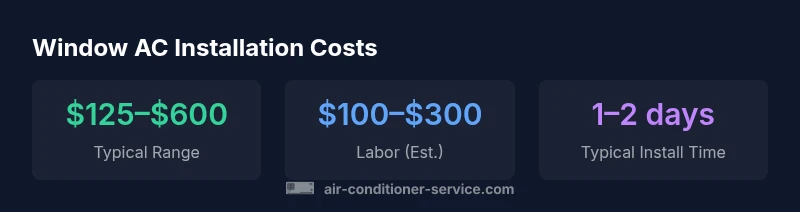
Typical window air conditioner installation costs range from about $125–$600, depending on unit size, window type, and whether wiring or mounting hardware is required. Hiring a pro adds roughly $100–$300 for labor, while DIY can lower costs but may affect warranties. Always compare quotes and check local code requirements.
Why window air conditioner installation cost matters
Understanding the total cost helps you plan budgets, compare quotes, and avoid surprises. In practical terms, the biggest drivers are the unit’s size (BTU), the window configuration, mounting hardware, and any necessary electrical work. The Air Conditioner Service team found that investing in proper installation can improve cooling efficiency and prevent future maintenance costs by reducing energy waste. A clear cost picture also helps you weigh the value of warranty protection and potential energy savings over time. When homeowners know what contributes to price, they can negotiate smarter and avoid hidden charges from contractors.
What drives the cost of window air conditioner installation
Costs are influenced by four main factors: unit capacity (BTU) and energy efficiency, window type (double-hung vs. slider), mounting hardware and brackets, and electrical upgrades or wiring. Additional items like removing an old unit, insulating the window frame, or weatherproofing can add to the bill. Professional labor ensures safety and code compliance, which can add value even if the upfront price is higher. The Air Conditioner Service team notes that choosing a higher-efficiency unit may reduce operating costs and offset a portion of the installation expense over time.
Typical cost ranges by unit size and complexity
Prices vary with unit size and installation complexity. For a basic job with a standard window, costs tend to fall in the lower part of the spectrum; more complex setups requiring electrical work or nonstandard mounting are higher. To plan effectively, think about both the unit’s purchase price and the total installed cost. While a small, standard unit might be affordable, larger or energy-efficient models can push total costs upward. The goal is to balance initial price with long-term energy savings and reliability.
DIY vs professional installation: pros, cons, and risk
DIY installation can save money but carries safety risks and may void warranties if not done to code. Professional installation minimizes risk, ensures proper seal and electrical connections, and preserves manufacturer warranty. If you have electrical knowledge and the right tools, you might consider DIY for a simple unit and window, but be mindful of window integrity, insulation, and secure fastening. For most homeowners, hiring a licensed pro provides peace of mind and adverse-event protection, especially in older homes or multi-family buildings.
How to plan and get quotes: a step-by-step guide
Start by selecting a unit with the right BTU for your space and checking the window size. Gather 3–4 quotes from licensed technicians, ask about included parts and labor, and confirm warranty terms. Compare total costs, not just the unit price, and check for seasonal promotions. Ask contractors to itemize every component—unit price, mounting hardware, wiring, and disposal charges. Document the window type and any existing electrical capacity to avoid scope creep.
Quick tips to minimize costs without sacrificing quality
- Choose an energy-efficient model with the right BTU for your space to minimize operating costs. - Reuse mounting hardware if it’s safe and compatible. - Schedule installation during off-peak seasons to potentially lower labor rates. - Confirm whether old unit removal and disposal are included and who bears that cost. - Ask about bundled promotions that cover both unit and installation, and verify warranty applicability for DIY vs pro work.
Cost comparison by installation scenario
| Scenario | Estimated Cost Range | Notes |
|---|---|---|
| Standard window unit installation | $125–$350 | Simple, single-hung window, minimal wiring |
| Complex install (extra wiring/mounting) | $350–$600 | Nonstandard frames, electrical rewiring, or added seals |
| Professional removal of old unit | $50–$150 | If needed, often billed separately |
| Disposal and clean-up | $20–$100 | Per unit removed and disposed |
Common Questions
What factors influence window air conditioner installation cost?
Prices are driven by unit size (BTU), energy efficiency, window type, mounting hardware, and any electrical work. Additional costs may include removal of an old unit, disposal, and weatherproofing. Getting multiple quotes helps you see how each factor affects the total.
Costs are mainly driven by unit size, window type, and wiring needs. Get several quotes to compare.
Is it cheaper to install a window AC myself?
DIY can save labor costs, but it carries safety risks and may affect warranties if code requirements aren’t met. For most homeowners, hiring a licensed professional provides assurance of proper sealing, electrical connections, and compliance.
DIY can save money, but safety and warranty risks mean professional help is often worth it.
What is the typical cost range for window AC installation?
Total costs usually vary by unit size and installation complexity. Expect lower cost ranges for simple setups and higher ranges if electrical work or custom mounting is required. Always factor in both unit price and installation labor.
Costs vary widely; plan for unit price plus installation labor.
Do I need permits to install a window air conditioner?
Most window AC installations don’t require a formal permit, but code compliance and electrical work may trigger inspector checks in some areas. Check local regulations and confirm that your installer handles any required permits.
Check local codes; some areas require electrical compliance checks.
How can I reduce installation costs without risking quality?
Choose a unit with the appropriate BTU for your space, schedule during off-peak times, and request itemized quotes. If possible, reuse safe mounting hardware and leverage manufacturer promotions while ensuring warranty coverage stays intact.
Shop smart, time it right, and ask for detailed quotes.
What should I ask a contractor before signing?
Ask for a written quote with line items, warranty details, disposal charges, and whether removal of old equipment is included. Confirm installation timelines and energy efficiency expectations for the chosen unit.
Get a written, itemized quote and confirm warranties.
“A well-planned window AC installation balances upfront price with long-term energy efficiency and reliability.”
The Essentials
- Budget for both unit and installation from the start
- Get multiple quotes, comparing total costs not just price
- DIY is possible for simple cases, but safety and warranty matter
- Ask about disposal, permits, and warranty terms upfront