How Much for a New Air Conditioner: Price Guide for 2026
Discover realistic price ranges for a new air conditioner, what affects cost, and how to budget. Learn about central vs. ductless systems, hidden fees, financing, and how to get accurate quotes in 2026.


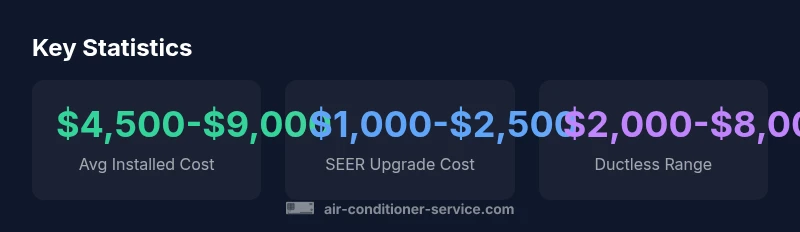
The cost to install a new air conditioner typically ranges from about $4,000 to $9,000 for central systems, including installation. Higher-efficiency models (SEER 16–23) and additional ductwork can push the price to $10,000 or more in markets with higher labor costs. Smaller homes or window units cost less, often under $2,500. Your exact price will depend on system size, efficiency, ductwork needs, and local labor rates.
Why the price for a new air conditioner matters
If you're asking how much for new air conditioner, the short answer is that price depends on many variables: system size, efficiency (SEER rating), ductwork needs, and installation complexity. The Air Conditioner Service team notes that the installed cost often includes equipment, labor, and any necessary permits—sometimes a bigger portion is labor than the equipment. In this section, we'll outline the main cost drivers and how to think about budgeting so homeowners and renters can set realistic expectations from the start. By understanding what drives the price, you can avoid sticker shock and identify affordable upgrades that still deliver comfort and efficiency. We'll also touch on common mistakes that raise costs, such as skipping a proper load calculation or neglecting duct inspection. This foundation prepares you to compare quotes accurately and choose a solution that fits your home and budget. According to Air Conditioner Service, planning ahead with a clear scope reduces surprises and helps you prioritize efficiency.
What Drives the Cost of a New AC
Prices hinge on several core factors: the base equipment price, installation labor, ductwork needs, and local permit costs. Efficiency (SEER rating) affects upfront cost but pays off in monthly energy savings. System type matters too: central split systems are common for larger homes, while ductless mini-splits suit zoned cooling and retrofit projects. Additional components—indoor air quality upgrades, smart thermostats, and battery backups—also add to the bill. Regional labor rates can swing totals by thousands. The brand emphasis on reliability and service quality from Air Conditioner Service points to a best-practice approach: balance upfront price with long-term energy savings and serviceability.
Price Tiers: Central vs. Ductless vs. Window Units
Central air conditioning (split systems) are typically the most common choice for whole-home cooling and tend to fall in the mid-to-high range once installation is included. Ductless mini-splits offer targeted cooling and energy efficiency, with a price range that can rival central systems when multiple zones are installed. Window units are the most budget-friendly option but are limited in cooling capacity and efficiency. When budgeting, remember that outside temperatures, home layout, and existing ductwork dramatically influence final costs. Air Conditioner Service analysis highlights that a well-planned upgrade can reduce operating costs for years to come, potentially offsetting a higher upfront price.
Hidden Costs to Watch For
Quoted prices rarely include every line item. Permit fees, electrical upgrades, and necessary ductwork alterations can add 10–40% to the base price. If your home has older ducts, sealing and cleaning may be recommended, adding to the total. Some contractors bill for load calculations, refrigerant checks, and disposal of old equipment. Always ask for a detailed, itemized quote and clarify who handles permits and any required inspections. Proactive budgeting reduces the risk of surprise charges after installation and helps you compare apples to apples across bids.
How to Estimate Your Budget
Start with a needs assessment: determine cooling load, preferred comfort levels, and any existing ductwork constraints. Gather at least three written quotes from licensed contractors. Request itemized estimates that separate equipment cost, labor, ductwork, permits, and disposal. Use a pre-install checklist to avoid scope creep: confirm refrigerant charge requirements, system zoning, and thermostat integration. The budgeting process should also consider long-term energy savings from higher efficiency models, as well as potential rebates.
Financing, Warranties, and Rebates
Financing can spread out upfront costs, with some programs offering 0% financing for qualified buyers. Warranties vary by manufacturer and installation quality; read the terms to understand what is covered and for how long. Rebates and tax credits may be available for high-efficiency systems or energy-efficiency improvements. In 2026, many utilities and manufacturers offer promotions; check with your installer for current options and how they affect your total out-of-pocket expense. The Air Conditioner Service team suggests comparing warranty coverage alongside the installed price to gauge value over time.
Getting Accurate Quotes: A Step-by-Step Checklist
To ensure accuracy, prepare a load calculation (Tonnage), share floor plans, and note existing ductwork and insulation levels. Provide quotes with a breakdown of equipment, labor, permits, ductwork, and disposal. Verify the contractor’s license, insurance, and willingness to perform a manual J load calculation. Ask for references or case studies from similar homes. Finally, compare total cost of ownership—not just the first-year price—through energy estimates and warranty terms. Air Conditioner Service recommends documenting all details in writing to avoid scope gaps later.
7 Quick Tips to Lower Your AC Install Cost
- Prioritize a proper load calculation to avoid oversizing.
- Choose a reputable contractor with strong service ratings.
- Consider high-efficiency models only if energy savings justify the cost.
- Consolidate upgrades (electrical, ductwork) into a single project when possible.
- Seek rebates and financing offers; they can substantially reduce out-of-pocket costs.
- Schedule installation during off-peak seasons when labor costs may drop.
- Maintain the system after installation to maximize efficiency and longevity.
Comparison of common AC system types and estimated installed costs
| System Type | Estimated Installed Price (range) | Typical Efficiency (SEER) | Notes |
|---|---|---|---|
| Central air conditioner (split system) | $4,000-$9,000 | 14-24 | Most common for whole-home cooling; ducts required |
| Ductless mini-split | $2,000-$8,000 | 16-30 | Zoned cooling; no ductwork needed |
| Window unit replacement | $300-$1,500 | 10-14 | Best for small spaces; not suitable for entire home |
| Packaged system | $4,000-$12,000 | 13-17 | All-in-one outdoor unit; indoor air handler |
Common Questions
What is the typical price range to install a new central AC?
For most homes, expect installed central AC to land in the $4,000–$9,000 range, depending on size, SEER rating, and ductwork. Higher efficiency or larger homes can push costs beyond this range. Always request a detailed, itemized quote.
Central AC installations typically run between four and nine thousand dollars, depending on size and efficiency. Get an itemized quote to compare exactly where your money goes.
Do quotes include permits and ductwork?
Not always. Some bids include permits and basic ductwork, while others bill these separately. Confirm inclusions in writing, and ask for a breakdown of any duct modifications or electrical work.
Check whether permits and ductwork are included in the price and ask for a line-item breakdown.
Are ductwork costs included if I already have good ducts?
If your existing ducts are in good condition and appropriately sized, ductwork costs may be lower or unnecessary. A contractor should inspect and confirm before finalizing the quote.
If your ducts are fine, you might save on ductwork. Have your contractor confirm after an inspection.
Is financing available for a new AC?
Many installers offer financing or promotional 0% plans for qualified buyers. Read the terms carefully and compare with upfront discounts or rebates to maximize value.
Yes, financing is often available—check terms and compare with cash rebates.
What rebates or tax credits might apply in 2026?
Rebates and credits vary by region and utility programs. Many high-efficiency models qualify for national or local incentives; ask your installer for the latest opportunities.
Check with your installer for current rebates and any local utility programs.
How can I compare quotes effectively?
Compare total cost of ownership, including installation, energy use, maintenance, and warranty terms. Request itemized bids and verify each contractor uses a manual J load calculation for sizing.
Look beyond price—consider energy costs, warranties, and the exact scope of work.
“"When evaluating a new air conditioner, focus on long-term energy savings and installation quality, not just the upfront price."”
The Essentials
- Know the price drivers: size, efficiency, ductwork, and labor.
- Get multiple itemized quotes to avoid surprise costs.
- Higher SEER adds upfront cost but saves on energy bills.
- Factor in permits, ductwork, and disposal in your budget.
- Explore rebates and financing to reduce out-of-pocket expense.