Cost to Replace AC Unit: A Practical Guide for 2026
Learn the cost to replace ac unit with practical breakdowns, price ranges, financing options, and tips to save. This guide helps homeowners compare quotes and plan for 2026 costs when upgrading central AC, heat pumps, or ductless systems.


The cost to replace an AC unit typically ranges from $3,500 to $8,000 for a standard split-system installation, including the new condenser, evaporator, and labor. Factors like unit size (tonnage), SEER rating, brand, and existing ductwork influence the final price. In some cases, permits, electrical upgrades, or removal of old equipment add to the total.
What determines the cost to replace ac unit
The cost to replace ac unit is not a single number—it depends on several interrelated factors. According to Air Conditioner Service, the most significant drivers are the system type (central split, ductless/multi-split, or heat pump), the required cooling capacity (tonnage) and efficiency (SEER rating), installation complexity, ductwork, and any electrical or permit requirements. Regional labor rates, contractor experience, and disposal fees also influence the final price. Understanding these variables helps homeowners avoid sticker-shock and make informed decisions. Beyond the hardware, recognizing regional differences in taxes, permit costs, and disposal fees can prevent unexpected add-ons when the project is underway.
Cost components you should expect
A realistic project budget breaks the price into components you can compare across contractors. The outdoor condenser or heat pump unit is a major chunk, followed by the indoor air handler or evaporator, refrigerant and line sets, and installation labor. You’ll also see charges for electrical work, duct modifications, controls, and thermostat wiring. Permits, disposal of the old equipment, and any necessary upgrades to electrical panels or wiring can add to the overall cost. Air Conditioner Service notes that the presence of extensive ductwork and the need for attic access can substantially affect labor time and, therefore, cost.
How quotes are typically structured
Contractors often provide a price that includes equipment, labor, and basic materials, with separate line items for permits, disposal, and potential add-ons. It’s common for quotes to list a baseline for the equipment plus a contingency (for changes in duct size or refrigerant type). A thorough quote should specify the SEER rating, the exact model(s) proposed, and the number of outdoor units or indoor heads. When shopping, ask for a written breakdown and request options for different SEER tiers to understand trade-offs between upfront cost and ongoing energy savings.
Estimating your project: practical steps
Start by confirming your current system size and type, then gather at least three written quotes from licensed installers. Ask each contractor to size the system using a Manual J calculation or equivalent; avoid ballpark guesses. Compare not only the total price but also inclusions: outdoor unit, indoor air handler, ductwork adjustments, warranties, and post-installation testing. Request a cost-estimate timeline and a clear payment schedule. To improve accuracy, provide the same scope to each bid (same equipment choices, same labor scope) so you’re comparing apples to apples.
Financing and long-term value
If upfront cost is a concern, explore financing options offered by installers or third-party lenders. Look for rebates, utility incentives, and tax credits applicable to high-efficiency models. While a premium unit may cost more upfront, higher SEER ratings can reduce annual utility bills, sometimes resulting in a favorable payback period over the life of the system. Air Conditioner Service also emphasizes evaluating the long-term value: energy savings, quieter operation, and reliability should factor into your decision alongside the sticker price.
Hidden costs and common pitfalls
Be aware of potential hidden costs that can surprise buyers. Ductwork modifications, upgrades to electrical panels, or replacements of old refrigerant lines may be necessary for a safe, up-to-code installation. Permits and disposal fees vary by municipality, and some contractors bill separately for removal of the old unit. Avoid accepting a low bid that uses inferior parts or excludes essential items like a proper refrigerant charge check, system startup, or a comprehensive warranty. Air Conditioner Service highlights the importance of a transparent, itemized proposal to prevent cost creep.
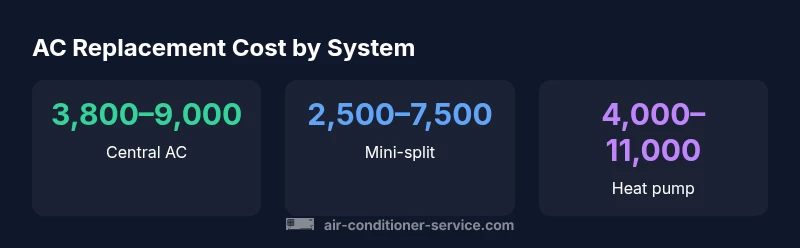
Replacement costs by system type with notes
| System Type | Estimated Cost Range | Notes |
|---|---|---|
| Central AC (split-system) | $3,800–$9,000 | Outdoor condenser + indoor air handler |
| Ductless mini-split | $2,500–$7,500 | No ductwork or multi-head setup |
| Heat pump (air-source) | $4,000–$11,000 | Cooling + heating; higher upfront cost |
| High-efficiency SEER upgrades | $6,000–$14,000 | Best long-term energy savings |
Common Questions
What factors most influence the cost to replace an AC unit?
The biggest factors are system type, cooling capacity (tonnage), SEER rating, installation complexity, ductwork needs, and any electrical or permitting requirements. Regional labor rates and disposal fees also affect the total price.
The main drivers are the type of system, size, efficiency, and how complex the install is. Regional labor and disposal fees also matter.
Is it cheaper to repair or replace an old AC unit?
Repairing an old unit can be cost-effective for minor issues, but persistent problems or low efficiency may justify replacement. When decisions hinge on energy bills, a newer high-efficiency model often pays off over time.
If repairs keep costing more than a new system’s energy savings over a few years, replacement is usually wiser.
Do rebates or financing affect the total cost?
Yes. Rebates, tax credits, and financing can lower upfront costs or improve long-term value. Always confirm current incentives before finalizing a quote.
You can often reduce upfront costs with rebates and financing, plus energy savings over time.
Are permits required for replacement?
Many replacements require permits to ensure electrical and refrigerant work meets code. Your installer should handle permit applications and inspections as part of the project.
Permits are common; your installer usually arranges them and arranges inspections.
How should I compare quotes effectively?
Ask for a detailed line-item breakdown, warranty terms, and exact equipment models. Ensure the bid covers removal of old equipment, disposal, and startup checks.
Get itemized quotes with clear warranties and startup checks so you’re comparing apples to apples.
“Replacing an AC unit is a long-term investment, not just a one-time purchase. Plan for upfront costs and future energy savings to maximize value.”
The Essentials
- Know the main cost drivers before shopping
- Get written quotes with line-item detail
- Factor long-term energy savings into decisions
- Expect some extra costs for permits and ductwork
- Compare multiple contractors to protect value