Price for a Central Air Conditioner: What to Expect in 2026
Understand the price for a central air conditioner, including equipment costs, installation labor, rebates, and regional factors. This guide helps homeowners compare quotes, budget accurately, and avoid common hidden fees.


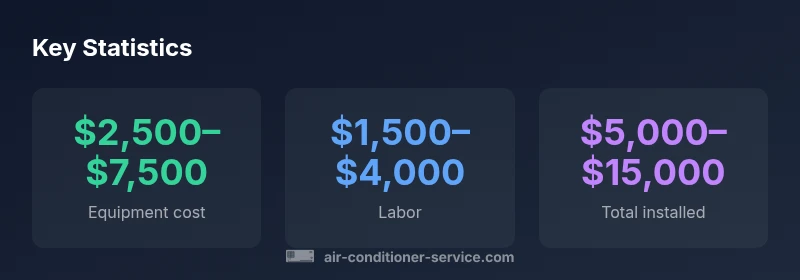
The price for a central air conditioner varies widely by system size, efficiency, and installation. On average, homeowners should expect to pay for both equipment and labor, with total installed costs typically ranging from roughly $5,000 to $15,000, depending on climate, ductwork, and rebates. Shopping around, requesting multiple quotes, and financing options can help you compare apples to apples. For a precise estimate, obtain a written quote that itemizes equipment, labor, and permits.
Market overview and price formation
According to Air Conditioner Service, the price for a central air conditioner is influenced by multiple variables that work in tandem to determine the final bill. System size, efficiency (SEER rating), ductwork condition, climate, and local labor rates all play pivotal roles. In practice, you aren’t buying a single component; you’re budgeting for equipment, installation, and ancillary costs like permits and potential electrical upgrades. Homeowners should expect that the same model can carry different total price tags depending on where they live and how well the existing ductwork integrates with the new system. When evaluating options, focus on the total installed price rather than the unit price alone to capture the full value you receive over time.
Understanding these dynamics helps you build a realistic budget and avoid sticker shock when quotes arrive. Many buyers don’t realize that even a high-efficiency unit can be cost-effective if installed with proper duct sealing and optimization. Conversely, neglecting ductwork or failing to address electrical requirements can erase savings from a more efficient compressor. The goal is to balance upfront investment with long-term energy savings and comfort levels in your home.
Equipment price components
Central air conditioner pricing breaks down into several core components. The outdoor condenser unit, the indoor air handler, and the evaporator coil comprise the heart of the system. Add-ons like a new thermostat, zoning controls, and advanced filtration can raise the price but often improve comfort and efficiency. In most markets, a typical equipment price range for a complete central system falls between $2,500 and $7,500, depending on efficiency (SEER), brand, and whether the system includes upgraded refrigerants or smart features. Installation or delivery fees are not included in this equipment range and can add substantially to the total.
Choosing a higher SEER rating generally increases upfront costs but offers lower operating costs over time. If your home requires additional components, such as a new air filtration system, dehumidification, or a de-icing kit for cold climates, include those in the equipment portion of your quote. Remember that some manufacturers require specific indoor units to pair with the outdoor compressor, so ensure compatibility when comparing options.
Installation, labor, and permit costs
Labor often represents a sizable portion of the total price. Installation costs cover equipment placement, refrigerant charging, ductwork adjustments, sealant and insulation, and electrical work. Removing an old system, upgrading electrical panels, or repairing damaged ductwork can add to labor time and cost. Permits and safety inspections mandated by local authorities also factor into the bottom line. In many regions, installation labor ranges from $1,500 to $4,000, with duct improvements and electrical upgrades pushing costs higher in older homes. Getting a clearly itemized quote helps you see how much is allocated to every task and where you might negotiate.
If your ducts are leaky or poorly sized, sealing and rebalancing can dramatically improve system performance and comfort, often a cost-effective improvement compared to replacing equipment alone. Ask your contractor for a detailed scope of work and a rough timeline so you understand how the installation will unfold and what shutdown you should expect.
Regional differences, rebates, and financing options
Prices vary by region due to climate, demand, and availability of skilled labor. Hotter regions tend to drive higher equipment costs because larger or more efficient systems are necessary to achieve comfort, while colder areas may see different pricing pressures. Rebates and tax credits can substantially offset upfront costs; these incentives depend on your location and the system’s efficiency. Financing options, including zero- or low-interest plans, can make larger upgrades more affordable by spreading the cost over time. Air Conditioner Service recommends checking both manufacturer rebates and local utility programs before finalizing a quote.
Be wary of aggressive “discounts” that exclude essential components or come with restrictive warranty terms. Always verify the total installed price and confirm what is included in the quote, such as duct sealing, thermostat integration, and warranty coverage. A well-structured plan that leverages rebates and financing, while ensuring high-quality installation, often yields the best long-term value.
How to estimate, compare quotes, and avoid common pitfalls
To estimate accurately, start by calculating your home’s cooling load and selecting a realistic SEER target based on comfort needs and energy goals. When you receive quotes, insist on itemized breakdowns that separate equipment, installation, ductwork, permits, and any add-ons. Compare apples to apples by ensuring quotes include the same SEER rating, same system type, and similar ductwork conditions. Check warranties on both equipment and labor; a longer labor warranty can save money on future service.
Shop around, but don’t rely on price alone. A lower quote may reflect lower-quality parts, shorter labor warranties, or hidden fees. Request references and read online reviews for the installer. If you proceed with financing, compare interest rates, terms, and any promotional offers. Finally, plan for a post-installation energy audit or efficiency tune-up to maximize performance and minimize annual operating costs over the system’s life.
Budgeting a realistic scenario: two sample budgets for different homes
Scenario A: A medium-sized, single-story home in a temperate climate with functional ducts. Equipment cost might fall in the $3,000–$6,000 range, with installation at $1,800–$3,000. Total installed price could land around $5,000–$9,000, assuming standard ductwork and no major electrical upgrades. Rebates and promotions could further reduce the net outlay, bringing the effective cost lower for qualified homes.
Scenario B: A larger home in a hot climate with aging ductwork and a need for duct resealing. Equipment may cost $5,000–$9,000, installation $2,500–$5,000, and ductwork upgrades could push total to $9,000–$15,000 or more. In this case, the emphasis on high SEER and enhanced filtration could yield long-term energy savings that offset the higher upfront investment, especially when rebates are applied.
In both scenarios, a professional inspection and an itemized written quote are essential. Factor in yearly maintenance costs and potential service plans to protect the investment and ensure peak performance across many years.
Cost components and installed price ranges for central AC installations
| Item | Low range | High range | Notes |
|---|---|---|---|
| Equipment cost (central AC unit) | "$2,500" | "$7,500" | Condenser, coil, and indoor unit, varies with SEER |
| Installation labor | "$1,500" | "$4,000" | Includes refrigerant charge and basic duct sealing |
| Total installed price | "$5,000" | "$15,000" | Equipment + labor + permits + basic upgrades |
| Region and incentives | "N/A" | "N/A" | Prices vary; rebates can reduce net cost |
Common Questions
What affects the price for a central air conditioner?
Price is driven by system size, efficiency (SEER), ductwork condition, climate, and labor rates. Upgrades such as better filtration, zoning, and smart thermostats add to the cost but can improve comfort and efficiency. Always compare total installed costs.
Price depends on size, efficiency, ductwork, and labor. Upgrades add value but cost more upfront.
Is it cheaper to replace the whole system or just parts?
In most cases, replacing the entire system provides better long-term performance and system compatibility, especially when ducts and controls are aging. A partial replacement may save upfront cost but can lead to higher maintenance and energy bills later.
Usually, replacing the whole system saves more in the long run.
Are rebates and financing common for central AC installations?
Yes, many utilities and manufacturers offer rebates, and financing options are commonly available. Rebates reduce upfront cost, while financing can spread payments over time. Check eligibility and terms before committing.
Rebates can cut your upfront cost; financing can spread the cost.
Should I expect extra charges for ductwork or permits?
Ductwork improvements and permits are common extra charges. If your ducts are leaky or poorly sized, sealing and upgrading them can improve efficiency and comfort, sometimes offsetting higher equipment costs.
Duct work and permits are normal; ask for a clear breakdown.
What’s a realistic budget range for a central AC install?
A realistic total installed budget typically ranges from about $5,000 to $15,000, depending on system size, efficiency, and house condition. Getting multiple itemized quotes helps refine the number for your home.
Most homes fall between $5,000 and $15,000 installed.
How long does installation usually take?
Most standard installations take from one to three days, depending on ductwork, electrical upgrades, and any needed home preparations. A detailed schedule helps minimize disruption.
Installation days vary; plan for 1–3 days depending on the job.
“Understanding the total installed cost helps homeowners avoid sticker shock and ensures the chosen system fits long-term energy goals.”
The Essentials
- Budget for total installed cost, not just equipment
- Ask for itemized quotes and compare apples to apples
- Check rebates and financing before deciding
- Invest in duct sealing and proper sizing for best value