Central Air Conditioner Installation Cost: What to Expect in 2026
Get a data-driven breakdown of central air conditioner installation cost, including typical ranges, cost drivers, and budgeting tips from Air Conditioner Service.


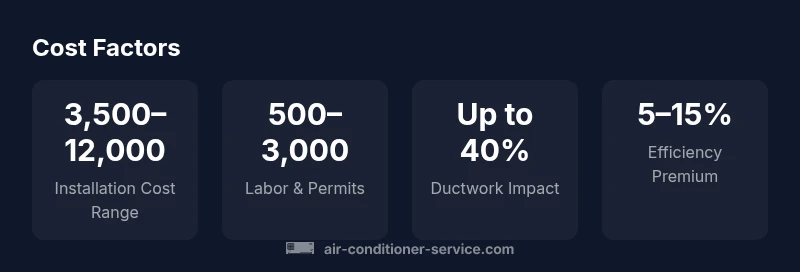
Typical central air conditioner installation costs range from about $3,500 to $12,000, influenced by system size, ductwork condition, energy efficiency, and labor. Complex installs, old ducts, or high-efficiency models push prices higher, while simpler retrofits with existing ducts may land on the lower end. This guide explains cost drivers and budgeting tips.
What drives the cost of central air conditioner installation
Understanding the central air conditioner installation cost starts with recognizing the main drivers: equipment choice, ductwork, installation labor, permits, and existing home infrastructure. According to Air Conditioner Service, the most influential variables are system size and energy efficiency: larger units and premium SEER ratings dramatically affect upfront price. Ductwork plays a pivotal role in many homes, especially if existing ducts require repair, sealing, or repurposing for zoning. Labor rates vary by region and contractor, and permit fees can add several hundred dollars to the bill. In older homes, electricians may need to upgrade circuits or add dedicated breakers, further elevating costs. On the upside, high-efficiency models deliver lower operating costs and potential rebates, offsetting part of the upfront investment over time. For homeowners planning ahead, a careful cost assessment should weigh local labor markets, duct condition, and future energy savings. This section breaks down each driver with practical examples and budgeting ranges.
Typical cost ranges: equipment, labor, and extras
Most installations fall into a broad spectrum, reflecting choices and conditions. A common central air conditioner installation cost can be broken down into three major components: the equipment itself, labor and permits, and incidental extras. Equipment prices vary by size, efficiency, and technology (single-stage, multi-stage, or variable-speed compressors). Labor includes mounting, refrigerant piping, indoor air handler connection, and any ductwork modifications. Permits and inspections are jurisdiction-dependent and can add hundreds to a few thousand dollars. Extras such as new thermostats, zoning systems, or refrigerant line insulation add to the total. Because every home is different, the final number can swing widely, from more modest retrofits to full system replacements with ductwork overhaul. When budgeting, plan for both baseline equipment costs and contingencies for unanticipated work that may arise during installation.
How ductwork and home layout shape pricing
If your home already has a well-sealed, adequately sized duct system, costs can stay near the lower end of the range. But many houses require duct cleaning, sealing, or even full duct replacement to ensure optimal performance. Length and routing of refrigerant lines also influence price—longer runs require more materials and labor. Attics, crawl spaces, and multi-story layouts pose access challenges that increase labor time. In some cases, existing electrical panels must be expanded or reinforced to support the new system. In rural areas, travel time and regional demand can push prices higher; in urban markets, permit and code compliance costs may also rise. The takeaway: minimize surprises by getting a detailed scope of work and asking the installer to itemize ductwork, line sets, and any required electrical upgrades.
Unit choice and efficiency: SEER ratings and long-term savings
The upfront price is only part of the story. Higher SEER ratings offer greater energy efficiency and can reduce monthly utility bills, sometimes offsetting the initial premium over several years. The central air conditioner installation cost increases with efficiency because of better compressors, advanced controls, and higher-quality refrigerant lines. Consider your climate, usage patterns, and expected occupancy to determine whether a 2- or 3-stage system or a variable-speed model makes sense. For homeowners who plan to stay in their home for many years, the long-term operating savings can be meaningful even if the initial outlay is larger. Balance the upfront cost with potential rebates, tax incentives, and reduced energy consumption, and compare with your current energy bills to estimate payback. Air Conditioner Service recommends modeling several scenarios to choose the best long-term value.
When you need permits, inspections, and electrical upgrades
Many installations require local permits and inspections to meet safety and building codes. Some jurisdictions charge permit fees, which must be included in the central air conditioner installation cost calculation. Electrical upgrades may be necessary if your existing panel cannot handle the new load, or if a dedicated circuit is required for the outdoor condenser. These factors can add hundreds to thousands of dollars to the bill and sometimes require a licensed electrician. If your home lacks adequate space for the outdoor unit or if ductwork runs through inaccessible areas, access-related labor costs can creep up. Budget for these potential items and ask the installer to provide a line-item estimate so you can review exactly what is covered.
How to estimate costs for your home: a practical step-by-step guide
A practical estimate starts with a home assessment. Step 1: define your cooling needs by calculating square footage, ceiling height, and insulation. Step 2: decide on efficiency goals (SEER rating) and desired features (smart thermostats, zoning). Step 3: obtain at least three written quotes with itemized line items. Step 4: ask for an on-site duct inspection and a separate duct sealing/repair estimate if needed. Step 5: review permits, electrical requirements, and potential rebates. Step 6: factor financing options, warranties, and maintenance plans. Finally, compare the total installed cost and the long-term energy savings to determine the best value. Air Conditioner Service suggests documenting all assumptions and requesting clear scope definitions from each contractor.
Getting accurate quotes: questions to ask installers
- Is the quote for a full replacement including ductwork, or only the outdoor unit?
- What SEER rating is included, and what is the expected annual energy use?
- Are line-set lengths and refrigerant charge included?
- Will duct sealing, insulation, or zoning be addressed?
- Are permit fees included? What about electrical upgrades?
- What warranties and maintenance plans are offered?
- What is the estimated timeline, and what happens if delays occur?
- Can you provide a written, itemized breakdown of all costs?
Cost factors for central air installation
| Category | Typical Range | Notes |
|---|---|---|
| Unit size (tons) | $3,500–$12,000 | Depends on cooling load and SEER |
| Ductwork/installation | Varies widely | Duct replacement or sealing adds cost |
| Labor & permits | $500–$3,000 | Region-dependent; includes permit fees |
| Efficiency upgrade premium | 5–15% extra | SEER upgrades may add cost |
Common Questions
What is the typical cost range for central air conditioner installation?
Costs vary widely by unit size, efficiency, and ductwork. Expect a broad range and obtain multiple quotes with itemized line items.
Costs vary by unit size, efficiency, and ductwork. Get multiple quotes with itemized line items.
How much does ductwork repair or replacement add to the cost?
Duct repairs, sealing, or replacement can significantly affect total cost, sometimes exceeding a third of the installed price depending on accessibility.
Duct repairs or replacement can significantly affect total cost, depending on accessibility.
Is a ductless mini-split cheaper than a central air system?
Ductless systems can be cheaper to install in some spaces, especially where ductwork is impractical, but they serve different use cases than centralized systems.
Ductless can be cheaper in some cases, but serves different needs than central air.
Will I need permits or electrical upgrades?
Permits and electrical upgrades are common and should be included in your budget. They ensure safety and code compliance.
Permits and electrical upgrades are common and should be budgeted for.
Are there financing options or rebates available?
Many installers offer financing and there are regional rebates or incentives for high-efficiency systems. Check local programs and utility offers.
Financing and rebates may be available; check local programs and rebates.
How long does installation typically take?
Most installations take 1–3 days depending on scope, accessibility, and whether ductwork is involved.
Most installs take 1–3 days depending on scope and ductwork.
“A proper central air installation isn't just about the upfront price; investing in duct sealing and a high-efficiency unit saves money over the life of the system.”
The Essentials
- Get multiple quotes to compare value
- Assess ductwork needs early to avoid surprises
- Balance upfront cost with long-term energy savings
- Include permits and electrical upgrades in budget
- Explore financing and warranty options