Which Air Conditioner Is More Silent in Operation: A Practical Comparison
A detailed, data-backed comparison of inverter DC vs conventional AC units to determine which is typically quieter in operation, with installation tips and maintenance advice for homeowners.


Which air conditioner is more silent in operation? Inverter-driven DC compressor models typically win for quiet performance, due to variable speeds and smoother cycling. They run more steadily at night and during light cooling, especially when paired with dedicated silent modes and proper installation. For best results, prioritize an inverter unit, good outdoor placement, and vibration isolation to minimize noise.
Why Silence Matters in Home Comfort
Silence at home is more than a nuisance; it affects sleep, focus, and overall comfort. When evaluating the question of which air conditioner is more silent in operation, most homeowners prioritize models that minimize audible distractions without sacrificing cooling performance. According to Air Conditioner Service, quiet operation is a top criterion for many households, especially in bedrooms and home offices. Beyond the compressor, fans, ducting, and outdoor routing all influence perceived noise. In practice, a quieter unit improves daily living and reduces the likelihood of disturbance during late evening cooling cycles.
How Noise Is Generated in HVAC Systems
Noise in air conditioners comes from several sources: compressor cycling, fan motors, airflow across coils, and vibration transmitted through the mounting surface. The compressor switching on and off creates the most noticeable pulses, while fans contribute steady background hum. Installation details—such as mounting on solid foundations, proper vibration isolation, and minimizing duct-resonance—can amplify or dampen these sounds. Understanding these mechanisms helps answer the core question: which air conditioner is more silent in operation, and under what conditions?
Inverter DC vs Conventional: Core Noise Differences
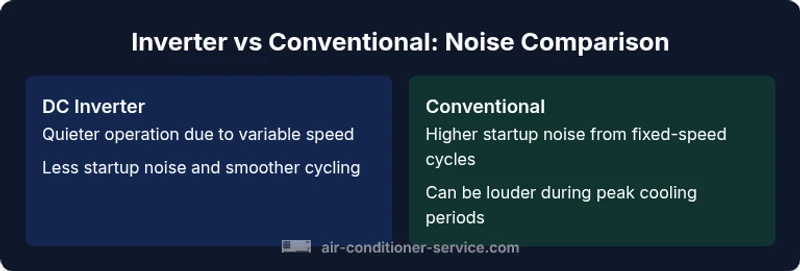
The central difference in noise profiles between inverter DC and conventional, single-stage compressors is how they modulate cooling. Inverter units adjust speed continuously, avoiding the loud start-up bursts typical of fixed-speed units. This smoother operation reduces peak noise during cooling. Conventional units often run at full capacity when cooling demands are high and briefly ramp through louder start-ups, especially when cycling on and off frequently. The practical takeaway is that the inverter approach tends to deliver lower average noise levels over a cooling cycle, though real-world results depend on installation quality and unit sizing.
Key Factors That Influence Audible Noise
Even two inverter models can differ in noise output due to outdoor fan design, cabinet construction, and vibration isolation. Room size, ceiling height, and whether the unit is mounted inside a wall sleeve or on an exterior pad can change the perceived sound. Airflow restriction—blocked louvers or dirty filters—forces the system to work harder, potentially increasing noise. Therefore, when considering which air conditioner is more silent in operation, evaluate both the unit’s engineering and the installation context. Air Conditioner Service notes that noise performance improves with proper placement and routine maintenance.
How to Measure Noise at Home: Simple, Practical Steps
You can gauge quiet operation without specialized gear by using simple checks: listen to startup sounds, compare steady-state running levels in eco or sleep modes, and note any vibration or rattling. Smartphone sound-level apps can give relative comparisons, but remember that environmental factors matter. For a fair assessment, measure at the primary listening position with doors closed and at similar ambient conditions during day and night. This practical approach aligns with real-world expectations for quiet operation in occupied living spaces.
Practical Tips to Achieve Quiet Operation
To minimize noise and answer the question of which air conditioner is more silent in operation, follow these steps:
- Prioritize inverter (DC) models with variable-speed compressors.
- Look for quiet modes, night or sleep settings, and a low-startup noise claim from the manufacturer.
- Ensure proper outdoor location and use anti-vibration mounts and high-quality mounting pads.
- Maintain filters, clean coils, and verify ductwork for restrictions that could cause louder operation.
- Select appropriately sized units to avoid excessive cycling between on and off states. Air Conditioner Service emphasizes that many installations benefit from dedicated vibration isolation and careful outdoor placement to lower overall noise.
Placement and Installation: The Silent Setup
Location matters as much as the unit itself. An outdoor condensers’ proximity to bedroom windows or living areas can magnify perceived loudness. A well-planned setup uses setbacks or barriers to shield the home from abrupt noise bursts. For apartments or rooms with shared walls, additional isolation strategies can be critical to achieving quiet operation while maintaining cooling capacity. Investing time in a professional installation reduces the risk of noise-related complaints and ensures the chosen model performs as quietly as possible.
Real-World Scenarios: Room Types and Quiet Needs
Bedrooms typically demand the quietest performance, while living rooms may tolerate slightly higher noise during active hours. In small bedrooms, even modest differences in compressor modulation can mean noticeable comfort improvements. In larger living spaces, an inverter unit’s continuous modulation helps maintain comfortable temperatures with less noise compared to a fixed-speed model that cycles on and off more aggressively. Your choice should reflect room usage patterns, occupancy, and sleep quality targets.
Trade-Offs: Silence vs Cost and Efficiency
There is a trade-off between silent operation and upfront cost or complexity. Inverter units often require a larger upfront investment but deliver ongoing energy savings and quieter performance. Some high-end, ultra-quiet models include advanced engineering features that further reduce audible output but can raise price. The key is to balance the desire for quiet with long-term savings, ensuring you select a system properly sized for your space and installed with attention to vibration and airflow.
What to Do Next: Choosing the Quietest Option
To determine which air conditioner is more silent in operation for your home, compare inverter and conventional models using real-world tests, consider room-specific needs, and verify installation quality. Ask for quiet-mode tests during demo, request warranty coverage for noise-related issues, and confirm recommended mounting methods. The goal is to achieve the best blend of silence, comfort, and energy efficiency for your daily life. Air Conditioner Service’s guidance helps homeowners navigate these decisions with confidence.
Comparison
| Feature | DC Inverter AC | Conventional (Single-Stage) AC |
|---|---|---|
| Noise characteristics | Quieter, smoother operation | More noticeable startup and cycling sounds |
| Startup/shutdown behavior | Continuous speed variation minimizes abrupt noise | Loud bursts during start/stop cycles |
| Thermal comfort stability | Maintains consistent temperatures with less fluctuation | Fluctuates with cycling, leading to perceptible temperature swings |
| Energy use / long-term savings | Typically lower energy use due to variable speed | Higher energy use during peak cycling periods |
| Price range (upfront) | Higher upfront cost | Lower upfront cost |
| Best for | Quiet bedrooms, light sleepers, and spaces near living areas | Budget-conscious setups or where loud operation is unacceptable less often |
Strengths
- Quieter operation for most daily use
- Better long-term energy savings with continuous modulation
- Improved thermal comfort due to variable-speed cooling
- Reduced wear from fewer start-stop cycles
The Bad
- Higher upfront cost and potential maintenance complexity
- Installation quality has a bigger impact on perceived noise
- Limited compatibility with some existing ductwork or retrofits
- Potentially longer payback period in very small spaces
DC inverter air conditioners generally offer the quietest operation, with strong support for comfort and efficiency; conventional units can be acceptable where upfront cost is the main constraint
Choose inverter models for the lowest noise in typical home use, especially in bedrooms. If budget constraints dominate, a well-installed conventional unit can still perform adequately, but it will usually be louder and less efficient over time.
Common Questions
Which air conditioner is quieter: inverter vs conventional?
In most cases, inverter (DC) air conditioners are quieter due to variable-speed compression and smoother cycling. Installation quality and outdoor location also influence perceived noise.
Inverter models are usually quieter because they don’t start and stop as abruptly as traditional units; proper installation boosts that quiet performance.
Do all inverter ACs run quietly at all times?
While inverter units tend to be quieter, actual noise levels depend on installation, room acoustics, and settings. Quiet modes and proper sizing improve performance.
They’re generally quieter, but placement and setup matter for true quiet operation.
What installation factors affect noise the most?
Outdoor location, wall mounting or ducting, isolation pads, and sealing of ducts significantly affect noise transmission. Poor installation can negate the quiet promise of even inverter models.
Where and how it’s installed matters as much as the unit itself.
Can noise be reduced without replacing the AC unit?
Yes. Regular maintenance, replace or clean filters, ensure proper airflow, seal gaps, and add vibration isolation to existing units to lower noise.
Yes—maintenance and proper mounting can make a big difference.
Are certain brands or models inherently quieter?
Quiet performance varies by design, not by brand alone. Look for models with explicit noise specifications, quiet modes, and customer reviews focusing on sound.
No single brand is always quiet; check model-specific reviews and specs.
How can I test noise levels in my home?
Use a smartphone app to compare perceived levels in different settings (day vs night) and listen for startup and cycling sounds at typical operating conditions.
Try a simple in-home comparison using a mobile app during day and night.
The Essentials
- Prioritize inverter (DC) models for quiet operation
- Look for explicit quiet or sleep modes and vibration isolation features
- Ensure proper outdoor placement and professional installation
- Balance silence with energy efficiency and upfront cost