Why Are Inverter ACs Better? A Practical Guide for Homes
Explore why inverter air conditioners are better, focusing on energy efficiency, comfort, noise reduction, and long-term costs for homeowners and renters.


This comparison explains why are inverter air conditioners better by examining efficiency, noise, and long-term costs. Inverter ACs adjust compressor speed to the cooling load, delivering steady comfort while reducing energy spikes and wear. This article lays out the key differences, practical savings, and installation considerations for homeowners and renters.
What makes inverter technology different
Inverter air conditioners rely on a variable‑speed compressor that continuously tunes its output to match the current cooling or heating demand. Unlike traditional units that switch on at full power and then shut off, inverter systems modulate, gradually increasing or decreasing speed. This leads to steadier temperatures, less wear on components, and a more predictable power draw. The core question—why are inverter air conditioners better?—is answered by looking at how you experience comfort, energy use, and maintenance over time. According to Air Conditioner Service, the practical advantage is smoother operation with reduced energy spikes, which translates into real savings and a gentler footprint on your electrical circuit.
Real-world performance matters. The Air Conditioner Service team notes that homes with inverter units report fewer noticeable temperature swings and more uniform climate control, even when outdoor conditions change rapidly. Noise and vibration also tend to be lower because the compressor never needs to surge from idle to full power. For households weighing options, these factors often lead to lower electricity bills, fewer nuisance interruptions at night, and a more predictable cooling experience.
Energy Efficiency: How inverter ACs save energy
Energy efficiency is the cornerstone of the inverter advantage. Because the compressor can run at partial loads, the system avoids the waste associated with cycling on and off. This means less energy waste during light cooling days and when the outdoor temperature is moderate. Modern inverter systems also optimize refrigerant flow and component temperatures, contributing to better overall COP (coefficient of performance) and a healthier operating envelope. Air Conditioner Service analysis shows that the biggest efficiency gains occur under partial-load conditions, which are the most common in everyday use. For homeowners, this translates into meaningful energy savings over the life of the unit, especially in shoulder seasons when demand fluctuates but consistency remains desirable.
Comfort and Temperature Stability
Stability is a perceptual win with inverter technology. Instead of chasing a target temperature by rapid, large power swings, an inverter unit maintains a closer balance with the indoor environment. The result is fewer overshoots or undershoots, leading to a more consistently comfortable room temperature. This is particularly noticeable during cooling surges on hot days or during milder mornings and evenings when the indoor climate should feel subtly even. The inverter’s flexible speed control helps minimize hot spots and drafts, improving overall comfort without requiring constant manual adjustments.
Noise Levels and Vibration
Quieter operation is a frequent reason homeowners choose inverter systems. When a traditional fixed-speed compressor cycles on and off, the start‑up and shut‑down can generate noticeable clicks or thumps. Inverter compressors ramp gradually, reducing those abrupt transitions. In practice, you’ll often hear only a soft, steady hum at typical living room frequencies, even when the unit is delivering cooling power. Reduced vibration also comes from smoother motor operation and better mounting. For light sleepers and open-plan living, this can make a visible difference in perceived noise.
Durability and Long-Term Costs
Durability in inverter systems benefits from less thermal cycling and more controlled operation. Because the compressor is not constantly revving at full power, wear patterns may be more favorable over time, potentially extending component life. While upfront costs can be higher, the long‑term energy savings and fewer interruptions can offset the initial investment. A practical way to think about it is: inverter technology reduces peak loads and thermal stress, which can translate into lower repair risk and improved reliability across several cooling seasons.
Comparing Inverter vs Traditional Fixed-Speed: Key Differences
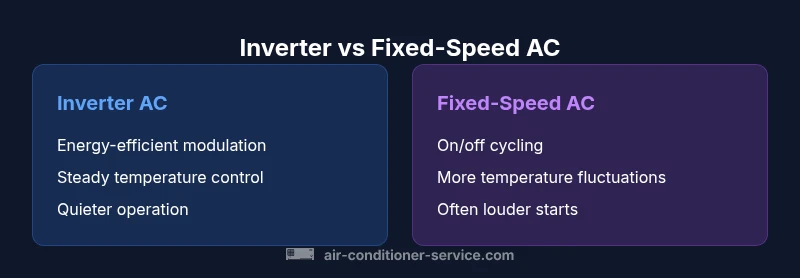
The core distinction lies in control strategy. Inverter air conditioners adjust speed to maintain setpoint, while fixed-speed models switch between full power and off. This difference affects energy use, comfort, noise, and wear. Inverter systems often require more sophisticated controllers and sometimes more specialized service, but they reward users with steadier cooling, quieter behavior, and improved efficiency under typical daily loads. When evaluating options, consider not just the sticker efficiency rating but how the system behaves during your regular usage patterns and climate.
Sizing, Installation, and Real-World Performance
Correct sizing is essential for inverter performance. Oversized units can still short-cycle and waste energy, while undersized systems struggle to meet comfort targets on hot days. Proper installation ensures that refrigerant charge, ducting, and thermostat control work in harmony. Real-world performance is influenced by how well the system is matched to your home’s thermal characteristics, window orientation, insulation quality, and occupant behavior. An experienced technician can help verify that an inverter model aligns with your space, ensuring expected efficiency gains and consistent comfort.
Myths vs Reality: Common Misconceptions
A popular myth is that inverter ACs always save energy; the truth depends on usage patterns and climate. Inverter technology shines when there are variable loads, fluctuations in outside temperature, or frequent thermostat adjustments. Another misconception is that inverter systems are fragile; while more complex, modern inverters are designed for reliability with proper maintenance. Finally, some people assume inverter ACs require frequent specialized service; with regular filter changes and coil cleaning, routine care is typically straightforward for homeowners. The reality is a balanced picture: reliable comfort and energy savings come with appropriate sizing, quality installation, and periodic upkeep.
Practical Guide: How to Choose an Inverter System
To choose the right inverter air conditioner, start by assessing your room size, insulation, and typical occupancy patterns. Look for models with a well‑rated energy performance claim and a thermostat that can maintain tight setpoints. Consider features such as hyper‑conditioning modes for rapid dehumidification, smart scheduling, and compatibility with home automation. Check warranty terms and service availability in your area, and plan for a professional sizing assessment before purchase. Remember, the most effective inverter unit is one that matches your real-life usage, not just the highest efficiency label.
Maintenance Essentials for Inverter Systems
Maintenance for inverter systems is similar to conventional units but with emphasis on preserving the efficiency of the variable-speed components. Regular air filter cleaning or replacement helps maintain airflow and cooling effectiveness. Coil cleaning keeps heat exchange surfaces efficient, and professional checks can verify refrigerant pressure and electrical connections without disturbing the system’s carefully balanced controls. A simple maintenance routine reduces energy waste and protects system longevity.
Real-World Scenarios: When Inverter Shines
In homes with mixed occupancy, variable daily usage, or frequent temperature adjustments, inverter ACs often deliver the most noticeable benefits. They excel when outdoor conditions shift between cool and warm, or when a room requires gentle, steady cooling rather than a rapid, oscillating response. In rental properties, inverter systems can improve tenant comfort, reduce complaints about temperature swings, and support longer system life with less wear.
Comparison
| Feature | Inverter AC | Fixed-Speed AC |
|---|---|---|
| Energy Efficiency | Higher efficiency due to variable speed | Lower efficiency due to fixed cycling |
| Temperature Stability | Better, steadier cooling | More fluctuations with cycling on/off |
| Noise Levels | Quieter operation at typical loads | Potential louder starts during cycling |
| Initial Cost | Higher upfront cost | Lower upfront cost |
| Long-Term Savings | Greater energy savings over time | Smaller energy savings due to spikes |
| Maintenance Needs | Similar maintenance with possible inverter checks | Simpler mechanism but potential for more cycles |
Strengths
- Significant energy savings over time
- Smoother temperature and comfort
- Quieter operation in normal use
- Potentially longer equipment life due to gentler operation
The Bad
- Higher upfront purchase price
- More complex technology that may require specialized service
- May be limited compatibility with some older systems
Inverter ACs offer better long-term value through energy efficiency and comfort; choose inverter for most homes.
The inverter option typically delivers steadier temperatures and lower energy use, translating to savings and improved daily living. Select inverter if you want comfort with efficiency, and ensure proper sizing and professional installation.
Common Questions
What is an inverter air conditioner?
An inverter air conditioner uses a variable-speed compressor to adjust cooling or heating output, rather than simply turning on and off at full power. This allows for smoother temperature control and improved efficiency. The system modulates to match demand, reducing energy spikes and wear.
An inverter AC uses a variable-speed compressor to smoothly adjust output, giving you steadier comfort and lower energy use.
Are inverter ACs more energy-efficient than traditional units?
Yes, in most cases, because they avoid constant on/off cycling and operate at partial loads when possible. Energy efficiency gains depend on usage patterns and climate, but the overall design typically yields better long‑term energy performance.
Yes, they usually save energy because they don’t switch on and off as much, especially when you’re not requiring full cooling.
Do inverter ACs cost more upfront?
Typically, inverter units have a higher upfront price than traditional models. The difference can be offset over time by reduced energy bills and fewer temperature fluctuations. Consider total cost of ownership over the life of the unit.
They usually cost more at purchase, but can save you money over time with lower energy bills.
Will inverter ACs cool a room faster?
Not necessarily faster to reach the target temperature, but they reach and maintain it more steadily. The modular operation prevents overshoot and keeps the room comfortable without aggressive surges.
They don’t always cool faster, but they maintain the temperature more steadily and quietly.
Are inverter ACs more reliable?
Reliability depends on quality, installation, and maintenance. Modern inverter systems are designed for durability, but improper sizing or neglect can affect performance. Regular maintenance helps sustain reliability.
They’re built to last, but like any system, proper sizing and upkeep keep them reliable.
What should I consider when sizing an inverter AC?
Size the unit to match room size, insulation, and expected occupancy. An undersized unit struggles on hot days, while an oversized unit can waste energy by short cycling. A professional load calculation helps ensure the right match.
Get a professional size check to pick the right capacity for your space.
The Essentials
- Choose inverter for steady comfort and lower energy waste
- Ensure proper sizing to maximize benefits
- Expect higher upfront costs but lower long-term expenses
- Regular maintenance sustains inverter efficiency