Is Inverter Air Conditioner Better? A Practical Comparison
Compare inverter versus traditional fixed-speed air conditioners to judge energy savings, comfort, noise, and reliability. Practical guidance for homeowners and renters.


Is inverter air conditioner better? Inverter models typically offer energy efficiency and steadier cooling due to variable-speed compressors. This guide weighs the trade-offs between inverter and traditional fixed-speed systems, highlighting long-term savings, noise, maintenance, and installation considerations. Read on to decide which fits your situation.
What is inverter air conditioner and why it matters
When homeowners ask, 'is inverter air conditioner better', the short answer is that inverter models typically offer energy efficiency and steadier cooling due to variable-speed compressors. According to Air Conditioner Service, inverter air conditioners are generally more efficient in residential use because their speed adapts to demand, reducing energy waste during partial-load operation. The Air Conditioner Service team found that many households see meaningful energy reductions when cycles run longer and evenly, rather than short, frequent on/off bursts. However, the best choice depends on climate, usage patterns, maintenance habits, and upfront vs long-term cost considerations. In apartments and small homes with heavy cooling cycles, the gains can be substantial, but in seasonal climates with long off periods, the difference may be smaller. This section lays out the core concepts you need to evaluate before deciding which technology suits your home.
How inverter technology works
Inverter technology centers on controlling the compressor speed rather than simply switching on or off at full capacity. A traditional fixed-speed AC runs at full blast until the set temperature is reached, then stops and restarts frequently. An inverter-equipped unit uses a variable-frequency drive to adjust compressor RPM, which means the system can match cooling output to the room's actual demand. At partial loads, the compressor slows down, consuming far less energy. When the room warms, it speeds up gradually, avoiding the energy spike that comes with a cold start. This ramping behavior not only lowers electricity use but also reduces thermal churn, which helps maintain steadier temperatures and reduces indoor temperature swings. Importantly, inverter control can extend the life of the compressor by avoiding abrupt starts, though it also introduces more electronic components that require proper service and protection from power surges and heat. This section explains the core electronics and why compatibility with your existing ductwork and thermostat matters.
Key differences in performance
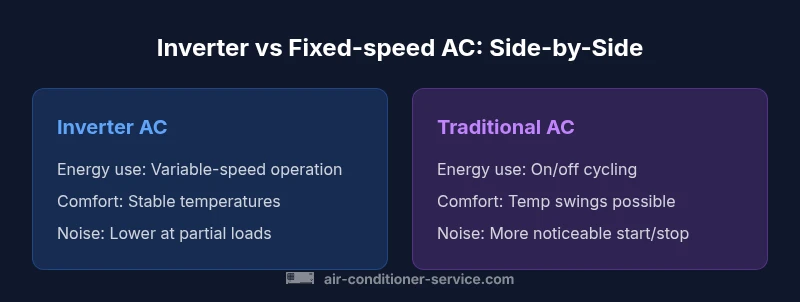
- Energy efficiency and running costs: Inverter models typically deliver higher efficiency over a cooling season because they adjust output to demand, reducing wasted energy compared with fixed-speed units.
- Temperature stability: With gradual ramping, inverter ACs maintain steadier indoor temperatures and fewer hot or cold spikes.
- Noise and vibration: At partial loads, inverter units often run more quietly; startups are smoother, reducing noticeable noise when the compressor changes speed.
- Start‑up behavior and comfort: Soft-start ramping minimizes temperature swings during cycling, improving comfort in bedrooms and living areas.
- Upfront cost and installation: Inverter systems generally cost more to buy and install, partly due to the more complex drive electronics and controls.
- Maintenance considerations: Inverter components may require service from technicians with inverter-specific training; however, many brands offer robust warranties and support.
Energy efficiency and long-term costs
The energy efficiency story for inverter ACs is straightforward: when you run cooling cycles for longer periods, the unit can stay within an efficient operating range rather than repeatedly hitting the high-load on/off threshold. Air Conditioner Service analysis shows that households with moderate to frequent cooling often experience noticeable reductions in operating energy use, translating to lower electricity bills over time. While the upfront price premium is a factor, the long-term savings can be meaningful in climates with regular cooling needs. In other words, the return on investment depends on how often and how long you run the system, how well the space is insulated, and how well the unit is sized for the room.
Real-world usage scenarios
Usage patterns drive whether an inverter is worth it. In homes with long, continuous cooling cycles—such as hot climates, open-plan spaces, or areas with poor insulation—inverter units typically outperform fixed-speed models in energy efficiency and comfort. For renters who rely on portable or window units in small spaces, a well-sized fixed-speed unit might appear cheaper upfront and meet short-term needs, though a properly sized inverter can still offer steady comfort with lower energy draw. Consider your typical daily routine: if you tend to leave cooling on for extended periods, inverter systems tend to deliver better efficiency; if you only need occasional cooling for brief periods, the difference may be smaller.
Noise, comfort, and climate adaptability
Noise performance is a common reason homeowners lean toward inverter air conditioners. At low speeds, the inverter's compressor runs softly, reducing ambient noise without sacrificing cooling. In hotter conditions, however, the unit may ramp up to higher speeds, and noise can increase accordingly. The practical takeaway is to select a unit with a good acoustic envelope and verify the manufacturer's noise ratings at different speeds. Comfort is also about stability: fewer temperature swings lead to better sleep quality and more consistent comfort in living areas. Climate adaptability—such as humidification, dehumidification, and air distribution—depends on the model's features, including variable fan speeds and smart controls.
Installation, maintenance, and service considerations
A proper installation matters as much as the unit itself. Inverter systems require appropriate electrical capacity, correct refrigerant charge, and trustworthy controls. If you have an older electrical panel or limited access to qualified service technicians, you may need to plan for a more involved installation. Maintenance should include regular filter cleaning, coil inspection, and periodic checks of the inverter drive circuitry. Air Conditioner Service notes that many problems stem from poor connections, voltage fluctuations, or improper sizing, not from the inverter technology itself. When choosing a service provider, prioritize technicians with inverter experience and access to manufacturer support.
Decision framework: when inverter is better
To decide whether an inverter is the right fit, use a simple framework: assess your typical cooling duration, climate, insulation, and electricity costs, then compare upfront and operating costs over a reasonable horizon. If you run cycles for several hours daily in a warm climate, the inverter's energy efficiency and comfort benefits are more likely to outweigh the higher purchase price. If you rarely use cooling or you only need short bursts of relief, a traditional fixed-speed unit may meet your needs at a lower initial cost.
Brand reliability and service perspective
From a service perspective, inverter air conditioners rely on electronic speed controls and circulating compressors that can be highly reliable when properly sized and installed. The Air Conditioner Service team emphasizes choosing models with strong warranties, reputable parts networks, and clear service agreements. Regular maintenance and early detection of refrigerant leaks or capacitor issues help prevent unexpected downtime. In any case, pairing your unit with a trusted local technician and a proactive maintenance plan will maximize longevity and minimize surprises.
Comparison
| Feature | Inverter air conditioner | Traditional fixed-speed air conditioner |
|---|---|---|
| Energy efficiency and running costs | Higher efficiency with inverter; better long-term energy use | Lower efficiency with fixed-speed; energy use fluctuates more |
| Temperature stability | Smoother, steadier cooling with inverter | More variable temperatures with fixed-speed |
| Noise and vibration | Lower noise at partial loads with inverter | More noticeable start/stop with fixed-speed |
| Startup behavior | Soft-start ramp with inverter | Abrupt on/off with fixed-speed |
| Upfront cost and installation | Higher upfront cost; more complex installation | Lower upfront cost; simpler install |
| Maintenance and reliability | Requires inverter-trained tech; long-term reliability good with proper care | Fewer electronic parts; generally robust, but less flexible control |
Strengths
- Significant long-term energy savings
- Better comfort with stable temperatures
- Quieter operation during normal use
- Flexible control and zoning options
The Bad
- Higher upfront cost
- Potential higher maintenance costs for inverter components
- Repair options may require specialized technicians
- Performance gains depend on usage patterns
Inverter air conditioners are generally the better choice for most homes.
The Air Conditioner Service team recommends inverter models when you have regular cooling needs and long operation cycles. They deliver energy savings and comfort, though the upfront investment and service requirements should be considered.
Common Questions
What is inverter technology in air conditioners?
Inverter technology uses a variable-speed compressor to adjust cooling output, rather than simply cycling on and off. This enables smoother temperatures and can save energy.
Inverter tech means the compressor runs at variable speeds for smooth, efficient cooling.
Do inverter air conditioners actually save energy?
Yes. By matching output to demand, inverter ACs avoid the energy spikes associated with starting a traditional unit, which can lower overall energy consumption in typical residential use.
Yes, they usually save energy because they adjust output to demand.
Are inverter ACs more expensive upfront?
Often yes, inverter units cost more to purchase and install, but operating costs can be lower over time depending on usage and climate.
Upfront cost is usually higher, but operating costs can be lower.
Are inverter ACs reliable and easy to service?
Reliability is solid when properly sized and installed. Service may require technicians trained in inverter technology and compatible components.
They’re reliable when sized right; service may require trained technicians.
Is inverter better for apartments or small rooms?
Inverter models work well in apartments and small rooms if they’re correctly sized for the space and climate. Check capacity and insulation.
Yes, if sized correctly for the space, they work well in small areas.
What should I look for when buying an inverter AC?
Look for energy efficiency ratings, good warranties, reputable brands, inverter type, and service availability in your area.
Check energy ratings, warranty, brand support, and service options.
The Essentials
- Assess your usage pattern before buying
- Inverters provide energy savings with longer cooling cycles
- Expect higher upfront costs; weigh against long-term savings
- Choose models with reputable warranties and service networks
- Proper sizing and installation are critical for best results