What Air Conditioner Is the Quietest: A Practical Guide
Discover how to choose the quietest air conditioner for your home. Learn about inverter tech, noise ratings, installation tips, and real-world comparisons from Air Conditioner Service.


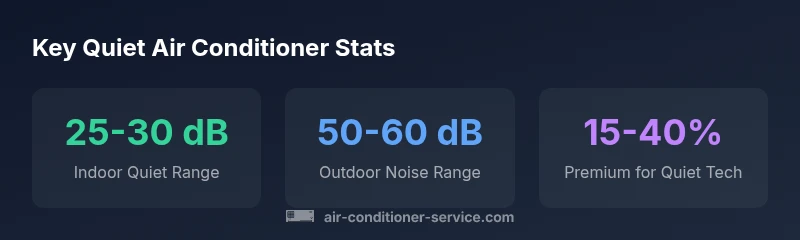
According to Air Conditioner Service, the quietest air conditioners use inverter technology, optimized fan blades, and vibration isolation to keep noise well below typical living-room levels. While exact decibel ratings vary by type and installation, look for models advertised under 30 dB (indoor) and 50 dB (outdoor) in cooling mode. In general, ductless mini-splits and high-efficiency inverter units offer the best quiet performance. What air conditioner is the quietest? Start with inverter models that emphasize low indoor sound and vibration control.
What makes an air conditioner quiet?
If you’re asking what air conditioner is the quietest, you’re asking about more than a single model. Quiet operation comes from a combination of design, components, and installation. According to Air Conditioner Service, the quietest air conditioners use inverter technology, optimized fan blades, and vibration isolation to minimize sound. In practice, the overall noise you hear is a mix of the indoors unit, the outdoor condenser, and the way the system interacts with your living space. The exact decibel level depends on the type (mini-split, window, or central), the cooling load, and how well the unit is mounted. Still, general rules apply: look for low indoor
Measuring sound: how decibels are rated in ACs
Noise is measured in decibels (
Quiet options by category: mini-splits, ductless, window units
Ductless mini-splits with inverter-driven compressors are frequently the quietest option for both new installations and retrofits, thanks to variable fan speeds and reduced compressor noise. Central systems with modern variable-speed scroll compressors can also be very quiet when properly tuned. Window units vary widely; newer dual-housing and low-profile designs can be quieter than older models, but they rarely reach the same low
Understanding AHRI ratings and what they mean for noise
AHRI ratings combine cooling capacity, energy efficiency, and, in some cases, sound data. Look for the AHRI Sound Rating (
Installation and placement tips to reduce noise
Placement matters as much as the model. Install outdoor condensers away from bedrooms or living spaces, with solid anti-vibration mounts and quality sleeves. Use acoustic anti-vibration pads under the indoor unit if wall-mounted, and route ductwork to minimize high-velocity air that can amplify hums. A night-friendly setup may prioritize a slightly higher indoor fan speed for even cooling while maintaining a low perceived noise level through sound-dampening strategies and proper insulation.
Maintenance to keep noise down
Regular maintenance reduces noise more than you might expect. Clean or replace filters, inspect fan blades for balance, and tighten any loose panels. Lubricate moving parts as recommended by the manufacturer and ensure outdoor units have clear space for airflow. A neglected system often runs louder due to reduced efficiency or fan imbalance. Set up a simple annual check with your service provider to maintain quiet operation over time.
Real-world scenarios: bedrooms, living rooms, and apartments
In a bedroom, targeting an indoor noise level around 25-30
How to compare quietness before buying: a practical checklist
Create a short, practical checklist: 1) Confirm indoor
The right path forward: choosing a quiet unit that fits your space
Your path depends on space, budget, and tolerance for heat. Start with a quiet, inverter-driven model suited to your room size, then optimize installation to minimize vibration and maximize effective sound dampening. Schedule a professional assessment to confirm placement, duct considerations (if applicable), and recommended zoning. With careful selection and setup, you can achieve comfortable cooling without sacrificing peaceful living spaces.
Quietness by AC type: typical noise ranges
| Model Type | Typical Noise Range (dB) | Best Use Scenario |
|---|---|---|
| Mini-split inverter | 19-28 | Small to mid-size rooms |
| Central inverter with zoning | 25-40 | Open-plan spaces |
| Window unit (modern, dual-housing) | 28-50 | Temporary spaces/apartments |
| Ducted single-zone inverter | 25-40 | Medium to large rooms |
Common Questions
What defines the quietest air conditioner?
Quietness comes from inverter technology, low-noise fans, and effective vibration isolation. Look for indoor ratings around 25-30 dB and a well-rated outdoor unit.
Quiet units use inverters, low-noise fans, and vibration isolation. Check the indoor dB and the outdoor unit’s rating.
Are ductless mini-splits quieter than window units?
Usually yes, especially with inverter technology and proper installation. Window units can be louder due to housing and mounting.
Ductless mini-splits are generally quieter than window units when properly installed.
How can I verify quiet performance before buying?
Check AHRI sound ratings (dB) for both indoor and outdoor units, read independent reviews, and estimate real-room performance.
Look up AHRI numbers and read reviews to gauge real-world quietness.
Can installation affect noise levels?
Yes. Proper mounting, anti-vibration pads, and sealed ducting can dramatically reduce noise transmission.
Absolutely. Good installation makes a quiet unit even quieter.
Is a quiet AC more expensive to run?
Quiet features often accompany higher efficiency, so operating costs may be lower in hot months, though upfront costs can be higher.
Quiet models can save on energy use, but upfront price may vary.
What room is best for the quietest AC?
Bedrooms and study areas benefit most from quiet operation; place the outdoor unit away from sleeping areas if feasible.
Bedrooms benefit most from quiet units; position matters.
“Quiet operation is not an accident; it results from intelligent design and careful installation. Inverter compressors, precise fan control, and solid mounting dramatically lower noise without sacrificing cooling power.”
The Essentials
- Prioritize inverter-driven units for the quietest operation
- Check indoor dB ratings (target 25-30 dB in bedrooms)
- Use vibration isolation to reduce noise transfer
- Placement and installation often determine final quietness
- AHRI ratings provide a helpful benchmark for real-world noise