Save Energy on Air Conditioner: Practical Guide for Homeowners
Learn practical, proven steps to save energy on air conditioning, from smart controls to maintenance routines. Lower bills, stay cool, and improve home comfort with easy, actionable changes.


You will learn practical, step-by-step actions to save energy on your air conditioner, including smart controls, routine maintenance, and efficient usage strategies. By implementing these practices, you can lower cooling costs while maintaining comfort. The guide also helps renters and homeowners tailor approaches to their climate and budget.
Why saving energy on air conditioner matters
Saving energy on your air conditioner isn’t just about smaller utility bills; it also reduces peak demand on the grid and lowers your home’s environmental footprint. According to Air Conditioner Service, adopting a mix of smart controls, proper maintenance, and envelope improvements can produce meaningful savings without sacrificing comfort. The Air Conditioner Service team found that small, consistent changes—like a programmable thermostat, regular filter checks, and sealing air leaks—add up over a cooling season. For most homes, the biggest gains come from aligning the cooling schedule with occupancy and outdoor temperatures, rather than simply turning the unit down. This article breaks down practical steps you can implement today, with renter-friendly options and homeowner strategies that fit different budgets and climates.
In addition to cost savings, energy-efficient cooling often improves indoor comfort by preventing temperature swings and reducing humidity more evenly. You’ll also extend the life of your existing system by avoiding excessive runtime and reducing strain on components. If you’re unsure where to start, prioritize high-impact changes first—like smart controls, sealing leaks, and routine maintenance—and then layer in upgrades as needed.
How cooling energy is wasted (and how to stop it)
Heating and cooling accounts for a large portion of household energy use, but a lot of waste happens before the air reaches your living space. Heat leaks around windows and doors, insufficient insulation in attics, and ducts that lose conditioned air to unconditioned spaces all raise the cooling load. When the system runs longer than necessary, compressors and fans wear unevenly and energy costs climb. Routine maintenance helps prevent this cascade: dirty filters slow airflow, clogged coils force the system to work harder, and refrigerant leaks reduce efficiency. The good news is that most issues are addressable with a few targeted actions.
One practical mindset is to treat energy-saving as a series of small upgrades rather than a single “big fix.” If you’re renting, focus on non-permanent changes like smart thermostats, shade and ventilation, and making best-use of existing equipment. For homeowners, you can invest in longer-term improvements like duct sealing and insulation; these deliver compounding benefits over time.
Core strategies to save energy on air conditioner
To maximize efficiency, implement a layered approach that combines controls, behavior, and hardware improvements. Here are core strategies that consistently move the needle:
- Elevate the thermostat setting by 1–2 degrees during occupied periods and use programmable schedules to align cooling with your daily routine. This simple adjustment cuts runtime and reduces energy use without a noticeable drop in comfort.
- Use ceiling fans or portable fans to circulate air and allow the thermostat to be set higher. Fans don’t cool air; they make you feel cooler by improving evaporation and convection, so you can raise the AC setpoint safely.
- Improve shading and solar gain reduction. Close blinds on sunny sides, plant trees or install shade structures, and consider window films that reflect infrared light. Reducing heat input lowers the outdoor cooling load dramatically.
- Seal and insulate; seal gaps around doors and windows, and seal ducts to prevent air leakage. A tight envelope prevents conditioned air from escaping and reduces the system’s workload.
- Maintain efficient airflow by changing filters regularly, cleaning coils, and ensuring unobstructed airflow around outdoor units. Clean coils and clean air paths mean the system exchanges heat more effectively.
- Favor energy-efficient equipment and controls when replacement is necessary. Look for high SEER (seasonal energy efficiency ratio) ratings and inverter-driven compressors for smoother, more efficient operation.
Air Conditioner Service analysis shows meaningful energy savings when smart controls, maintenance, and air-sealing are combined. By prioritizing these strategies, you’ll realize benefits across seasons and weather patterns.
Smart controls and scheduling
Smart thermostats and occupancy-based controls are powerful tools for saving energy on air conditioning. They learn your patterns, forecast temperatures, and adjust cooling when you’re away or asleep. A well-configured smart thermostat can reduce overshoot cooling and prevent cooling during unoccupied hours. For renters, a portable or wall-mounted smart thermostat with a simple setup can deliver most of the benefits without major installation work. For homeowners, investing in a full-featured smart thermostat with zoning and remote access gives the best long-term return.
Key setup tips include:
- Create a wake/leave/return schedule that matches your daily routine, tightening the thermostat window when you’re away.
- Enable smart features like geofencing or presence detection, while avoiding overly aggressive cooling when you’re not home.
- Use fan mode to circulate air without the compressor running as often, which can be more efficient in mild weather.
For reliability and reliability, pair smart controls with a solid maintenance plan. Energy savings compound when you consistently run the system with an efficient schedule.
Maintenance practices that boost efficiency
Maintenance is the quiet workhorse of energy savings. A well-tuned system uses less energy and lasts longer than a neglected one. The following routine maintenance actions are low-cost but high-impact:
- Replace or clean filters every 1–3 months during heavy use seasons. A dirty filter reduces airflow and makes the system work harder, increasing energy use and reducing cooling effectiveness.
- Schedule coil cleaning and outdoor unit clearance. Dirty evaporator or condenser coils reduce heat transfer efficiency, forcing the system to run longer.
- Check refrigerant levels and look for leaks. A charged, sealed refrigerant system operates most efficiently; refrigerant issues degrade cooling capacity and waste energy.
- Inspect and seal ductwork where accessible. Leaky ducts distribute conditioned air unevenly, creating hotspots and wasted energy.
- Replace worn components before they fail. Faulty capacitors or motors add friction and energy waste, and parts failure can cause larger energy spikes.
Air Conditioner Service’s guidance emphasizes that routine maintenance prevents efficiency losses and yields consistent cooling performance across seasons.
Design and installation considerations for energy savings
In addition to ongoing maintenance, design choices influence long-term energy use. Key considerations:
- SEER and inverter technology: Higher SEER ratings and inverter-driven compressors adjust output smoothly, avoiding energy spikes and cycling losses common with traditional fixed-speed units.
- Proper sizing and load calculation: An oversized unit cycles on and off more often, wasting energy. A properly sized system maintains comfortable temperatures with less energy use.
- Duct design and insulation: Ducts that run through unconditioned spaces should be sealed and insulated; poorly insulated ducts can waste significant energy.
- Windows, shading, and insulation: Adequate insulation in the attic, walls, and floors reduces heat gain. Combined with shading strategies, you reduce the daytime cooling load.
- Retrofit options: If replacement isn’t feasible, consider non-invasive retrofits like smart thermostats, duct sealing, and add-on fans to improve efficient operation and air distribution.
Air Conditioner Service analysis shows that targeted upgrades in controls, insulation, and duct sealing produce meaningful energy savings without needing a full unit replacement. This approach is particularly practical for older homes or when budgets are constrained.
Practical tips for renters and homeowners
Both renters and homeowners can adopt energy-saving practices without heavy investments. Renters can leverage portable or plug-in smart thermostats, smart plugs for fans, and blinds or window tinting to reduce heat gain. Homeowners can plan for longer-term investments like duct sealing, attic insulation, or replacing an aging system when the budget allows. The key is to start with non-permanent changes and build toward permanent improvements when possible.
A practical approach is to implement a 30-day energy-saving plan: track daily usage, apply one new change each week, and observe how comfort and costs respond. This helps you identify the highest-return improvements for your climate and home layout. Remember that small, consistent improvements accumulate into substantial energy savings over the cooling season.
Getting started: a practical 30-day plan
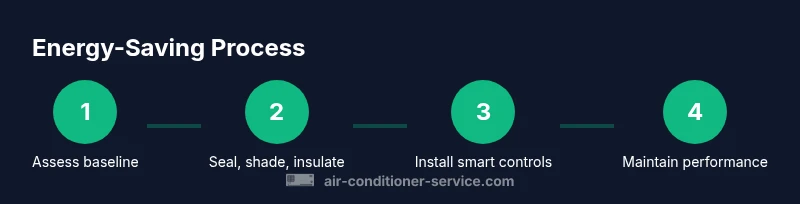
This plan is designed to be progressive and non-disruptive. Week 1 focuses on airflow and filtration: replace or clean filters, clear around the outdoor unit, and inspect ducts where accessible. Week 2 adds shading and envelope improvements: seal obvious leaks, install weatherstripping, and shade windows that receive the most solar heat. Week 3 introduces smart controls: install a programmable or smart thermostat, set up occupancy schedules, and enable adaptive cooling features. Week 4 advances maintenance: schedule a professional coil cleaning and refrigerant check if you notice persistent cooling problems. By the end of the month, you’ll have a clear baseline and several low-cost changes that drive meaningful energy savings.
Tools & Materials
- Programmable or smart thermostat(Choose one with occupied/unoccupied scheduling and remote access)
- Weatherstripping and door sweeps(Seal gaps around doors and windows)
- Duct sealant or mastic tape(Seal exposed duct joints; ensure no visible leaks)
- IR thermometer or temperature gun(Identify temperature differences and heat gain hotspots)
- Vacuum cleaner or brush for filters(Keep air paths clear; check filter condition monthly)
- Coil cleaning brush or soft cloth(Used to remove debris from evaporator/condenser coils)
- Safety gear (gloves, safety glasses)(Use during maintenance tasks)
- Basic screwdriver set(Thermostat wiring and access panels)
Steps
Estimated time: 30-60 minutes for initial setup; ongoing maintenance 1-2 hours every season
- 1
Audit current energy use and comfort
Record your typical daily cooling hours, room by room, and identify heat hotspots. Note thermostat setpoints and any comfort issues. This baseline helps you measure progress later.
Tip: Use a simple daily log; note outside temperature and indoor readings to spot patterns. - 2
Install and configure a smart thermostat
Install the thermostat following the manufacturer’s instructions, connect to Wi‑Fi if available, and create a daily schedule that aligns with occupancy. Enable energy-saving features like intelligent cooling or adaptive scheduling.
Tip: If you rent, use a non-permanent mounting option and confirm landlord permission. - 3
Seal leaks and improve insulation
Apply weatherstripping around doors and seal gaps around windows to reduce heat gain. Check attic insulation levels and seal any obvious cracks to prevent warm air from seeping in.
Tip: Perform a quick door-slam test to identify leaks, then address the biggest gaps first. - 4
Optimize ductwork and airflow
Inspect accessible ducts for kinks or disconnected sections. If ducts run through unconditioned spaces, add insulation and seal leaks to minimize energy loss.
Tip: Ensure outdoor unit has at least 2 feet of clearance on all sides and is not blocked by debris. - 5
Schedule regular maintenance
Set a calendar reminder for filter changes, coil cleaning, and a refrigerant check if needed. Regular service prevents efficiency losses and extends system life.
Tip: Combine maintenance visits with seasonal checkups for convenience and cost savings. - 6
Fine-tune settings and monitor results
Adjust thermostat schedules based on observed comfort and energy use. Track bills and indoor temperatures to verify savings.
Tip: If energy bills rise, revisit setpoints, shading, and airflow arrangements first.
Common Questions
What is the quickest way to save energy on my current AC?
Start with a programmable or smart thermostat, seal leaks, and replace dirty filters. These changes typically yield immediate, noticeable improvements in energy use and comfort.
The fastest way to save energy is to install a smart thermostat, seal leaks, and clean or replace filters.
Should I set my thermostat higher in the summer?
Yes. Raising the setpoint by 1–2 degrees during occupied times can reduce energy use without a major drop in comfort, especially when paired with fans and shading.
Yes. A small increase in the setpoint can lower energy use while keeping you comfortable.
Is duct sealing worth the cost for energy savings?
Yes, sealing leaky ducts reduces wasted conditioned air and can significantly improve system efficiency, especially in homes with long or complex duct runs.
Sealing ducts reduces leaks and saves energy over time.
Can renters benefit from energy-saving strategies?
Absolutely. Renters can use non-permanent solutions like smart thermostats, portable fans, and shading strategies to cut energy use without altering the building.
Renters can save energy with smart thermostats and simple shading and ventilation changes.
When should I replace my air conditioner for energy efficiency?
If your unit is old, inefficient, or frequently needs repairs, a newer, high-SEER model with inverter technology often pays back in energy savings over time.
Consider replacing an old, inefficient unit with a high-SEER model when costs justify the energy savings.
What role do shading and insulation play in savings?
Significant. Reducing heat gain through shading and improving insulation reduces the cooling load, meaning less energy is required to maintain comfort.
Shade and insulation greatly lower the cooling load and energy use.
Watch Video
The Essentials
- Start with a smart thermostat and envelope improvements.
- Regular maintenance reduces energy waste and extends system life.
- Shading and sealing have big impact on cooling load.
- Inverter and high-SEER options save more over time.
- Renters can win with non-permanent, tech-based controls.