Emergency Air Conditioner Repair: A Practical Guide for Homeowners
Learn practical, step-by-step guidance for emergency air conditioner repair, with safety steps, quick diagnostics, and when to call a pro. Air Conditioner Service shares actionable tips for urgent cooling during heatwaves.


Emergency air conditioner repair means quickly diagnosing and restoring cooling during a breakdown. Start by cutting power at the main breaker, assessing safety, and performing basic checks; then contact a licensed pro for urgent service. According to Air Conditioner Service, avoid DIY refrigerant work and hazardous voltages. If you have no cooling in extreme heat, schedule emergency repair as soon as possible.
What qualifies as emergency air conditioner repair?
Air conditioners can fail in ways that threaten comfort and safety during extreme heat. An emergency repair is needed when cooling stops during hot weather, or when electrical smells, burning components, or water leaks are detected. These situations require rapid assessment and safe action to prevent further damage. In this context, urgency levels vary but spike during heat waves, and quick, methodical responses can minimize discomfort and prevent additional damage. According to Air Conditioner Service, signs of urgent failure include: 1) the unit not cooling at all, 2) unusual buzzing or sizzling sounds, 3) a burning smell or smoke, 4) ice on refrigerant lines or evaporator coils, and 5) water pooling near the system. If you encounter any of these, prioritize safety and call for urgent service without delay.
Immediate safety steps you can take
- Power down the outdoor condenser and indoor air handler at the main breaker before touching any components. This reduces risk of shock or short circuits. - Keep children and pets away from the equipment and any exposed metal parts. - Do not attempt to seal refrigerant leaks or bypass electrical protections. Refrigerant handling requires licensed technicians and improper repair can be dangerous. - If you notice burning odors, smoke, or hot smells, evacuate the area and call emergency services if necessary. These steps minimize risk while you prepare for professional help.
Quick diagnostic checks you can perform without a pro
- Verify the thermostat is set to cool and the setpoint is lower than the room temperature. If the display is dim or unresponsive, replace or recharge batteries as a first step. - Check the circuit breaker for the outdoor unit. If the breaker has tripped, reset it after you’ve ensured there’s no obstruction or visible damage. - Inspect the outdoor unit for obstructive debris, ice buildup, or damaged fins. Gently clear debris with a dry cloth or a soft brush. Do not use sharp tools. - Listen for unusual sounds when the unit attempts to start; persistent buzzing, grinding, or banging can indicate electrical or mechanical problems that require professional testing.
Common urgent failure scenarios and their causes
- Tripped breakers or blown fuses: Often the result of overloads during heat spikes or a failing capacitor. - Ice buildup on the evaporator coil: A sign of restricted airflow or low refrigerant; do not attempt to break the ice with force. - Dirty condenser fins: Reduces heat rejection and causes the system to work harder, leading to overheating. - Weak or failing capacitors: A common failure mode that prevents startup; diagnosis requires a meter and safety procedures. Each scenario requires different actions and urgent professional assessment.
How to document symptoms for the technician
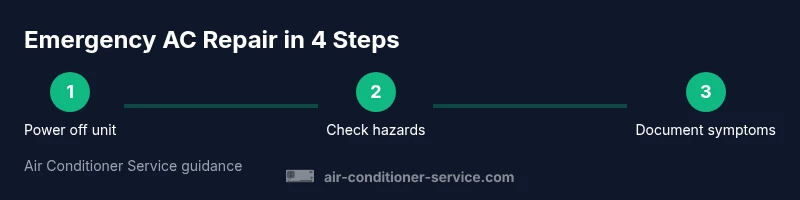
- List the exact time when the issue started and any changes in operation (cycling on/off, no cooling, unusual noises). - Note whether any smells (burning, ozone-like) or odors are present and where they originate. - Record thermostat behavior, display errors, and whether the outdoor unit feels unusually hot or cold. - Take clear photos of the outdoor unit, wiring access panels, and any signs of damage or ice. A concise symptom log speeds up diagnosis and repair.
What to expect from an emergency service visit
- The technician will perform a safety assessment, confirm power isolation, and test electrical components with calibrated instruments. - They will diagnose refrigerant, electrical, and airflow issues and present repair or replacement options. - Expect a written estimate outlining parts, labor, and any precautionary measures. - Depending on the issue, the technician may need to replace a part on-site or schedule a follow-up visit for further work. Clear communication helps secure prompt, effective service.
How to decide between repair and replacement in an emergency
- If the system is older and showing multiple failing components, replacement may offer better long-term value than multiple repairs. - Consider current refrigerant costs, energy efficiency, and potential future maintenance needs. - A professional assessment will provide a recommended course of action based on diagnostics, age, and operating costs. Choosing wisely now helps minimize risk of repeated emergencies.
Post-emergency: restoring reliability and safety after repair
- After repair, request a safety and performance check to confirm proper refrigerant charge, electrical protection, and airflow. - Reset maintenance plans, including filter changes and coil cleaning twice a year to sustain efficiency. - Document the repair details for future reference and warranty records. - Consider a proactive maintenance schedule to prevent future emergencies and extend equipment life.
Maintain a proactive plan to reduce future emergencies
- Schedule regular maintenance with a licensed technician to inspect electrical connections, refrigerant levels, and airflow. - Clean or replace filters every 1-3 months, depending on usage and air quality. - Keep the outdoor unit clear of debris and trim vegetation so airflow remains unobstructed. - Prepare a quick-response plan for heatwaves, including knowing nearby emergency repair contacts and having spare parts like filters on hand.
Tools & Materials
- Non-contact voltage tester(Essential to verify power status before touching components)
- Digital multimeter(For testing voltage, continuity, and resistance safely)
- Screwdriver set (Phillips & flat-head)(Access panels and electrical connections)
- Insulated gloves(Protection when handling energized parts)
- Flashlight(Inspect dim corners and deep cabinets)
- Owner's manual for your AC model(Model-specific guidance and troubleshooting tips)
- Tape or zip ties(Temporary wiring management if needed)
- Phone with emergency service numbers(Have quick access to repair services)
Steps
Estimated time: 45-75 minutes
- 1
Turn off power to the unit
Go to the main electrical panel and switch the circuit breaker for the outdoor condenser and indoor air handler to off. Wait a full minute to allow residual voltages to dissipate, then verify with a non-contact tester that power is indeed off. This protects you from shocks while you inspect components.
Tip: Always assume the unit is live until power is confirmed off. - 2
Check for obvious hazards
Look for burning smells, melted wiring, or visible smoke around the unit. Do not touch exposed wiring if you see damage. If damage is evident or smell is strong, evacuate and call emergency services if necessary.
Tip: Document hazards with photos for the technician. - 3
Test thermostat and controls
Turn the thermostat to cool and verify the display responds. If the display is blank or unreliable, replace the batteries if possible, or note the issue for the technician. A non-responsive thermostat can mimic a system failure.
Tip: A faulty thermostat can be mistaken for a compressor issue. - 4
Inspect the outdoor unit
Clear debris from around the condenser and visually check fins for damage. Look for ice buildup on coils and ensure there are no obstructions blocking airflow. Do not poke or break ice with tools.
Tip: Active airflow is critical for cooling; obstructed airflow worsens problems. - 5
Reset and re-energize safely
If you did not observe obvious hazards and the breaker has not tripped, restore power and observe the system for a few minutes. If the breaker trips again, stop and call a professional—do not keep resetting a potentially faulty circuit.
Tip: Repeated trips indicate a wiring or component issue that requires repair. - 6
Call professional emergency service
If there is burning odor, smoke, refrigerant signs, or persistent overheating, contact a licensed HVAC technician immediately. Provide symptom details, time of onset, and any observed noises or smells to expedite service.
Tip: Share your symptom log and photos to help the technician diagnose quickly.
Common Questions
What counts as an emergency for an AC?
An emergency includes no cooling during extreme heat, burning smells, smoke, ice on lines, or water leaks near the unit. In these cases, shut off power and contact a licensed technician immediately.
If there’s no cooling and you notice burning smells, smoke, ice, or water near the unit, shut off the power and call a licensed technician right away.
Can I DIY repairs during an emergency?
Only safe, non-invasive actions should be attempted. Do not handle refrigerants, attempt electrical repairs beyond basic safety, or bypass protections. When in doubt, call a pro.
Avoid DIY refrigerant work and dangerous electrical tasks—call a professional for emergencies.
How long does emergency repair usually take?
Time varies by problem and parts availability; many emergency repairs are completed in a few hours, but some issues require scheduling a follow-up visit.
Most emergencies take a few hours, but complex issues may need a return visit.
Will an emergency repair void my warranty?
Warranty terms vary by model and provider. A licensed technician performing authorized repairs typically preserves warranty coverage; always check your contract.
Warranties often stay valid when repairs are done by a licensed professional per your contract.
What should I tell the technician about my unit?
Describe onset time, thermostat behavior, noises, smells, ice or leaks, and what you did before the problem started. Include model and any relevant recent work.
Tell the tech when it started, what you observed, and any changes you made before it failed.
Is it safe to operate a unit with a suspected refrigerant leak?
No. Refrigerant leaks should be handled by licensed technicians due to health and environmental risks. Evacuate the area if advised and ventilate.
Don’t operate the system if you suspect a refrigerant leak; call a pro immediately.
How can I reduce future emergency repairs?
Schedule regular maintenance, replace filters, clean coils, and keep debris away from the outdoor unit. Proactive care lowers risk and improves efficiency.
Regular maintenance and clean filters help prevent future emergencies.
Watch Video
The Essentials
- Identify emergency conditions early and protect occupants.
- Do safe, basic checks before calling for help.
- Document symptoms to speed up diagnosis.
- Choose professional repair when safety or refrigerant is involved.