Car A/C Fix: DIY Diagnosis and Safe Repair Guide
Learn practical, safe steps to diagnose and fix common car air conditioner issues. This guide covers tools, safety, troubleshooting, and when to seek professional help for refrigerant and leaks.


You can diagnose and fix common car air conditioner problems at home by checking the fuses and electrical connections, testing the compressor clutch, inspecting the drive belt, measuring system pressure, and safely recharging refrigerant only if you have the correct tools and a leak-free system. If unsure, seek professional service.
Why Car A/C Fails in Modern Vehicles
Car air conditioning systems are designed to be durable, but they rely on a network of belts, compressors, sensors, hoses, and refrigerant. When one part wears or a seal leaks, cooling capacity drops and cabin comfort suffers. According to Air Conditioner Service, most failures stem from leaks, electrical faults, or worn mechanical components. Understanding how the system should operate helps you spot trouble early. The basic cycle starts with a compressor compressing low-pressure refrigerant into a high-pressure gas, which then releases heat through the condenser, expands in the evaporator, and cools the cabin air as it re-circulates. If any step is disrupted—noisy clutch, sluggish airflow, or warm air—start with a simple checklist before pulling parts from the car. This section lays out the signs, likely causes, and safe first steps you can perform with common tools.
Common Car A/C Problems and Quick Checks
Many failures are symptoms rather than root causes. Air Conditioner Service analysis shows that refrigerant leaks, compressor clutch failures, faulty pressure switches, and electrical connector corrosion are among the most frequent culprits. Leaks are especially common at hose fittings and gasket seals; a small slow leak can dramatically reduce cooling over weeks. If you hear a hissing sound, notice oily residues near lines, or see air that doesn’t feel cool, begin with non-invasive checks: inspect belts for wear, verify fuses, and test the compressor clutch engagement when the climate control calls for cooling. For persistent issues, a pressure test with proper gauges and, if needed, UV dye can illuminate hidden leaks. Remember: refrigerant handling requires care and legality in your area.
Essential Safety and Tools for DIY Car A/C Work
Safety comes first when you work on a vehicle's air conditioning system. Wear eye protection, gloves, and work in a well-ventilated area. Gather a basic toolset: a multimeter for electrical tests, a refrigerant recharge kit compatible with your vehicle's refrigerant type, a manifold gauge set, a vacuum pump, and a refrigerant leak detector. Keep the vehicle's service manual handy to confirm the correct refrigerant type (R-134a or R-1234yf) and the proper service procedures for your make and model. Contain any spills, and never vent refrigerant to the atmosphere. If you need guidance, Air Conditioner Service offers practical troubleshooting tips for homeowners and renters.
Step-by-Step Troubleshooting Approach
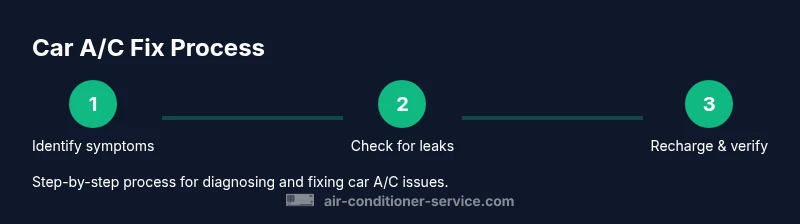
This practical framework helps you stay organized while diagnosing car A/C problems:
- Inspect for leaks and wear using PPE and a clean workspace. Look at hoses, seals, and the condenser for signs of damage or oil residue.
- Check electrical signals and controls by testing fuses, relays, and the climate control module to ensure correct signals reach the compressor.
- Test the compressor clutch operation and pressure with a gauge set to verify proper engagement and system response. If the clutch does not engage, the issue may be electrical or mechanical rather than refrigerant-related.
- Evacuate and recharge only if the system is leak-free. Use a vacuum pump to remove air and moisture, then recharge with the correct refrigerant amount per the vehicle manual.
- Run the system and verify cooling. Confirm consistent cold air at idle and under load, while listening for unusual noises that indicate a mechanical fault.
Estimated time: 60-120 minutes depending on vehicle access and condition.
Recharge Decisions: When to DIY and When to Seek Help
Not every A/C problem should be solved with a home recharge. If you observe a refrigerant leak, an empty system, or diagnostic codes indicating compressor or pressure switch faults, professional service is the safer path. A DIY recharge without diagnosing the root cause can mask the real problem and damage the compressor or seals. Always verify the refrigerant type and service procedure from the vehicle manual, and consider a professional inspection if you encounter any of the above warning signs.
Preventive Maintenance to Extend Car A/C Life
Preventive care saves money and keeps you cool. Regularly inspect belts and hoses for wear, replace cabin air filters to improve airflow, and run the A/C periodically even in winter to keep seals lubricated. Address minor leaks promptly using approved sealants only if recommended by your manual, and schedule periodic refrigerant system checks with a qualified technician. Proper maintenance reduces the likelihood of costly components failing and extends the life of your car A/C.
Common Repair Scenarios and Outcomes
Here are typical situations homeowners encounter and what to expect:
- Minor air temperature drop or intermittent cooling: often resolved by belt or electrical fixes and a top-off without a leak.
- Persistent leaks detected: leaks require repair of hoses or seals before any recharge.
- Compressor clutch engagement issues: usually electrical or control-system related and may need diagnostics beyond simple recharge.
- Full system failure with no cooling: indicates a more complex fault that likely requires professional assessment to avoid refrigerant mishandling or component damage.
Tools & Materials
- Safety gloves (nitrile or equivalent)(Protect hands from refrigerant and sharp edges.)
- Safety goggles(Eye protection required when working around refrigerant and pressurized systems.)
- Multimeter(Test electrical circuits, fuses, and relays touching the compressor clutch wiring.)
- Manifold gauge set(Used to measure system pressures and diagnose under/overcharge.)
- Vacuum pump(Evacuate air/moisture before recharge.)
- Refrigerant recharge kit (R-134a or R-1234yf as applicable)(Only use the type specified by your vehicle’s manual.)
- UV leak dye and UV light(Helps visualize refrigerant leaks during checks.)
- Leak detector(Identifies refrigerant leaks beyond dye methods.)
- Wrench set and screwdrivers(Remove panels or components as needed for access.)
- Service manual or OEM data(Confirm refrigerant type and model-specific steps.)
Steps
Estimated time: 60-120 minutes
- 1
Prepare safety and tools
Power off the vehicle and remove the keys. Put on PPE, verify refrigerant type in the manual, and lay out tools in a clear workspace. This groundwork prevents accidents and ensures you have everything you need before touching components.
Tip: Create a simple checklist to confirm each item is ready before starting. - 2
Inspect for leaks and wear
Visually inspect hoses, fittings, seals, and the condenser for signs of damage or oil residue. Use soap solution or a leak detector to identify active leaks. Mark any damaged parts for replacement before proceeding.
Tip: Do not ignore even small oil traces; they often indicate a developing leak. - 3
Check electrical signals
Test fuses, relays, and the climate control module with a multimeter to ensure the compressor receives proper signals when cooling is requested. Address any wiring or connector corrosion.
Tip: Unplug and re-seat connectors to rule out a loose connection before replacing parts. - 4
Test the compressor clutch
With the system commanded to cooling, verify clutch engagement and measure current draw. If the clutch does not engage, the issue is likely electrical or control-related rather than refrigerant.
Tip: Be cautious of moving parts; keep hands clear of belts during testing. - 5
Evacuate and recharge (only if leak-free)
If no leaks are detected, connect the vacuum pump to evacuate air and moisture. After a deep vacuum, recharge with the correct refrigerant amount per the manual. Monitor pressures during the recharge.
Tip: Follow the vehicle’s specified refrigerant charge rather than guessing. - 6
Run and verify cooling
Start the engine with A/C on max cooling and observe if cold air emerges consistently. Listen for unusual noises and check for frost-free operation as a sign of proper function.
Tip: Take a short drive to test under varying ambient temperatures.
Common Questions
Can I fix my car A/C myself?
Yes for basic checks and non-hazardous tasks, but leaks or refrigerant work should be handled by a professional to avoid injuries or further damage.
Yes, you can do basic checks yourself, but leaks and refrigerant work are best left to a professional.
What tools do I need to recharge car A/C?
A manifold gauge set, a vacuum pump, a compatible refrigerant recharge kit, and the vehicle’s service manual. Use the correct refrigerant type and follow safety precautions.
You’ll want a gauge set, a vacuum pump, and a recharge kit with the right refrigerant type for your car.
Is it legal to recharge refrigerant at home?
Regulations vary by location. Many areas require licensed technicians for refrigerant handling and charging due to environmental and safety risks.
It depends on where you live—refrigerant handling is often regulated and may require a licensed technician.
How do I know if I have a refrigerant leak?
Watch for oily residue at fittings, hissing sounds, reduced cooling, or use UV dye and a leak detector to locate leaks.
Look for oily spots, listen for a hiss, or use dye and detectors to find leaks.
How long does a DIY car A/C fix take?
Most basic checks take about 60-120 minutes; more complex issues or leaks can take longer or require professional service.
Most DIY checks take about an hour or two, but bigger problems may need a pro.
Watch Video
The Essentials
- Diagnose leaks and electrical faults before recharging
- Use the right refrigerant type and follow OEM guidelines
- Evacuate with a vacuum pump before charging
- Test cooling performance after each major step
- Call a pro for leaks or refrigerant handling when unsure