Why Would Air Conditioning Stop Working? A Practical Troubleshooting Guide
Struggling with an AC that won’t cool or turn on? This practical guide walks homeowners through fast checks, a clear diagnostic flow, and step-by-step fixes to get your air conditioner running again—without unnecessary delays.


Most air conditioners stop working because of simple, fixable issues. Start by verifying the thermostat is set to cool, checking the circuit breaker or fuse, and replacing a dirty air filter. If the outdoor unit is blocked or the unit still won’t start, inspect for debris and signs of a tripped safety switch. When in doubt, contact Air Conditioner Service for professional help.
Why would air conditioning stop working
According to Air Conditioner Service, many indoor cooling issues stem from a handful of common, fixable causes. When homeowners search for the question why would air conditioning stop working, they often uncover problems like a tripped circuit breaker, a dirty filter, an incorrect thermostat setting, or a blocked outdoor unit. Understanding these root causes helps you triage quickly and safely. In this guide, we’ll map out the most frequent failures, how to verify them, and when to escalate. Remember, while DIY checks can solve a lot, some problems require a licensed technician, especially when refrigerant leaks or electrical faults are involved. Air Conditioner Service emphasizes starting with the basics and building a logical plan from there. This approach minimizes risk, saves time, and keeps your family comfortable while you work toward a fix.
Safety first: unplug, power down, and protect yourself
Before you touch any components, turn off power to the system at both the indoor air handler and the outdoor condensing unit. Use the disconnect switch nearby and, if you’re unsure where to find it, switch off the main circuit breaker. Never bypass safety devices or attempt to handle refrigerant, electrical wiring, or capacitor components without proper training. Wear eye protection and keep children and pets away. If you smell burning, notice melted insulation, or hear buzzing from inside the unit, stop immediately and call a professional. Safety is your first priority when troubleshooting an air conditioner. Air Conditioner Service notes that most injuries from DIY troubleshooting occur when the power is still active or when high-voltage components are mishandled.
Quick checks you can perform in minutes
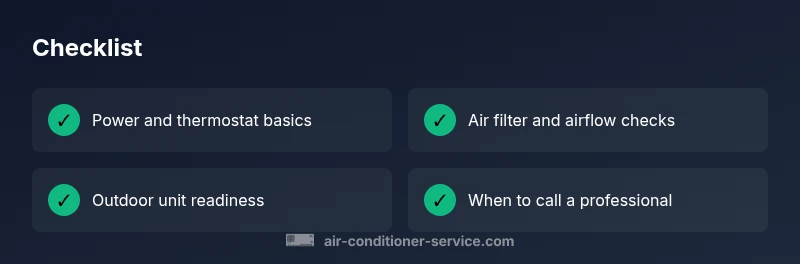
In just a few minutes you can rule out several common culprits. Confirm the thermostat is set to cool and that the fan is running. Check the circuit breaker or fuse box for any trips and reset if safe to do so. Inspect the air filter—if it’s visibly dirty or clogged, replace it. Make sure outdoor condenser fins aren’t bent or blocked by debris like leaves or grass. Ensure all supply vents inside the home are open and unblocked. A blocked filter or obstructed outdoor unit is a frequent reason for reduced cooling efficiency, and addressing these issues often restores normal operation. If you’re still not seeing airflow or cooling after these checks, you’re likely dealing with a more involved problem that requires professional evaluation.
Diagnostic flow at a glance
This section outlines a practical flow you can follow when your AC stops cooling or won’t turn on. Start with the easiest checks and progress to more advanced diagnostics: confirm power and thermostat settings, inspect air filtration and outdoor unit readiness, listen for unusual noises, feel the air coming from registers, and check for ice formation on the coils. If you identify a tripped breaker, a blocked outdoor unit, or a dirty filter, address those first. If the problem persists, move to the deeper diagnostics listed in the next sections and consider a professional inspection for refrigerant and electrical components. This logical flow aligns with Air Conditioner Service’s recommended troubleshooting approach.
Step-by-step fixes for the most common causes
This section details fixes for the top causes. Fixes are ordered from easy to harder tasks to help you progress methodically. Replace dirty filters immediately to restore airflow. Reset tripped breakers and verify the thermostat is correctly configured. Clear debris around the outdoor unit and clean condenser coils if necessary. If the system still won’t start or cool, you may be facing a refrigerant leak, a faulty compressor contactor, or a more complex electrical fault, all of which require a licensed professional. Throughout, ensure you follow safety practices and never work on live electrical components without training.
Prevention tips to minimize future outages
Prevention is better than repair. Schedule regular maintenance with a licensed technician, ideally twice a year for most central systems. Replace filters every one to three months depending on usage and filter type. Keep the outdoor unit free of vegetation, wash coils gently if you see grime buildup, and ensure proper airflow around the condenser. Check thermostat batteries and settings regularly to avoid drift in readings. Finally, document any warning signs you notice (strange noises, ice formation, or spikes in energy usage) so a technician can diagnose quickly next time.
When to call a professional
Some problems are beyond DIY troubleshooting. If you notice refrigerant leaks, unusual hissing noises, ice buildup on coils that won’t melt after a defrost cycle, burning smells, or if power remains off after checking breakers, contact a licensed HVAC technician immediately. Electrical work and refrigerant handling require certification and proper safety protocols. Air Conditioner Service recommends scheduling a professional inspection promptly to prevent additional damage and ensure refrigerant levels are correct and safe.
Final reminders and expectations
Even well-maintained systems experience issues. The key is to stay proactive: keep filters clean, maintain clear airflow around the outdoor unit, and schedule annual tune-ups. When you follow a structured diagnostic approach and avoid delay, you’re more likely to restore comfort quickly and reduce the risk of larger failures. Remember, some problems simply need a pro—the sooner you call, the shorter the downtime and the fewer surprises you’ll face when the bill arrives.
Steps
Estimated time: 30-60 minutes
- 1
Power off and safety check
Turn off power at the main breaker and the outdoor disconnect. Inspect for any obvious signs of damage or burning odors before you proceed. Verify you have a safe workspace and use protective gear as needed.
Tip: Always test for power with a non-contact tester after turning off the breaker. - 2
Check thermostat and controls
Ensure the thermostat is in cooling mode and set to a temperature lower than room temperature. If the thermostat is old or unresponsive, replace it to restore proper control.
Tip: If you have a programmable thermostat, confirm it isn’t on a delayed mode or schedule. - 3
Inspect power supply and breakers
Look for a tripped breaker or a blown fuse. Reset breakers one by one, and replace fuses if needed. If the problem recurs, a wiring issue may be present and requires a pro.
Tip: If you’re unsure which breaker controls the AC, label them for future reference. - 4
Check and replace air filters
Remove and inspect the air filter. Replace it with the correct size and type. A clogged filter reduces airflow and forces the unit to work harder, which can trigger safety shutoffs.
Tip: Consider upgrading to a higher-efficiency filter if your system supports it. - 5
Inspect outdoor unit and condensate lines
Clear away leaves and debris from the outdoor condenser. Check that the fan spins freely and that condensate lines are not blocked. A dirty coil reduces cooling capacity dramatically.
Tip: Do not use high-pressure water on fins; use a soft brush instead. - 6
Call a professional for persistent issues
If the unit still won’t run or you suspect refrigerant leaks or electrical faults, contact a licensed HVAC technician. They can diagnose refrigerant issues, capacitor health, and compressor function safely.
Tip: Provide the technician with maintenance history and the symptoms you observed.
Diagnosis: AC won't turn on or fails to cool effectively
Possible Causes
- highPower issue (tripped breaker or blown fuse)
- highIncorrect thermostat settings or faulty thermostat
- highClogged air filter reducing airflow
- mediumCondenser unit blocked or dirty coils
- lowLow refrigerant due to a leak
Fixes
- easyReset the circuit breaker and check fuses; restore power
- easyVerify thermostat settings and test/replace the thermostat
- easyReplace or clean the air filter; ensure unobstructed airflow
- easyClear debris and gently wash condenser coils; ensure outdoor unit has adequate clearance
- hardCall a licensed technician to check refrigerant levels and inspect for leaks
Common Questions
What should I do first if my AC won’t turn on?
First check the thermostat and power supply. Verify the circuit breaker hasn’t tripped and that the thermostat is set to cool. If these basics don’t solve the problem, move to checking the air filter and outdoor unit for obstructions.
Start with the thermostat and power, then check the air filter and outdoor unit if needed.
Why is my air conditioner blowing warm air instead of cold?
Warm air often indicates reduced airflow, a dirty filter, or a blocked outdoor unit. If the refrigerant level is low, you may also get warm air; this requires a professional check for leaks and proper recharge.
Usually airflow issues or refrigerant leaks cause warm air; a pro may be needed for leaks.
How can I tell if the refrigerant is low?
Low refrigerant is typically indicated by continuous cooling problems, hissing or bubbling sounds near the outdoor unit, or a noticeable drop in cooling efficiency. Only a licensed technician should handle refrigerant adjustments.
Look for persistent cooling problems and sounds near the outdoor unit; refrigerant should be handled by a pro.
Is it safe to clean the condenser coils myself?
Yes, you can safely clean condenser coils with a soft brush or cloth and gentle, low-pressure water. Avoid high-pressure hoses and never spray water into the electrical components. If coils are severely dirty or corroded, call a pro.
Gently brush and lightly rinse the coils, avoid electrical parts. Call a pro for heavy buildup.
When should I replace my air filter and how often?
Filters should be replaced every 1-3 months depending on usage, filter type, and household factors like pets or dust. Regular replacement helps maintain airflow and efficiency.
Change filters every 1-3 months; more often with pets or dusty environments.
What maintenance can I do to prevent future outages?
Schedule regular professional maintenance, replace filters promptly, keep outdoor clearance, and monitor thermostat performance. Early detection of minor issues prevents major costs and keeps your system running smoothly.
Get regular tune-ups, replace filters, and keep the outdoor unit clear to prevent issues.
Watch Video
The Essentials
- Diagnose basics first: power, thermostat, and airflow.
- Keep the outdoor unit clean and unobstructed.
- If DIY fixes don’t restore cooling, call a pro promptly.
- Maintain a maintenance schedule to prevent future outages.