What to Do If Your Air Conditioner Stops Working
A practical, step-by-step guide for homeowners and renters to diagnose why an air conditioner stops cooling and fix common issues safely—expert tips from Air Conditioner Service.


If your air conditioner stops working, start by checking power, thermostat settings, and the outdoor disconnect. If nothing changes, shut off power and call a licensed technician to inspect electrical components and refrigerant safety. This approach protects you and reduces the risk of damage while you regain cooling fast.
Common causes of AC outages
When an air conditioner stops working, homeowners often face a mystery. The most frequent culprits are simple problems that you can verify without special tools. A power issue or a tripped breaker tops the list, followed closely by thermostat or control wiring problems. Dirty air filters or a blocked condenser can trigger safety shutoffs or reduce cooling efficiency, making the unit seem dead even though it has power. Outdoor units left in direct sunlight or with grass and debris around the condenser can overheat and shut down temporarily. Refrigerant leaks or a failing capacitor are less common but serious issues that typically require a professional.
Air Conditioner Service analysis, 2026, shows that resolving power and thermostat problems alone restores cooling in many homes. The goal is to rule out the easy, non-invasive causes first, then move to more advanced checks if cooling does not resume.
Safety and quick checks you can perform safely
Safety first: never work on live electrical components. Start with simple, non-invasive checks you can do from a safe distance. Verify the thermostat is set to cool and not to a higher temperature, ensure the outdoor unit’s disconnect switch is ON, and confirm the circuit breaker for the indoor and outdoor units is not tripped. Check the air filter—if it’s clogged, replace it. Make sure outdoor areas are clear of debris so the condenser can vent heat effectively. If the unit still won’t start, turn off power at the main breaker and wait a few minutes before restoring power to reset controls. If you smell burning plastic, hear sizzling noises, or detect a refrigerant odor, evacuate and contact a professional immediately.
How to read sounds, indicators, and error codes
Most modern ACs use a small display or indicator lights to signal faults. A hum from the compressor without cooling usually indicates power but a control issue, while a clicking sound from the outdoor unit can point to a faulty start capacitor or contactor. A frozen evaporator coil often indicates reduced airflow or refrigerant problems. If your unit shows error codes, refer to the user manual or the manufacturer’s website to interpret the code in plain language. Document any codes and the circumstances when they appear to share with a technician. This step helps narrow down the root cause quickly and reduces diagnostic time.
When to call a professional and what to expect
If basic checks don’t restore cooling, it’s time to involve a licensed HVAC technician. Electrical components, refrigerant handling, and compressor diagnostics require formal safety training and tools. A pro will typically perform a system pressure test, verify refrigerant levels, inspect wiring and capacitors, and test the thermostat and control board. Expect a diagnostic fee, potential inspection of the outdoor unit, and a recommended repair or replacement plan. In urgent cases, such as electrical smells or fire risk, contact emergency services before calling a technician.
Maintenance habits to prevent future outages
Prevention beats repair. Schedule seasonal maintenance, including coil cleaning, refrigerant leak checks, and capacitor testing. Replace or clean air filters regularly and keep the outdoor unit free of debris. Keep the thermostat firmware updated if applicable and ensure vents are not blocked by furniture. Regular maintenance helps catch problems early, improves efficiency, and reduces the likelihood of sudden outages during peak cooling months.
Troubleshooting printable checklist
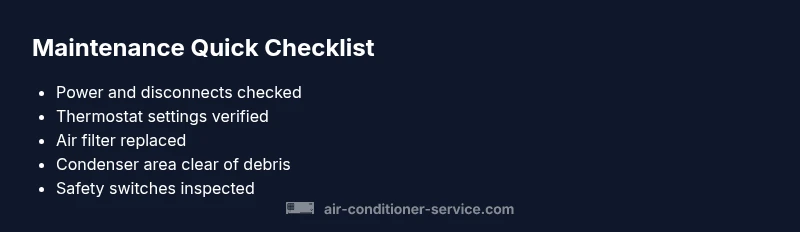
Use this quick printable checklist when troubleshooting: check power at the outlet and main breaker, review thermostat settings, examine the outdoor disconnect, replace the air filter, inspect the condenser for debris, listen for unusual noises, and note any error codes. If unresolved, power down before contacting a professional. Safety and systematic checks prevent wasted time and costly mistakes.
Steps
Estimated time: 45-60 minutes
- 1
Power safety check
Turn off the main power at the breaker panel before touching any components. Inspect both indoor and outdoor disconnects to confirm power is present when re-energizing. This step prevents shocks and further damage.
Tip: Always keep a clear path to the main breaker in case you need to cut power quickly. - 2
Thermostat and controls
Ensure the thermostat is set to cool and that the temperature is lower than the room temperature. Replace batteries if it’s a wireless model and verify there are no error indicators on the thermostat.
Tip: If the thermostat is old, consider upgrading to a programmable model for better reliability. - 3
Inspect the outdoor unit and wiring
Check for visible debris around the condenser, ensure the fan spins freely, and reseat any loose wiring or disconnects. A quick visual check can uncover obvious blockages or loose connections.
Tip: Do not touch electrical wires while the unit is energized. - 4
Filter and airflow check
Replace dirty air filters and ensure supply vents are not blocked by furniture or drapes. Poor airflow can trigger safety shutoffs or cause the unit to run without effectively cooling.
Tip: Filter changes can dramatically improve efficiency and cooling speed. - 5
Condensate overflow and safety switches
If your system has a condensate pan or float switch, ensure it isn’t blocked. A floating switch can shut down the system to prevent water damage.
Tip: Always avoid tilting or altering safety switches manually. - 6
breaker and fuse test
Test the breakers and fuses for the circuit feeding the AC. If you see signs of wear or a blown fuse, replace them only with the correct rating.
Tip: Never bypass a safety device to get the unit running. - 7
Call a professional if unresolved
If the unit still won’t start after these checks, contact a licensed HVAC technician. Electrical and refrigerant work requires trained technicians.
Tip: Document codes and symptoms to speed up the diagnostic process.
Diagnosis: AC won’t turn on or stops cooling during operation
Possible Causes
- highPower issue (no power reaching the unit)
- highTripped circuit breaker or blown fuse
- mediumFaulty thermostat or incorrect settings
- mediumFailed start capacitor or control contactor
Fixes
- easyCheck the main and disconnect breakers, and reset any tripped breakers.
- easyVerify thermostat is set to cool, at a valid temperature, and wired correctly.
- easyInspect the outdoor disconnect and ensure it is ON; reseat any blown fuses.
- easyReset the condensate overflow switch if applicable.
- mediumIf capacitor or contactor appears damaged or burnt, contact a professional for replacement.
Common Questions
What should I check first if my air conditioner stops working?
Start with power at the outlet and main breaker, then confirm thermostat settings. If these basics aren’t at fault, inspect the outdoor disconnect and filter for restrictions.
First check power, thermostat, and the outdoor disconnect; then look at the filter if needed.
Why is my AC running but not cooling?
Common reasons include a refrigerant issue, dirty coils or filter, or thermostat problems. A professional should verify refrigerant levels and compressor operation.
Not cooling can mean refrigerant or airflow problems; a technician should check refrigerant and compressor.
Can I fix a capacitor myself?
Capacitors store high voltage and can cause shocks even when unplugged. If you suspect a capacitor, call a licensed HVAC technician.
Capacitors can be dangerous; don’t handle them unless you’re trained.
How often should I replace the air filters?
Follow the manufacturer’s guidelines; in many homes, it's checked monthly and replaced as needed to maintain airflow.
Check your filter monthly and replace as needed to keep airflow steady.
When is emergency repair needed?
If you notice burning smells, unusual noises, or refrigerant leaks, shut off power and contact emergency services or a technician immediately.
If you smell burning or hear sizzling, stop and call a professional now.
How can maintenance prevent future failures?
Regular maintenance, coil cleaning, and professional inspections prevent many breakdowns and improve efficiency.
Routine maintenance helps your AC run reliably and efficiently.
Watch Video
The Essentials
- Check power and thermostat first to restore cooling quickly
- Clear or replace dirty air filters to improve airflow
- If basics fail, call a licensed technician promptly
- Maintain seasonal upkeep to prevent future outages
- Document codes and symptoms for faster diagnostics