Why Do Air Conditioners Stop Cooling? A Practical Troubleshooting Guide
Urgent, practical guide for diagnosing why your air conditioner stops cooling. Learn quick checks, a clear diagnostic flow, and safe, step-by-step fixes to restore comfort fast.


Most likely, your AC is not cooling due to airflow or refrigerant issues. Start by checking the thermostat, air filter, and outdoor condenser clearance, then inspect the breaker. If the unit still won’t cool, you may have a refrigerant leak or a faulty compressor. Safety first: disconnect power before touching electrical parts, and call a pro if needed.
Problem overview and quick checks
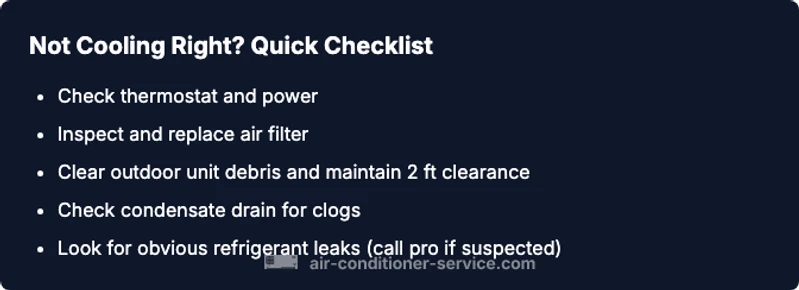
When your air conditioner stops cooling, it can feel urgent. According to Air Conditioner Service, many cooling problems begin with simple, safe checks you can perform without special tools. Start by confirming the thermostat is set to cool and not to a higher temperature or the fan setting. Then examine the air filter; if it's clogged, air cannot reach the evaporator coil, reducing cooling capacity. Check the outdoor condenser for debris and ensure at least two feet of clearance on all sides to allow heat to escape. Inspect the circuit breaker or fuse box; a tripped breaker will shut off power to the unit even if the thermostat calls for cooling. Finally, verify the condensate drain is clear; a blocked drain can trigger an overflow switch and shut down the system as a precaution. If you complete these steps and the unit still won’t cool, move to the diagnostic flow for deeper causes.
Common causes you can inspect safely
Several common culprits cause a loss of cooling, and most are easy to address. A dirty air filter or closed registers reduces airflow, making the evaporator coil freeze or struggle to absorb heat. A blocked or dirty outdoor condenser coil or nearby debris can prevent proper heat exchange. A thermostat that isn’t calibrated can misread room temperature, signaling the system to stop cooling. Refrigerant leaks or low charge, while less visible, will dramatically affect cooling and should only be handled by a licensed tech. Finally, leaky or poorly sealed ductwork can waste cooled air before it reaches living spaces. Tackle the low-hanging fruit first and beware that some issues require professional service.
Understanding airflow and cooling dynamics
A working cooling cycle depends on clean air reaching the evaporator coil, proper refrigerant pressure, and heat exchange on the outdoor condenser. When airflow is restricted, the coil can frost over, lowering cooling efficiency and triggering temperature swings. If you hear a squeal or grinding from the blower motor or feel weak air at vents, these may indicate a failing fan or motor. In many homes, a simple filter change and coil cleaning restore comfort. But if the refrigerant line is losing charge or there are unusual smells, the system needs a licensed technician. The goal is consistent, even airflow and stable temperatures throughout the space.
Safety first: what you should and shouldn't touch
Some checks are safe for homeowners; others require professional training. Always power down at the breaker before inspecting wiring or coils, and never refrigerant-handle or recharge a system yourself. Do not use sharp tools on fins or attempt to bypass safety switches. When opening access panels, keep hands clear of moving components. If you notice burning smells, buzzing noises, ice on coils, or a rapidly rising thermal reading on your thermostat, stop immediately and call a pro. Regularly cleaning and maintaining the unit reduces risk and protects your warranty.
Prevention to avoid future cooling loss
Prevention is cheaper than repair. Establish a simple maintenance routine: replace the pleated air filter every 1–3 months, depending on usage and pets; keep outdoor units clear of leaves, grass, and vegetation; schedule an annual professional inspection to check refrigerant levels, electrical connections, and the condensate drain. Use a programmable thermostat to avoid wasted energy and improve efficiency. Consider upgrading to a higher-SEER unit if you repeatedly face cooling losses during peak seasons. Small, proactive steps keep you cooler and can extend the life of your system.
Steps
Estimated time: 60-90 minutes
- 1
Power down and verify settings
Turn off the unit at the breaker before inspecting any internals. Confirm the thermostat is set to cool and that the fan is not running on high without cooling. This prevents accidental shock and helps isolate the issue.
Tip: Always start with the basics to rule out simple misconfigurations. - 2
Inspect and replace the air filter
Remove the filter and compare it to the recommended replacement interval. If dirty or discolored, replace with the correct size. A clogged filter dramatically reduces airflow and cooling performance.
Tip: Use written reminders for filter changes to maintain consistency. - 3
Check supply vents and ducts
Ensure all vents are open and unobstructed. Check for closed dampers or visible blockage in ducts that could be diverting cool air away from living spaces.
Tip: Even partial obstructions can cut cooling by a lot. - 4
Examine the outdoor unit and condenser
Clear debris around the outdoor unit for at least 2 feet. If accessible, gently wipe the condenser fins with a soft brush and check for obvious damage or bending.
Tip: Avoid using high-pressure water; it can bend fins and reduce efficiency. - 5
Inspect condensate drain and pan
Look for clogs in the condensate line and ensure the pan is not overflowing. A blocked drain can trigger safety shutoffs that stop cooling.
Tip: A small amount of condensate is normal, but standing water is a red flag. - 6
Check refrigerant indicators and electricals
If you suspect a leak or low refrigerant, do not attempt a recharge. Have a licensed technician verify refrigerant levels and inspect connections and electrical components.
Tip: Refrigerant handling requires proper certifications. - 7
Call a professional for unresolved issues
If none of the above resolves the cooling problem, schedule a service call. Refrigerant leaks, compressor faults, and major electrical problems require specialized tools.
Tip: Document any symptoms and actions taken to help the tech diagnose faster.
Diagnosis: Air conditioner not cooling
Possible Causes
- highAirflow restriction due to dirty filter or closed vents
- highOutdoor condenser blocked or dirty coil
- mediumRefrigerant leak or low charge
- mediumThermostat miscalibration or control board issue
Fixes
- easyReplace or clean the air filter; ensure all supply vents are open
- easyClear debris and check clearance around the outdoor unit; clean coil if accessible
- hardIf refrigerant issues are suspected, contact a licensed technician for inspection and recharge
- mediumTest and recalibrate thermostat or replace faulty control components as directed by a pro
Common Questions
Why is my AC running but not cooling, and the fan seems loud?
This usually points to airflow issues, a dirty filter, or a restricted coil. It can also indicate a refrigerant problem or a failing fan motor. Start with a filter check and outdoor unit clearance, then call a pro if noises continue.
If your unit runs but won’t cool, check airflow and filters first, then call a technician if the noise persists.
Can a dirty filter completely stop cooling, or just reduce efficiency?
A dirty filter can significantly reduce airflow, causing poor cooling or icing on the evaporator. It may not stop cooling entirely but will make the system work harder and longer to reach the desired temperature.
A dirty filter reduces airflow and makes cooling harder; it may lead to partial or delayed cooling.
Is it safe to add refrigerant myself if the system is low?
No. Refrigerant handling requires certification, specialized equipment, and can be dangerous. A licensed technician should diagnose leaks and restore the correct charge.
Do not add refrigerant yourself; contact a pro for leaks and proper charging.
How often should I replace the air filter?
Most homes benefit from a filter every 1–3 months, depending on use, pets, and household conditions. Check the manufacturer’s guidelines for your model.
Change the filter every 1–3 months based on use and pets.
What safety steps should I take before inspecting my AC?
Turn off power at the breaker before opening panels, keep hands away from moving parts, and avoid touching electrical components. If you smell burning or hear buzzing, stop and call a pro.
Power off before touching the unit; if you hear unusual noises, call a professional.
When should I call a professional for not cooling?
If basic checks don’t restore cooling, or you suspect refrigerant leaks, electrical faults, or a failed compressor, contact a licensed HVAC technician promptly.
Call a professional if basic steps don’t fix it or you suspect leaks or electrical faults.
Watch Video
The Essentials
- Start with basics: thermostat, filter, and airflow.
- Address airflow and outdoor unit issues first.
- Don’t DIY refrigerant or electrical repairs—call a pro.
- Regular maintenance prevents future cooling losses.