Why Did Air Conditioner Stop Working? A Practical Troubleshooting Guide
Learn why your air conditioner stopped and follow a practical, step-by-step guide to diagnose common issues, fix simple problems, and know when to call a professional for reliable cooling.


Most often, an air conditioner stops because of power issues, a tripped breaker, a dirty filter, or a faulty thermostat. Start by checking the breaker, resetting if needed, replacing the filter, and verifying thermostat settings. If it still won’t run or cool, continue with the full guide to determine whether it’s a simple fix or a professional repair is needed.
Why did air conditioner stop working? Common Causes
If you’ve just asked the question, why did air conditioner stop working, you’re not alone. In many homes, the interruption is caused by straightforward, fixable issues rather than a failed compressor. According to Air Conditioner Service, the top culprits are power problems (tripped breakers or blown fuses), a dirty air filter that restricts airflow, a thermostat that isn’t communicating correctly, and outdoor units impeded by debris or overgrowth. Begin with safe, low-effort checks: confirm the unit is plugged in, inspect the electrical panel for a tripped breaker, and reset it if needed. Replace any disposable or dirty filters, and verify thermostat settings to ensure cooling mode is active and the target temperature isn’t set unrealistically low. If the system still won’t start or you notice weak cooling, you’ll progress through deeper checks to identify whether it’s a simple fix or a situation requiring professional attention.
Start with the Basics: Safety and Quick Checks
Safety comes first when diagnosing an air conditioner. Before touching any components, switch off the power at the breaker and keep hands away from moving parts. Check for an obvious supply issue: is the outdoor unit’s disconnect switch on? Is the indoor blower running, and is there warm air at the registers? Confirm the thermostat is not in override mode and that fresh air is circulating around the outdoor condenser (at least 3 feet of clearance). A dirty or clogged filter also forces the system to work harder, often triggering a no-cool condition; replace the filter and run the unit on a clean path for air intake and exhaust. If you notice buzzing noises, burnt smells, or sparks, shut off power and call a pro immediately. These quick checks save time and prevent injury while you troubleshoot.
Common Failure Points and Quick Fixes
Many outages arise from straightforward issues. A tripped breaker or blown fuse stops the entire system; resetting the breaker usually restores power. Thermostats can drift or lose contact with the control board, so recalibrating or replacing the thermostat can restore proper operation. Airflow problems often come from a dirty filter or blocked return vents, so replace the filter and ensure vents are open. Outdoor units can get clogged with leaves, grass, or dirt, reducing heat rejection; carefully remove debris from the housing using a broom from a distance, never sticking hands into the fins. Refrigerant leaks are serious and require licensed service; the unit should not be charged by homeowners. If you’ve exhausted the basics and the AC still isn’t delivering cold air, the issue may lie with the compressor or control wiring, which warrants professional inspection.
Diagnostic Flow: Symptom to Solution
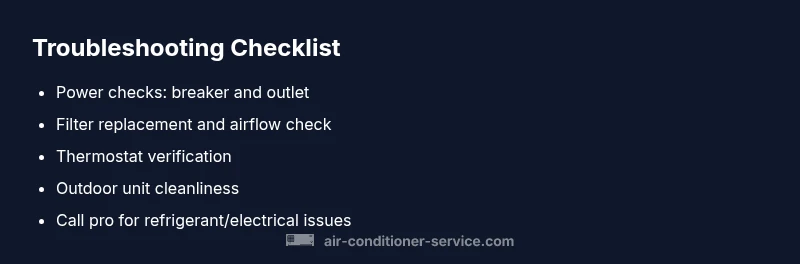
A structured diagnostic flow helps you avoid guesswork. Start with the symptom: no power, weak cooling, or unusual noises. For no power, test the outlet, reset breakers, and inspect fuses. If cooling is weak, check airflow, replace filters, and verify refrigerant lines are intact. If you hear noises or smell burning, shut down and call a professional. For each symptom, list possible causes (power, thermostat, airflow, refrigerant, electrical components). Then apply the corresponding fixes in order of simplicity: power checks, thermostat, filter change, outdoor unit cleaning, and finally calling a professional if none resolve the issue. This method aligns with Air Conditioner Service's practical approach to troubleshooting and emphasizes safety over risky DIY repairs.
Safe DIY Steps and What Not to Do
A practical, safety-first approach guides most home fixes. Do not attempt refrigerant work or capacitor testing unless you’re trained; these tasks require licensed technicians. Start with non-invasive steps: confirm power, inspect the thermostat, replace filters, and clear the outdoor unit. Use a vacuum or soft brush to remove dust from the coils at a comfortable distance, and never spray water into electrical components. If you must test for airflow, run the fan without cooling and note changes in sound or airflow, which can indicate obstructions or motor issues. If you try a restart and the unit cycles but shuts off quickly again, stop and seek professional service. Some problems aren’t a DIY fix; forcing the system to run can cause further damage and safety hazards.
When to Call a Pro and Preventive Tips
If basic checks don’t restore performance, or you identify signs of a refrigerant leak, electrical fault, or compressor issue, contact a licensed HVAC technician. The Air Conditioner Service team recommends scheduling a professional assessment when you notice persistent warm air, strange odors, frost or ice buildup on coils, frequent cycling, or a decline in performance after weather changes. Before the visit, note the unit’s age, last maintenance date, thermostat model, and any recent changes in use. Have model and serial numbers ready for the technician, and provide access to the outdoor unit and the electrical panel. While you wait, document symptoms with dates, times, and behavior; this helps the technician diagnose more quickly.
Steps
Estimated time: 45-60 minutes
- 1
Power down and safety check
Shut off the unit at the main breaker and disconnect switch if present. Confirm the area around the outdoor unit is clear of debris and that safety gear (gloves, eye protection) is available if you need to inspect the exterior components.
Tip: Never touch wiring or move large metal parts while power is on. - 2
Reset power and test the outlet
Restore power and use a known-good outlet to verify the device receives power. Listen for the outdoor fan and indoor blower; note any abnormal sounds or smells when you switch the unit on.
Tip: If the breaker trips again, stop and call a pro—there may be an electrical fault. - 3
Inspect and replace the filter
Remove and inspect the air filter. If dirty or clogged, replace with a filter of the same size and type. This often restores airflow and cooling efficiency.
Tip: Check filter material and MERV rating; higher isn’t always better for every system. - 4
Check thermostat settings
Verify the thermostat is set to cool, and the setpoint is comfortably above room temperature. If it still won’t respond, remove the thermostat cover to inspect wiring and display for error codes.
Tip: If you suspect a thermostat issue, consider temporarily wiring a simple thermometer to test cooling signals. - 5
Inspect outdoor condenser and refrigerant paths
Look for leaves, grass, and dirt around the condenser. Gently clean the fins with a soft brush from a distance. Do not spray water directly onto electrical connections or into the coil housing. If you notice frost, ice buildup, or refrigerant signs, stop and call a pro.
Tip: Always avoid poking fins; use a brush to maintain coil geometry. - 6
Test run and monitor performance
Restart the system and observe whether it starts and maintains cooling. Listen for consistent fan operation and check for even cooling in the home. If issues persist, document symptoms and prepare for a professional diagnostic.
Tip: Note time of day, outdoor temperature, and any unusual patterns in comfort changes.
Diagnosis: AC won't turn on or cool
Possible Causes
- highPower issue (tripped breaker or blown fuse)
- mediumThermostat malfunction or miscalibration
- mediumAirflow restriction from dirty filter or blocked vents
- lowOutdoor condenser blocked or dirty coils
- lowLow refrigerant or electrical component fault
Fixes
- easyCheck the electrical panel; reset any tripped breakers and replace blown fuses
- easyTest and recalibrate or replace the thermostat if needed
- easyReplace the air filter and ensure return vents are open for proper airflow
- easyGently remove debris from the outdoor unit and ensure clear space for airflow
- mediumIf refrigerant leaks or electrical faults are suspected, contact a licensed technician
Common Questions
What should I check first when the AC won't turn on?
Start with power: confirm the breaker is on, the outdoor disconnect is engaged, and the thermostat is not in a non-cooling mode. If power is intact, inspect the air filter and basic wiring connections. Air Conditioner Service recommends completing these steps before scheduling any service.
First, check the breaker and thermostat settings. Then inspect the filter and ensure the outdoor unit is clear of debris.
Why is my AC running but not cooling?
Common causes include a dirty filter, low refrigerant, or a malfunctioning compressor. Begin by replacing the filter and checking for airflow. If cooling remains weak, contact a licensed technician to inspect refrigerant levels and electrical controls.
If it runs but won’t cool, try replacing the filter and checking airflow; if that doesn’t help, call a pro.
How often should I replace the air filter to prevent problems?
Most homes benefit from a filter replacement every 1-3 months, depending on usage, pet dander, and indoor air quality. Regularly replacing filters helps maintain airflow and efficiency and reduces wear on the system.
Usually every 1-3 months, depending on use and pets.
Is resetting the thermostat safe for my unit?
Yes, resetting or recalibrating the thermostat is a safe first step. If the thermostat still doesn’t respond or the unit continues to misbehave, consider upgrading to a modern programmable model for better reliability and energy savings.
Resetting the thermostat is safe; if it still acts up, consider an upgrade for reliability.
When should I call a professional?
If you detect refrigerant leaks, persistent electrical faults, ice buildup on coils, unusual noises, or a unit that won’t stay on after basic troubleshooting, call a licensed HVAC technician. Early professional diagnosis can prevent bigger, costlier problems.
Call a pro if there are leaks, electrical faults, or ice on coils, or if basic fixes don’t work.
Watch Video
The Essentials
- Check power first and reset breakers as needed.
- Replace dirty filters to restore air flow.
- Verify thermostat settings and calibration.
- Avoid refrigerant handling; call a pro for leaks.
- Schedule regular maintenance to prevent future outages.