Why Won't My Air Conditioner Stay On? A Practical Troubleshooting Guide
Urgent, practical guide to diagnose why your air conditioner won't stay on. Step-by-step checks, safety tips, and when to call a pro from Air Conditioner Service.


The most likely cause is a safety shutoff or a thermostat issue, followed by an overloaded circuit or a dirty filter. Start with power checks, thermostat verification, and a quick filter swap; if it still won't stay on, inspect the outdoor unit breaker, and listen for buzzing or burning smells. If these steps don't fix it, contact a professional.
Why the issue happens and what to know
If you’re wondering, "why won’t my air conditioner stay on?" the answer is usually a mix of safety protections and maintenance gaps. According to Air Conditioner Service, most cycling problems begin with a tripped breaker, an incorrect thermostat setting, or a clogged air filter. These everyday culprits trigger built-in protections, causing the system to shut off to prevent damage. In many homes, a dirty filter or a misconfigured schedule creates the impression of unstable cooling even when the compressor is healthy. This article gives you practical checks, a clear diagnostic flow, and actionable repairs you can perform safely. Remember: if you smell burning plastic, hear unusual buzzing, or the breaker keeps tripping, stop and call a licensed technician. | 150-180 words
Quick checks you can perform safely
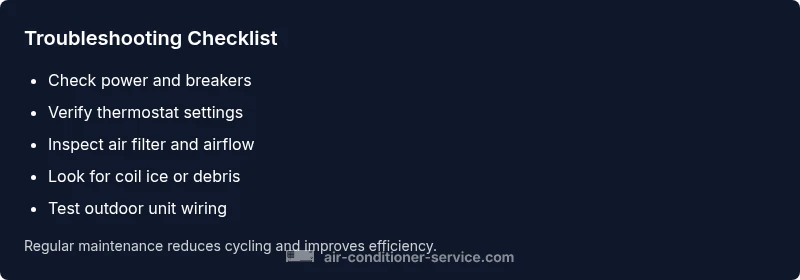
- Power and breaker: Confirm the disconnect is on and the circuit breaker feeding the outdoor unit is not tripped. If it is, reset it and test again. If it trips again, do not continue troubleshooting; there is a serious electrical issue.
- Thermostat settings: Make sure the thermostat is in cooling mode, set to a lower temperature than ambient, and not in an “auto” program that might turn off the compressor too soon.
- Air filter: A clogged or very dirty filter can cause rapid pressure changes and short cycling. Replace or clean the filter, then restart the system.
- Outdoor unit check: Look for obstruction near the condenser, and listen for buzzing or sizzling sounds that indicate electrical problems.
- Reset sequence: Turn off the unit at the thermostat, then switch the breaker off for 30 seconds before restoring power.
- Ice on coils: If you see frost on indoor coils, turn system off and let it thaw; this usually points to airflow or refrigerant issues. | 160-190 words
Diagnosing the symptom: not staying on vs not cooling
Not staying on and not cooling are related but distinct issues. If the unit turns on but shuts off after a few minutes, you’re likely dealing with a safety interruption (overload, thermostat fault, or compressor protection). If the air feels warm even while running, the problem could be airflow restriction, refrigerant issues, or a failing compressor. Use the diagnostic flow to separate common causes from rare ones and avoid unnecessary repairs. In many cases, a clean filter and a simple thermostat recalibration restore consistent cooling. Throughout diagnosis, keep safety in mind: never bypass safety devices or touch exposed electrical components without proper training. | 150-170 words
Common electrical issues
Electrical faults account for a large share of on/off cycling problems. Tripped breakers or blown fuses indicate an overload condition that requires immediate attention. A failing capacitor or relay in the outdoor unit can cause intermittent startup or abrupt shutdowns. Low voltage from a damaged wiring harness or poor connections can also mimic a blown fuse. If you notice buzzing, burning smells, or a warm outdoor unit, turn off power at the breaker and call a professional. These issues are not safe to diagnose with improvised methods. | 150-170 words
Filter, airflow, and thermostat considerations
A clogged indoor filter restricts airflow, causing the system to overheat and shut down to protect the compressor. Poor airflow also makes thermostats read inaccurately, leading to premature cycling. Check filters monthly during peak season and replace with the correct size. Thermostats that are dirty or miscalibrated can misread room temperature, causing cycles that feel erratic. If your thermostat is old, consider upgrading to a digital, programmable model with wide-range compatibility to reduce misreads. A well-maintained diffuser and blower motor help ensure steady airflow and reliable operation. | 150-170 words
What to do if the unit keeps cycling on/off
If cycling continues, isolate the cause with a calm, methodical approach. Step one: rule out simple culprits (power, thermostat, filter). Step two: inspect the outdoor unit for debris and ensure the fan is turning freely. Step three: test for capacitor or contactor issues with appropriate tools or a professional. Step four: check refrigerant pressure only if you have training; low refrigerant requires a licensed technician. Avoid running the system while ice forms on coils or if you detect unusual noises. Document symptoms and times of cycling to help a technician pinpoint the fault. | 160-170 words
When to call a pro and what to expect
If basic checks don’t resolve the issue, it’s time to contact a pro. A technician will typically inspect electrical connections, test capacitors and relays, measure refrigerant pressure, and assess the control board. Expect a diagnostic fee, followed by repair quotes for components or refrigerant service. The goal is to restore safe, reliable operation and prevent future breakdowns. Regular maintenance plans can reduce on/off cycling by catching wear and component drift early. | 130-150 words
Preventive maintenance to avoid future trips
Preventive maintenance is your best defense against unexpected shutdowns. Schedule annual inspections of the electrical panel, outdoor condenser, and indoor blower. Replace filters every 1–3 months during heavy use and clean the coil surfaces to maintain efficiency. A pro can perform a refrigerant check, clean condensate drains, and verify thermostat accuracy to prevent recurring problems. Keeping a maintenance log helps you spot trends and act before a failure occurs. | 130-150 words
Safety warnings and best practices
Safety comes first. Always cut power at the main breaker before inspecting electrical components inside the air handler or contactor panel. Use insulated tools and never bypass safety switches or fuses. If you’re uncomfortable with electrical diagnostics or if you smell burning, hear buzzing, or see visible damage, stop and contact a licensed technician immediately. Regular, supervised maintenance by professionals reduces risk and increases system longevity. | 100-120 words
Steps
Estimated time: 60-90 minutes
- 1
Power and safety prep
Begin by turning off the power at the main breaker and at the thermostat to prevent shocks. Verify the outdoor disconnect is accessible and safe to operate. Gather a flashlight, a clean filter, and basic tools if you have electrical experience.
Tip: Always de-energize before touching electrical components. - 2
Check thermostat and controls
Set the thermostat to cool mode and a temperature lower than room temp. If the display is blank or erratic, replace batteries or reset the device. Confirm there are no scheduling conflicts that could turn the system off prematurely.
Tip: Consider temporarily bypassing smart schedules by using a simple manual temp setting. - 3
Inspect air filter and indoor blower
Remove and inspect the air filter; replace if dirty or clogged. Check the blower compartment for obstructions and listen for unusual noises that could indicate a motor issue. A clean filter improves airflow and reduces cycling.
Tip: Use the correct filter size and MERV rating for your system. - 4
Examine outdoor unit and wiring
Clear debris around the condenser and ensure the fan spins freely when powered. Inspect visible wiring for loose connections or corrosion. A humming sound with a stalled fan often points to a capacitor or relay problem.
Tip: Do not poke at wiring while power is on. - 5
Test electrical components safely
If you have training, test capacitors and contactors with a multimeter. Look for bulging capacitors or pitted relays. If you’re unsure, skip this step and jump to calling a pro.
Tip: Never touch live terminals with bare hands. - 6
Consider refrigerant and professional help
Low refrigerant or a refrigerant leak requires a licensed technician. Do not attempt to discharge or refill refrigerant yourself. A pro can perform a pressure test and seal leaks.
Tip: Document symptoms and dates to help the tech diagnose quickly.
Diagnosis: AC turns off unexpectedly after starting or stops running before reaching the set point
Possible Causes
- highPower supply issues (outlet, cord, or circuit breaker)
- mediumFaulty thermostat or sensor reading incorrect temperature
- mediumCapacitor or relay failure in the outdoor unit
- lowOverheating or refrigerant-related protection
Fixes
- easyCheck and reset the circuit breaker; ensure outlet is supplying power
- easyTest thermostat with a known-good unit or recalibrate settings
- mediumInspect outdoor unit wiring, capacitors, and contactor; replace if needed
- hardIf refrigerant leaks or cooling performance is poor, call a professional for refrigerant service and system inspection
Common Questions
What is the first thing I should check when my AC won't stay on?
Begin with the power supply, thermostat settings, and the air filter. These simple checks resolve most on/off cycling issues. If the breaker trips, or you notice burning smells, stop and call a professional.
First, check power, thermostat, and air filter. If the breaker trips or you smell burning, stop and call a professional.
Can a dirty filter cause the unit to shut off?
Yes. A clogged filter reduces airflow, causes overheating, and can trigger short cycling. Replacing the filter often resolves the issue and restores stable operation.
Yes. A dirty filter can cause short cycling and shutdown; replacing it often fixes the problem.
Is a tripped breaker always the problem?
A tripped breaker is a common symptom of an overloaded circuit or a short. Reset the breaker, but if it trips again, there may be a larger electrical fault that requires a professional.
A tripped breaker is common but may indicate a larger electrical fault if it repeats.
Why does my thermostat show heat instead of cool?
Thermostat misreads can cause calling for heat or misfire. Check that the mode is set to cooling, the temperature setting is appropriate, and the sensor isn’t tilted or obstructed.
If it’s showing heat, make sure it’s set to cooling and that the sensor isn’t blocked.
How long should I wait after resetting the breaker?
Give the system a few minutes to reboot after the breaker is reset. If it still won’t stay on, recheck all basic causes before calling a pro.
Wait a few minutes after resetting, then test again. If it still fails, recheck basics or call a pro.
Can low refrigerant cause cycling?
Low refrigerant can cause reduced cooling and cycling, but it’s not a DIY fix. A licensed technician must diagnose and repair refrigerant leaks and recharge the system.
Low refrigerant can cause cycling, but it requires a professional recharge and leak repair.
Watch Video
The Essentials
- Start with power, thermostat, and filter checks.
- Differentiate not staying on from not cooling to pinpoint causes.
- Electrical faults and safety components are common culprits.
- Call a pro for refrigerant, capacitor, or control-board issues.