Why Is Air Conditioner Not Turning Off? Troubleshooting Guide
Urgent troubleshooting guide from Air Conditioner Service: learn why your air conditioner won’t turn off, quick checks, diagnostic steps, safety tips, and when to call a professional.


When your AC won’t turn off, the most likely culprits are a stuck thermostat, a relay or contactor left closed, or faulty wiring feeding the outdoor unit. Power down at the main breaker, verify the thermostat is set correctly, and check for a closed contactor in the outdoor unit. If it persists, call a professional.
Why is the Air Conditioner Not Turning Off? Immediate Safety Checks
If you’re asking why is air conditioner not turning off, the issue is typically a control path that’s stuck in a cooling cycle. The most common causes are a thermostat that’s stuck on cooling, a relay or contactor that has welded closed, or damaged wiring that keeps the outdoor unit energized. For safety, start by cutting power to the system at the main breaker and then proceed with careful inspections. According to Air Conditioner Service, begin with a quick power cut, verify the thermostat’s mode and setpoint, and test if the outdoor contactor is releasing when power returns. This fast sequence often stops runaway cooling and reduces the risk of electrical hazards. Keep in mind that working on live electrical components is dangerous; if you’re unsure, pause and seek professional help.
- Check that the thermostat is not in “on” mode, check for a locked temperature setting, and confirm there isn’t a remote sensor feeding erroneous signals.
- If a programmable thermostat is used, ensure schedules aren’t forcing cooling after you’ve left the house.
- Inspect for obvious signs of damage or frayed wiring around the indoor unit and thermostat terminal block.
If the unit continues to run after these checks, move to deeper investigations and consider safety-first steps like turning off the breaker and removing power to the outdoor condenser before any inspection of wiring or relays.
Common Causes at a Glance
There are several frequent culprits behind a continuously running AC. First, a thermostat failure or miscalibration can leave the system in cooling mode even when the user changes the setting. Second, a relay or contactor in the outdoor unit can fail closed, keeping power applied to the compressor and fan. Third, wiring faults—from loose connections to damaged insulation—can create a constant energizing signal. Finally, a faulty safety switch or float switch can falsely indicate a safety condition and keep the system running as a precaution. Understanding these common causes helps you triage quickly, prioritize power safety, and avoid needless part replacements.
- Thermostat stuck or miscalibrated
- Stuck contactor/relay in outdoor unit
- Wiring faults or transformer issues
- Faulty safety switches or sensors
If you identify one of these as the root cause, proceed with targeted fixes or contact a licensed technician for diagnostics, especially when high voltage is involved.
Thermostat and Wiring: The Control Center
The thermostat and its wiring form the nerve center of the cooling cycle. A sensor or terminal fault can keep sending a cooling request to the outdoor unit, even when you downshift the setting. Start with a simple reset: reseat any quick-connect terminals, check for loose wires, and replace batteries if your thermostat is battery-powered. If your thermostat is a digital model, review the wiring diagram and ensure the C-wire (common) is solidly connected. A miswired C-wire can cause erratic behavior and may prevent the system from recognizing an “off” command. If the thermostat seems to be functioning but the unit remains on, the issue may be outside the thermostat, involving relays or contactors.
- Reset the thermostat and recheck settings
- Inspect all terminal connections for corrosion or looseness
- Confirm the C-wire is properly connected (if applicable)
- Consider upgrading to a modern programmable thermostat if the current unit is old or malfunctioning
Electrical Relays and Contactor Health
Relays and contactors are mechanical switches that control the flow of electricity to the compressor and fan. A welded or pitted contact can fail to open, leaving the circuit energized. This is a common mechanical failure when the indoor or outdoor unit won’t turn off. Visual inspection may reveal burned marks or a stuck lever, but many issues require a meter and testing equipment. Because this involves high voltage, approach with caution. If you notice buzzing from the contactor, a burned smell near the outdoor unit, or the unit staying on despite power cycling, these are red flags.
- Look for visible signs of wear or welding in the outdoor contactor
- Do not try to “jump” or bypass the contactor—this is dangerous
- If the contactor is sticking, replacement is usually straightforward for a trained technician
Outdoor Unit, Refrigerant, and System Health
In some cases, the outdoor unit will continue to run due to refrigerant pressure imbalances or a mis-reading pressure switch. A stuck outdoor unit fan can also create a condition where the system seems stuck in cooling, especially on hot days when the compressor seeks to reach a target temperature. These issues often require specialized tools and refrigerant handling skills. If you’ve confirmed thermostat and relay health but the unit still won’t turn off, the next step is to schedule a professional diagnosis of refrigerant pressures, electrical controls, and overall system health. Do not attempt to charge or vent refrigerant yourself, as that is hazardous and may be illegal without proper certification.
- Avoid DIY refrigerant work
- Check for outdoor fan obstructions or debris that might keep spinning the unit
- Ensure proper clearances around the outdoor condenser for efficient safety work
When to Call a Professional and Safety Tips
If basic checks don’t resolve the issue, it’s time to call a licensed HVAC technician. Electrical panels carry shock risks, and improper handling can damage the compressor or create a fire hazard. A pro can safely test relays, inspect wiring, verify thermostat compatibility, and check refrigerant levels and pressures. In the meantime, keep the space ventilated, avoid using portable heaters or devices that could overload circuits, and ensure pets and children stay away from hot surfaces and wiring. Regular maintenance can reduce issues that cause a system to stay on, such as dust buildup on sensors or degraded insulation on wiring.
- Schedule professional diagnostics if the problem persists after basic checks
- Never bypass safety controls or rewire components yourself
- Maintain your system with annual inspections to prevent recurrence
Preventive Maintenance to Avoid Future Failures
Prevention is the best remedy for an AC that won’t turn off. Establish a routine that includes thermostat calibration checks, cleaning or replacing filters every 1-3 months, inspecting the condensate drain for clogs, and ensuring outdoor unit clearance. Use a programmable thermostat with reliable batteries, and consider a smart thermostat with diagnostics to alert you to control issues before they cause an outage. Early detection of relay wear, loose connections, or sensor drift can save time and money. By keeping components clean and connections tight, you reduce the likelihood of a stuck control path and extend the life of your system.
Steps
Estimated time: 60-120 minutes
- 1
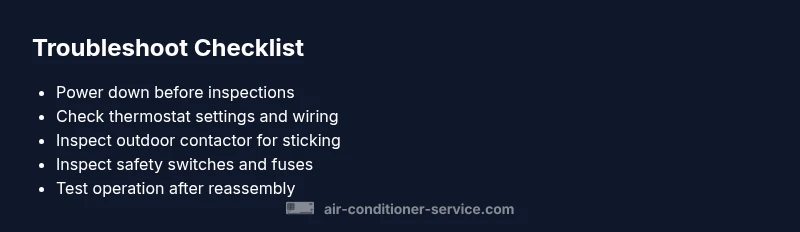
Power down the system
Shut off power at the main service panel to cut all electrical supply to both indoor and outdoor units. This protects you from shock while inspecting controls and wiring.
Tip: Use a flashlight to locate the breaker and confirm it’s fully in the off position. - 2
Check thermostat settings
Set the thermostat to off and verify no schedules are forcing cooling. If you’re using a programmable thermostat, temporarily set it to a fixed off mode to see if the unit stops.
Tip: Remove any recent changes or new schedules that could override the off setting. - 3
Inspect thermostat wiring
Carefully remove the thermostat cover and check for loose or damaged wires. Ensure the C-wire is solidly connected if present. Re-seat any flaky connections.
Tip: Take a photo of the wiring before you touch anything to aid reassembly. - 4
Test outdoor contactor operation
With power still off, inspect the outdoor contactor for signs of welding or sticking. If you have a safe way to apply voltage briefly (under supervision), verify the contactor releases when power returns.
Tip: Do not touch moving parts or energized components. - 5
Check for wiring shorts or damaged insulation
Look for frayed wires or scorched marks in both indoor and outdoor control circuits. A short can keep the cooling path energized regardless of the thermostat.
Tip: If you see damage, discontinue inspection and call a professional. - 6
Inspect safety switches and flood sensors
Some units have safety switches or float switches that can falsely indicate a problem and keep the system running due to a fault.
Tip: Reset or test safety switches per the device manual. - 7
Restore power and test
Turn the breaker back on and test whether the unit shuts off when you set the thermostat to off. Observe for continued operation and make a note of any abnormal noises or behavior.
Tip: Keep a distance from the unit and monitor for a short time after restoration. - 8
Call a professional if unresolved
If the system still won’t turn off, contact a licensed HVAC technician for a full diagnostic that includes electrical controls and refrigerant safety.
Tip: Provide the technician with notes of what you checked and any abnormal observations.
Diagnosis: AC won't turn off even after thermostat is set to off
Possible Causes
- highStuck or miscalibrated thermostat
- mediumRelay/contactor stuck closed in outdoor unit
- lowThermostat wiring short or transformer fault
Fixes
- easyPower off at the main breaker and verify thermostat settings are correct; reseat wires and test behavior after restoration.
- mediumInspect outdoor contactor for welding or sticking; replace if visibly damaged or test with a meter to confirm release.
- hardConsult a licensed technician to check refrigerant pressures and electrical controls; do not attempt refrigerant work yourself.
Common Questions
Why won’t my air conditioner turn off even when the thermostat is set to off?
A stuck thermostat, a welded relay/contactor, or a wiring fault are common causes. Start by powering down the system, check the thermostat settings, and inspect the outdoor contactor. If it still runs, contact a professional for a full diagnostic.
A stuck thermostat or a faulty relay often keeps the system running. Begin with a power down, check settings, and inspect the outdoor switch; if unresolved, call a professional.
Can a dirty air filter cause the AC to stay on?
While a dirty filter mainly affects airflow and efficiency, it can indirectly cause the system to behave oddly. Cleaning or replacing the filter improves air flow and reduces the risk of sensor or control misreads.
A dirty filter can cause inefficiency and sensor drift, which may contribute to odd cycling, but it generally won’t be the sole cause of a unit staying on.
Is a thermostat upgrade a good idea if the unit won’t turn off?
Upgrading to a modern programmable or smart thermostat can improve control accuracy and provide diagnostics that help prevent staying-on issues. Ensure compatibility with your HVAC system.
Upgrading the thermostat can provide better control and early error alerts, but ensure compatibility with your system.
What safety risks come with a unit that won’t turn off?
Continuous operation can overheat components, trip breakers, or pose electrical hazards. If you smell burning or hear buzzing, shut off power at the breaker and contact a professional.
Continuous running can be dangerous due to overheating and electrical risks; shut off power and call a pro if you notice anything abnormal.
Should I recharge the refrigerant myself if the unit won’t turn off?
No. Refrigerant handling requires a licensed technician. Improper charging can cause health and environmental hazards and will likely be illegal without certification.
No— refrigerant work should be left to a licensed professional due to safety and legal concerns.
When should I consider replacing the thermostat?
If the thermostat is old, frequently misreads temperature, or fails calibration, replacement is a wise choice for reliable operation. Check manufacturer guidance for compatible models.
If the thermostat is old or unreliable, replacing it can restore accurate control.
Watch Video
The Essentials
- Shut off power before any inspection.
- Start with thermostat and wiring checks.
- Do not bypass safety controls; call a pro if unresolved.
- Regular maintenance reduces future failures.