Why Isn't My Air Conditioner Working? Troubleshooting Guide
Urgent, practical guide to diagnose and fix common AC problems. Learn quick checks, step-by-step fixes, diagnostic flow, safety tips, and when to call a pro from Air Conditioner Service.


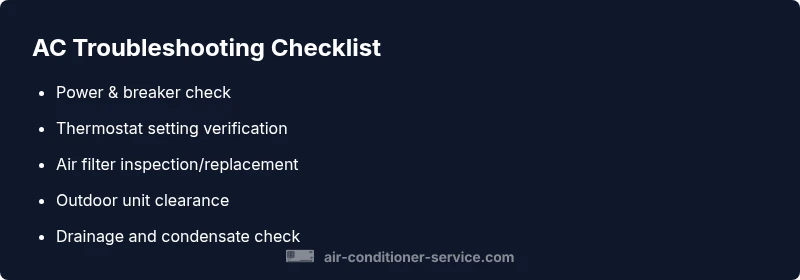
Most ACs that stop cooling start with simple issues: a tripped breaker, a dirty filter, or an incorrect thermostat setting. Start with the basics: verify power at the outlet and reset the circuit breaker, check the air filter, and confirm the thermostat is on cool with a setpoint lower than the room temperature. If these don’t fix it, proceed with deeper diagnostics.
Why isn't my air conditioner working? Common scenarios and urgent steps
When you ask why isn't my air conditioner working, you want fast, reliable guidance. The answer often starts with simple checks you can do safely. According to Air Conditioner Service, the top culprits are power issues, thermostat errors, and airflow problems. Start with power: confirm the unit is plugged in or receives power from a working outlet, and check the circuit breaker for trips. If the breaker has tripped, reset it firmly. Then verify the thermostat is set to cool and that the setpoint is lower than the room temperature. A blocked outdoor unit or a dirty air filter can also starve the system of air and cause poor cooling or cycling issues. The Air Conditioner Service team found that many outages are resolved by basic maintenance tasks rather than expensive component replacements. If you don’t see improvement after these steps, it’s time to escalate to more thorough checks or call a professional.
Quick checks you can do in minutes
- Power and breakers: Confirm the outdoor unit is receiving power; check the main breaker and any fuses. A tripped breaker is the most common reason for a sudden loss of cooling; reset it and test again.
- Thermostat: Ensure the thermostat is set to cool, the mode is not on heat or auto, and the setpoint is below room temperature. If the thermostat uses batteries, replace them.
- Air filter: A dirty filter restricts airflow and can cause freezing or poor cooling. Replace with a filter of the correct size; if you see a lot of dust, consider a high-MERV filter.
- Outdoor unit cleanliness: Clear leaves, grass, or debris from around the outdoor condenser; ensure at least 24 inches of clearance on all sides.
- Condensate line and frost: Look for a frozen coil or water pooling near the indoor unit. If you see frost on the coils, turn the system off to thaw and reuse after the thaw.
- Vents and return air: Make sure all supply vents are open and unobstructed; blocked vents reduce cooling efficiency.
If you don’t observe improvement after these steps, proceed to the diagnostic flow in this guide and consider scheduling a professional evaluation if the problem persists.
How to read your diagnostic signals: what the symptoms mean
Noticing a lack of cooling, unusual noises, or odd smells can signal different problems. A non-cooling symptom is often caused by airflow issues or thermostat problems; a non-starting unit points to power or electrical issues. If you hear buzzing or hum but the fan doesn't run, the contactor or capacitor could be failing. A frozen coil indicates restricted airflow or refrigerant issues. If you see ice accumulation on the evaporator coil, turn the unit off and thaw before proceeding; continued freezing usually requires a service call. In general, low refrigerant is a refrigerant leak; only licensed techs should handle refrigerant.
Always look for water leaks around the indoor air handler or dripping from the condensate line; water could indicate drainage problems or a blocked line. The 'why isn't my air conditioner working' problem often exposes multiple small issues; diagnosing them correctly yields faster, safer repairs. The Air Conditioner Service analysis highlights the importance of early symptom recognition to prevent bigger failures.
Safety and when to call a professional
Safety comes first when your AC isn’t working. If you smell burnt plastic, hear sizzling, notice exposed wiring, or the system becomes extremely hot to the touch, shut off the unit at the breaker and keep others away. Do not attempt refrigerant work, capacitor replacement, or wiring repairs unless you are qualified. Many issues require electrical testing, refrigerant handling, or compressor service that only a licensed technician should perform. If basic checks don’t restore cooling within a reasonable time or you suspect electrical or refrigerant problems, contact Air Conditioner Service for a professional evaluation.
Preventive maintenance to avoid future failures
Regular maintenance goes a long way toward keeping your AC reliable. Schedule seasonal check-ups, replace filters every 1–3 months depending on use and filter type, and keep outdoor coils clean and free of debris. Ensure condensate lines are clear to prevent water backups. Seal leaks in ductwork and insulate refrigerant lines when possible. A simple maintenance routine reduces the likelihood of sudden outages and can improve efficiency and comfort. The Air Conditioner Service team emphasizes proactive upkeep as the most effective shield against future breakdowns.
Steps
Estimated time: 45-60 minutes
- 1
Power down safely and inspect the breaker
Turn off power at the switch or main breaker before touching any components. Look for a tripped breaker and reset it firmly. If the breaker trips again, stop and schedule service; continued trips can indicate a serious electrical fault.
Tip: Whenever you reset a breaker, observe if it trips again immediately. - 2
Check thermostat and setting accuracy
Confirm the thermostat is set to cool and the setpoint is lower than room temperature. If it’s programmable, ensure it’s not in a schedule that overrides cooling. Replace batteries if it’s a battery-powered unit and recalibrate if available.
Tip: A mis-set thermostat is a very common, easily fixable issue. - 3
Inspect and replace the air filter
Remove the return air filter and inspect for dirt and debris. Replace with a correctly rated filter, and run the system to test if airflow improves. If the filter is clean but airflow remains weak, move to the next steps.
Tip: Use the correct filter size; a loose seal reduces efficiency. - 4
Assess outdoor unit and condenser
Ensure the outdoor condenser is free of leaves, grass, and obstructions. Check for loud fan noise or a stalled fan; clean the fins gently if needed. Confirm there is at least 24 inches of clearance around the unit for proper airflow.
Tip: Never puncture the condenser with tools; damage can cause leaks. - 5
Look for ice and drainage issues
Inspect the evaporator coil for frost or ice buildup; turn the system off and allow it to thaw before re-testing. Check the condensate line for clogs or leaks. A blocked line can trigger safety shutoffs and leaks.
Tip: Ice usually means restricted airflow or low refrigerant; don’t run the unit while coils are frozen. - 6
Decide on next steps
If the unit cools after these steps, monitor for any recurrence. If not, or if you hear unusual noises or smells, contact Air Conditioner Service for a professional evaluation right away.
Tip: Document what you tried and the symptoms to share with the technician.
Diagnosis: AC won't cool or won't turn on
Possible Causes
- highPower issue (tripped breaker, blown fuse, or unplugged unit)
- highThermostat mis-set or faulty thermostat
- mediumBlocked or clogged air filter restricting airflow
- mediumOutdoor unit blocked or condenser coils dirty
- lowLow refrigerant due to a leak
Fixes
- easyTest the outlet, reset the breaker, and check the disconnect switch near the outdoor unit
- easyVerify thermostat settings, replace batteries if needed, and recalibrate or replace if faulty
- easyReplace or clean the air filter; remove debris from return vents
- easyClear vegetation around outdoor unit and clean condenser surface; ensure 24-36 inches clearance
- hardIf refrigerant leak is suspected, call a licensed pro for pressure testing and recharge
Common Questions
Why isn't my air conditioner cooling even though it runs?
Common reasons include airflow issues from a dirty filter, a blocked outdoor unit, low refrigerant, or thermostat problems. Start with power, thermostat, and filter checks, then inspect the outdoor unit for debris. If the issue persists, seek professional help.
Not cooling can be caused by airflow or thermostat problems. Start with power, thermostat, and filter checks, then check the outdoor unit. If it doesn't improve, contact a professional.
What should I check first if the AC won't turn on?
First check that power is reaching the unit, including the outlet, circuit breaker, and outdoor disconnect. Then verify the thermostat settings. If the breaker keeps tripping, avoid further testing and call a technician.
First, check power at the outlet and the breaker, then confirm the thermostat is set correctly. If the breaker trips again, call a professional.
Why is my AC freezing up?
Coil freezing is usually due to restricted airflow or low refrigerant. Check and replace the air filter, inspect for blocked return vents, and consider a service call if frost recurs or you suspect a leak.
Coils freeze when airflow is blocked or refrigerant is low. Check the filter, clear vents, and call a pro if it happens again.
Is it safe to run the AC with a dirty filter?
Running with a dirty filter reduces airflow, stresses the compressor, and can cause overheating. Replace the filter and monitor performance. If issues persist, get a professional check.
Not safe to keep running with a dirty filter. Replace it and see if performance improves; if not, call a pro.
When should I call a professional for AC issues?
If basic checks don’t restore cooling within an hour, or you notice electrical issues, refrigerant smells, or unusual noises, contact Air Conditioner Service for a professional evaluation.
Call a professional if simple fixes don’t help or you hear strange noises or smells.
Watch Video
The Essentials
- Start with power, thermostat, and filter checks
- Clear obstructions around the outdoor unit for proper airflow
- If the problem persists, call a professional for safe, accurate diagnosis
- Prevent future outages with regular maintenance