When an Air Conditioner Is Not Working: Quick Troubleshooting
Urgent, practical guide to diagnose and fix a non-working AC. Safe checks, common causes, diagnostics, and when to call a pro for lasting cooling.


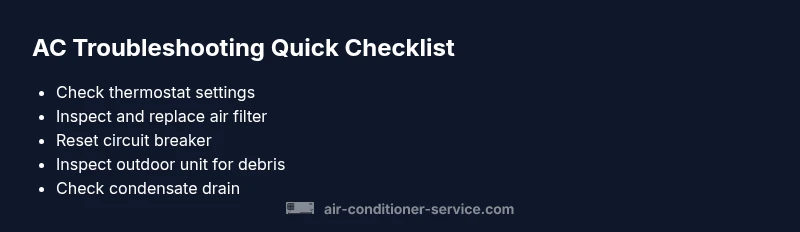
If your AC isn't cooling, the most common issue is a dirty filter or a tripped breaker. Start by checking the thermostat settings, air filter, and circuit breaker, then listen for airflow and condensation clues. If these basics don't restore cooling, shut the unit off and call a pro. Keep emergency contact handy and avoid opening the condenser housing.
Why this happens when an air conditioner is not working
This guide is for homeowners who need practical, immediate steps. According to Air Conditioner Service, most cooling failures start with simple, fixable issues rather than a full system fault. The phrase “when an air conditioner is not working” often points to airflow, power, or temperature control problems rather than a refrigerant leak. In many cases, the problem can be solved in minutes by addressing the basics: clean a filter, reset a breaker, and confirm thermostat settings. The goal is to restore airflow and power without risking damage. The Air Conditioner Service team found that a large share of inquiries involve clogged filters, dusty coils, or a tripped circuit. By starting there, you gain quick relief and buy time to plan more thorough maintenance if needed. Remember: if any step involves the electrical panel or wiring, take safety precautions or call a licensed technician. This article walks you through a safe, methodical checklist to identify the root cause and decide when licensed service is required.
Common causes and quick checks
Here are the most frequent culprits when an air conditioner is not cooling properly, with quick checks you can perform safely:
- Clogged air filter: A dirty filter reduces airflow and can trigger ice buildup or short cycling. Check the filter and replace if dark or clogged.
- Tripped breaker or blown fuse: A single faulty circuit can cut power to the outdoor condenser. Locate the panel, reset the breaker, and inspect fuses.
- Thermostat issues: Ensure the thermostat is set to cool, and that the temperature setting is lower than the room temperature. Check for a stuck display or dead batteries.
- Outdoor unit obstruction: Leaves, grass, or debris can block airflow. Clear a 2-foot radius and remove any buildup.
- Frozen evaporator coil: Improper airflow or low refrigerant can freeze the indoor coil, halting cooling. Thaw with power off and check air path.
- Condensate drain blockage: A clogged drain pan or line can trigger safety shutoffs.
- Refrigerant leaks or low charge: Refrigerant issues require a licensed technician. If you suspect a leak, do not run the unit long.
While some of these items require tools or a small amount of time, most homeowners can complete the basic checks within a few minutes. Air Conditioner Service analysis shows that resolving airflow or power issues at the outset prevents unnecessary service calls and often yields faster cooling results.
Diagnostic flow: symptom-to-diagnosis path
Use this straightforward flow to diagnose the likely cause when you notice cooling problems. Start with the symptom, then verify power and airflow, then inspect for signs of ice or leaks. If you can't resolve the symptom after the steps, escalate to a professional assessment. The goal is to identify the root cause with a logical sequence so you know whether a DIY fix is safe or a technician is needed. If the unit runs but blows warm air, begin with airflow and refrigerant checks; if it won’t start at all, focus on power and controls. Remember to document any error codes from the thermostat or outdoor unit, as those codes guide the next steps.
Step-by-step preview for the most common fix (airflow and power)
- Power down safely and inspect the outlet and circuit breaker. Switch off the breaker for the AC circuit before handling any components.
- Check the thermostat: confirm cooling mode, correct temperature, and that a battery is not dead.
- Inspect the air filter and replace if needed. A clean filter should allow a strong airflow within minutes of turning the system back on.
- If the outdoor unit is blocked, clear debris and check that the fan spins freely.
- Restore power and run the system for 10–15 minutes to observe performance.
- If there’s still no cooling, test for ice on the evaporator coil and listen for unusual noises; this can indicate a refrigerant issue or failed compressor.
- If none of these steps restore cooling, contact a professional for a leak check and component evaluation. Tip: keep a notebook of observed symptoms to share with the technician.
Safety notes and common mistakes to avoid
- Do not attempt refrigerant handling; it is hazardous and illegal in many places without proper certification.
- Never bypass electrical safety steps; turning off power is essential before you touch wires.
- Avoid opening the outdoor condenser housing; moving parts can cause injury.
- Don’t ignore ice on the evaporator coil or water leakage; these are signs of underlying problems that require attention.
- Regular maintenance is cheaper than emergency repairs; schedule seasonal checks and filter changes to prevent not-working conditions.
Prevention and maintenance to extend AC life
Create a simple maintenance routine to minimize the chances of future failures. Schedule filter changes every 1–3 months depending on usage and allergen exposure, clean the outdoor unit annually, inspect the condensate drain, and ensure the thermostat communicates accurately with the air handler. Keeping a tidy environment around the outdoor unit improves airflow and efficiency. Consider a professional pre-season tune-up once a year. This approach helps maintain cooling performance and reduces the risk of sudden failure, saving energy and prolonging equipment life. The Air Conditioner Service team recommends proactive maintenance as the most reliable defense against not-working situations.
Steps
Estimated time: 30-45 minutes
- 1
Power down and inspect power source
Shut off power at the thermostat and the circuit breaker. Confirm the outdoor unit is receiving power before proceeding.
Tip: Always switch off power at both the thermostat and breaker before touching electrical components. - 2
Check thermostat and cooling settings
Verify mode, temperature, and scheduling. Replace batteries if the display is dim or unresponsive, and ensure it communicates with the air handler.
Tip: If the thermostat is a smart model, try a basic manual setting to rule out app issues. - 3
Inspect and replace the air filter
Locate the filter, pull it out carefully, and replace it if dirty or discolored. A clean filter improves airflow immediately.
Tip: Keep spare filters on hand and set reminders for monthly or bi-monthly changes. - 4
Clear the outdoor unit and inspect for ice
Remove leaves and debris, ensure the fan spins freely, and check for ice buildup on the coils. Allow the unit to thaw if icy.
Tip: Never hammer or prod the refrigerant lines; ice can indicate airflow or refrigerant issues that require a pro. - 5
Test operation and observe results
Restore power and run the AC for 10–15 minutes. Listen for unusual noises and watch for proper airflow and cooling.
Tip: If cooling does not improve, log symptoms and prepare for professional service.
Diagnosis: AC won't start or won't cool
Possible Causes
- highPower issue (outlet, circuit breaker, or fuse)
- highThermostat misconfiguration or failure
- highAirflow restriction (dirty filter, blocked outdoor unit)
- lowRefrigerant leak or low charge
Fixes
- easyCheck the thermostat settings and status; ensure cooling mode is active and temperature is set appropriately
- easyInspect the circuit breaker and electrical panel; reset any tripped breakers and replace blown fuses if safe
- easyInspect/replace air filter; clean the outdoor coil area and remove debris around the unit
- mediumIf ice or refrigerant issues are suspected, do not run the system and contact a licensed technician
Common Questions
What is the most common reason an AC won't start?
Power or thermostat issues are the most common. Check the outlet, breaker, and thermostat settings first.
Most not starting problems come from power or thermostat issues. Start with the basics.
Can a dirty air filter cause not cooling?
Yes. A clogged filter reduces airflow and can cause weak cooling or system shutoff.
A dirty filter blocks airflow and can stop cooling.
Is it safe to reset my thermostat?
Yes, power cycling the thermostat can reset communication. If no improvement, proceed with basic checks.
Resetting is safe and can fix some issues.
Should I recharge refrigerant myself?
Recharging refrigerant should be performed only by a licensed technician. Leaks require professional repair.
Only a pro should handle refrigerant.
When should I call a professional?
If basic checks don’t restore cooling or you suspect a leak, ice, or unusual noises, contact a pro.
If basic checks fail or you hear odd noises, call a pro.
Watch Video
The Essentials
- Start with power and airflow checks first
- Most not-working AC cases are DIY-fixable
- If in doubt, call a licensed technician
- Prevent with regular maintenance