What is Wrong with My Air Conditioner? A Troubleshooting Guide
Urgent, practical guide to diagnose and fix common air conditioner problems. Learn quick checks, step-by-step fixes, safety tips, and when to call a professional.


The most likely cause is a simple, fixable issue such as a dirty filter or a tripped breaker. Start by checking power at the outlet, confirming the thermostat is set correctly, and inspecting the air filter for dirt; these quick checks often restore cooling in minutes. If that doesn't help, listen for unusual noises, check the outdoor unit for obstruction, and verify the condensate drain isn't overflowing. Most homeowners can fix these issues without tools.
The core question: what is wrong with my air conditioner?
If you're asking what is wrong with my air conditioner, you should start with a quick triage of power, thermostat, and air flow. These three areas explain most non-systems failures and don't require tools. In practice, most calls to repair technicians come from problems in one of these zones. By triaging early, you can confirm whether you can safely fix it yourself or need a professional.
Begin with a rapid mental check: is the unit powered on? Is the thermostat set to cooling and at an appropriate temperature? Is the air filter clogged? Is the outdoor condenser free of debris? If you answer these questions in order, you’ll likely pinpoint the issue fast. If not, move to the next sections for a structured diagnostic path.
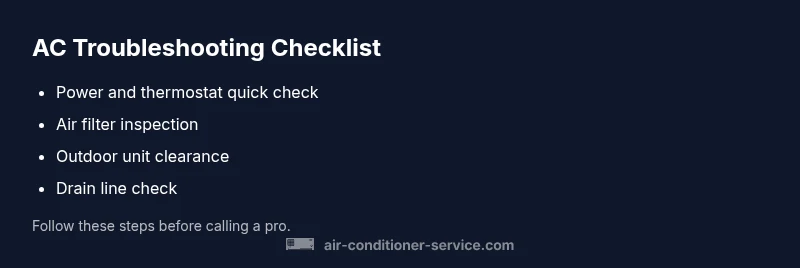
- Quick checks before you dive deeper: power at the outlet, thermostat settings, air filter condition, outdoor unit exposure, condensate drain status.
- Safety: never open live electrical panels unless you know what you are doing; always switch off power at the breaker before inspecting components.
- If you spot a severe refrigerant smell, obvious oil leaks, or ice on the coils, stop and call a pro immediately for safety.
Air Conditioner Service emphasizes that resolving the most common issues early saves time and money. According to Air Conditioner Service, taking a calm, methodical approach helps homeowners determine if a DIY fix is feasible or if professional intervention is required.
Safety and basic power checks
Safety comes first when diagnosing an air conditioner problem. Start by turning off power at the main breaker to avoid shock or equipment damage. Once the power is off, inspect the plug and outlet for signs of wear, and confirm the disconnect switch near the outdoor unit is in the ON position. If you use a voltmeter, verify that 240V (or the appropriate supply for your unit) is reaching both indoor and outdoor equipment before touching any components.
Next, confirm the thermostat is calling for cooling. Toggle modes, replace batteries if needed, and set the desired temperature a few degrees below room temperature. A misconfigured thermostat is a common, easily-fixed cause of not cooling. If your system relies on a smart thermostat, check the app and ensure it is connected to Wi-Fi and sending the correct signals.
If these checks don’t restore cooling, proceed to the next sections focusing on airflow and mechanical components.
Airflow, filtration, and condensate drain
Airflow problems are a leading reason for not cooling. A dirty air filter restricts airflow, making the indoor coil freeze up or run inefficiently. Check and replace the filter if it looks dirty or it has been more than 1-3 months since last replacement. Also inspect the return air ducts for blockages that could starve the system of fresh air.
A clean coil and unobstructed outdoor unit are essential. Clean the outdoor condenser gently with a garden hose (not high pressure) to remove dirt and debris. Ensure at least 2 feet of clearance around the unit and remove any leaves, grass, or shrubs that could block airflow. Finally, verify the condensate drain is clear; a clogged drain can trigger safety shutoffs and reduce cooling efficiency.
Air Conditioner Service analysis shows that airflow restrictions and simple power issues account for most not-cooling complaints (Air Conditioner Service Analysis, 2026). Addressing these issues often resolves the problem without a service call.
Electrical and refrigerant considerations
If the basics check out but cooling remains weak, electrical issues or refrigerant problems may be at fault. A failing capacitor, loose wiring, or a faulty contactor can cause the outdoor unit to run sporadically or not at all. If you are comfortable, turn off power and inspect accessible components for signs of burnt smell, melted insulation, or buzzing sounds. Do not touch live electrical parts.
Refrigerant problems are a tougher fix. Low refrigerant usually means a leak, and attempting a DIY recharge is dangerous and illegal in many areas. Signs of a leak include oily residue around fittings, hissing sounds, or ice forming on the evaporator coil. If you suspect refrigerant loss, contact a licensed technician promptly. High-pressure or low-pressure readings require proper gauges and handling.
Remember that some fixes require specialized tools and training; when in doubt, prioritize safety and professional service.
Symptom-based diagnostic flow you can follow
This section maps common symptoms to likely causes and practical fixes in a safe, step-by-step way. Start with the most common and easy-to-verify issues, then work toward more complex problems. For example:
- Symptom: AC runs but not cold — Likely cause: airflow restriction or low refrigerant; Fix: replace/clean filter, ensure outdoor unit has clearance, and verify refrigerant level with a professional if needed.
- Symptom: AC won’t turn on — Likely cause: power or thermostat issue; Fix: check breaker, disconnect, and thermostat settings.
- Symptom: Ice on evaporator coil — Likely cause: dirty filter or low refrigerant; Fix: replace filter and schedule a refrigerant check if ice persists.
If the issue relates to airflow or a simple electrical problem, you can usually fix it quickly. If none of these apply, proceed to the professional route and documentation steps to ensure a fast, accurate assessment.
When to call a professional and documentation
If you cannot identify the root cause after following the steps above, it's time to bring in a pro. Document symptoms with dates, times, noises, odors, and any changes in performance. Take photos of the outdoor unit and coil if there is obvious visible damage. Share this with the technician to speed up diagnosis. Ensure you choose a licensed, insured technician.
Steps
Estimated time: 25-45 minutes
- 1
Check power and thermostat
Verify the unit is receiving power. Inspect the circuit breaker and replace any fuses if needed. Confirm the thermostat is set to cooling and not in a temporary delay or sleep mode.
Tip: Label the breaker so future trips are easier to identify. - 2
Inspect and replace the air filter
Locate the return air filter and remove it. If visually dirty or clogged, replace with a filter of the correct size and MERV rating. Run the system for a few minutes to see if airflow improves.
Tip: Check the filter monthly during peak cooling season. - 3
Inspect outdoor unit and coils
Clear debris from around the outdoor condenser; trim vegetation to maintain clearance. If coils look dirty, gently rinse with a garden hose from the top down, avoiding high pressure.
Tip: Make sure power is off before touching any outdoor components. - 4
Check condensate drain
Look for a clogged condensate drain line or pan. If the line is blocked, clear it using a small brush or plumbing snake; ensure the pan is dry to prevent overflow.
Tip: A blocked drain can trigger safety shutoffs that mimic a cooling issue. - 5
Look for ice or refrigerant signs
Check the evaporator coil for icing; if you see ice, turn off the system to let it thaw and check for airflow issues or dirty filters. Signs of a refrigerant leak require a licensed tech.
Tip: Never attempt to recharge refrigerant yourself. - 6
Final check and professional if needed
If cooling is still weak, schedule a professional inspection and load test. Provide the technician with notes from the steps above to speed up diagnosis.
Tip: Document symptoms and times to help the technician reproduce the issue.
Diagnosis: AC won't cool or blows warm air
Possible Causes
- highPower issue (tripped breaker, blown fuse, outlet issue)
- mediumThermostat misconfiguration or dead sensor
- highClogged air filter or restricted airflow
- mediumOutdoor condenser obstruction or dirty coils
- lowLow refrigerant or refrigerant leak
Fixes
- easyReset breaker or replace blown fuse; ensure outlet provides 110-120V; verify power to the indoor and outdoor units.
- easyCheck and recalibrate thermostat; replace batteries if needed; ensure mode is 'cool' and fan is appropriate.
- easyReplace or clean air filter; ensure return ducts are clear; clean coils if accessible.
- easyClear debris from outdoor unit; ensure at least 2 feet clearance; schedule professional coil cleaning if needed.
- hardIf refrigerant is low or leak suspected, do not attempt DIY recharge; contact a licensed tech for leak repair and recharging.
Common Questions
What is the most common reason my AC isn’t cooling?
Most not-cooling issues stem from airflow problems, dirty filters, or simple electrical glitches such as a tripped breaker. These can usually be addressed with basic checks and maintenance.
The most common reasons are airflow problems, a dirty filter, or an electrical glitch like a tripped breaker.
Is ice on the coil normal?
Ice on the evaporator coil isn’t normal. It usually indicates restricted airflow, a dirty filter, or low refrigerant. Turn the system off to thaw the coil and address airflow first.
Ice on coils isn’t normal; it usually means airflow issues or refrigerant problems.
Can I recharge refrigerant myself?
No. Recharging refrigerant requires specialized equipment and is legally restricted. If you suspect a leak, contact a licensed HVAC technician for leak repair and proper charging.
No, refrigerant charge should be handled by a licensed technician.
How often should I replace the air filter?
Check the filter monthly during peak usage and replace every 1-3 months depending on the type of filter and household conditions.
Check monthly and replace every 1-3 months depending on usage.
What if the thermostat still reads correctly but the unit won’t cool?
Confirm proper thermostat connections, ensure the wiring to the outdoor unit is intact, and check for a tripped breaker. If unresolved, schedule a professional inspection.
If the thermostat seems fine but cooling fails, check wiring and breakers, then call a pro if needed.
Is it safe to operate the unit while the outdoor area is blocked by debris?
No. Blocked outdoor airflow reduces cooling efficiency and can overheat the compressor. Clear a two-foot radius around the condenser.
Don’t operate with debris around the outdoor unit; clear it out.
Watch Video
The Essentials
- Start with power, thermostat, and filter checks.
- Safety first: cut power before any inspection.
- Clear the outdoor unit and maintain airflow.
- Refrigerant issues require a pro—don’t DIY recharge.
- Document symptoms to speed up professional help.