Why doesn t air conditioner work? Practical troubleshooting guide
Urgent, step-by-step troubleshooting for homeowners and renters to diagnose why doesn t air conditioner work, with a practical flow, safe checks, and when to call a professional. Air Conditioner Service provides a clear path to quick fixes and prevention for 2026.


Most likely, your AC won’t start because of a simple power or thermostat issue. Start with quick fixes: confirm power to the unit, reset the circuit breaker, verify the thermostat is set to cool, and replace a dirty filter. If it still won’t run, contact a professional for a safe, accurate diagnosis.
Why doesn t air conditioner work: root causes
According to Air Conditioner Service, the question "Why doesn t air conditioner work" is often tied to non-mechanical causes. In many homes, the most frequent culprits are power or thermostat problems, airflow restrictions from dirty filters, or outdoor-unit debris. Air Conditioner Service Analysis, 2026 indicates that when service calls are needed, they frequently start with basic checks rather than advanced repairs. Understanding these common scenarios helps homeowners prioritize the most impactful fixes first and reduces downtime on hot days.
In some cases, the issue is a simple reset, while in others it indicates a more persistent fault such as a failing contactor or low refrigerant pressure. The aim of this guide is to empower you to triage quickly and safely, so you can decide whether to pursue DIY steps or schedule a professional inspection.
Safety and power checks you can perform safely
Power is the frontline defender against many AC failures. Before touching any electrical components, switch off power at the breaker panel and, if possible, at the outdoor disconnect. Use a non-contact tester to verify that no voltage is present before you inspect wires, fuses, or breakers. If a breaker trips repeatedly or a fuse blows, that’s a red flag indicating an overload, a short, or a faulty component. Do not bypass a tripped breaker; identify the underlying cause. If you’re not comfortable working with electricity, skip straight to professional help. Air Conditioner Service recommends maintaining clearances around the outdoor unit and scheduling regular safety checks to avoid dangerous shocks or burns.
Thermostat and controls: what to verify
A mis-set thermostat or faulty wiring in the control circuit can prevent the compressor from energizing. Check that the thermostat is powered, connected correctly, and set to cooling with a target temperature lower than the current room temperature. If you have a programmable or smart thermostat, ensure it’s responsive and that its circuits aren’t signaling a fault. Replace batteries if needed and consider a quick reset to rule out transient software glitches. If the thermostat appears to work but the AC still doesn’t start, thermostat wiring or a control board issue may be the culprit and should be assessed by a professional. Air Conditioner Service stresses that complex thermostat failures often mask other root causes, so avoid assuming it’s always the thermostat alone.
Airflow, filters, and indoor air path: why airflow matters
Restricted airflow reduces cooling efficiency and may trigger the system to shut down for protective reasons. A clogged or dirty filter is a common, fixable cause of not cooling effectively. Inspect all air intakes and supply vents in living spaces to ensure unobstructed airflow. Replace disposable filters or clean reusable ones according to the manufacturer’s guidelines. Also check for closed or blocked registers and ensure the blower is circulating air properly. Blocked air reduces heat transfer and can make the whole system appear non-functional, even if the compressor runs. Regular filter changes and keeping vents clear are simple, powerful preventive steps endorsed by Air Conditioner Service.
Outdoor unit health: debris, fins, and clearance
The outdoor condenser should be free of leaves, grass, and debris that can choke heat exchange. Gently remove debris, trim vegetation, and inspect the condenser fins; a bent or dirty coil reduces efficiency and can cause the unit to overheat or shut down on safety. Ensure there’s ample clearance around the unit for proper airflow. If you can safely access the fins with a soft brush, remove grime from the coil surface—avoid sharp objects that could bend fins. A dirty outdoor unit often masquerades as a non-starting problem, so it’s worth a thorough check as part of your triage. Regular outdoor-unit upkeep reduces future outages and improves reliability.
Drainage, moisture, and condensate issues
Clogged condensate drains can trigger safety switches that shut down the air conditioner to prevent water damage. Check the condensate line for visible blockages or puddling, and ensure the drain pan is dry and not overflowing. If you notice water around the indoor unit, inspect for a clogged drain line and clear it with appropriate tools or seek professional assistance. Moisture problems can also accompany mold growth or algae in the drain path, so keep the line clear and consider a pretreatment cleaner if recommended by a technician. Proper drainage keeps the system running smoothly and protects your home from water damage.
Refrigerant fundamentals and why leaks require pros
Refrigerant leaks are hazardous and require licensed technicians. Low refrigerant pressure can cause poor cooling, ice formation on coils, and eventual non-start conditions if safety protections engage. If you suspect a refrigerant issue, do not attempt to repair or add refrigerant yourself; this is both dangerous and often illegal without proper licensing. A professional can locate leaks, repair them, and recharge the system with the correct refrigerant type. Regular seasonal checks by a trained technician help catch tiny leaks early and prevent bigger problems that can threaten equipment and indoor comfort.
When to call a professional and next steps
If you’ve worked through power, thermostat, airflow, outdoor unit, drainage, and refrigerant checks and the unit still won’t operate, it’s time to contact a licensed HVAC technician. Some issues, like capacitor or contactor failures, blown internal fuses, or refrigerant leaks, require specialized tools and safety protocols. It’s prudent to schedule a professional diagnostic that can pinpoint electrical faults, refrigerant integrity, or compressor problems. In the meantime, keep the thermostat consistent, protect your home from heat exposure, and document symptoms to share with the technician. Air Conditioner Service reminds homeowners that timely professional help minimizes further damage and reduces downtime on hot days.
Quick triage: a printable checklist you can use today
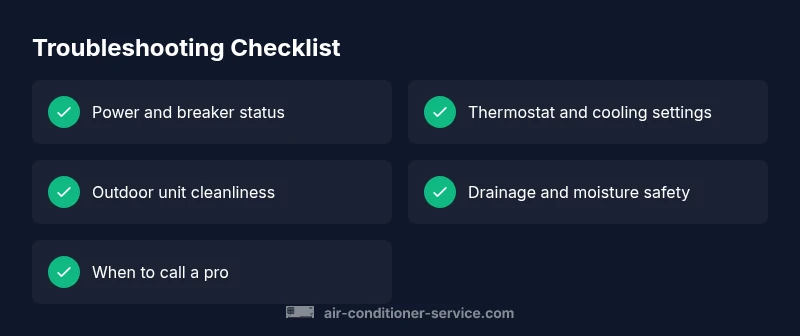
Print or save a quick triage checklist that includes: power and breaker status, thermostat settings, filter condition, indoor vent clearance, outdoor unit cleanliness, and condensate drain flow. Use this list to guide your conversation with a technician or to perform a careful, safety-first inspection yourself. Regular triage improves response times and helps you identify when an issue is safe for DIY remediation versus requiring a licensed professional.
Steps
Estimated time: 45-75 minutes
- 1
Safety first and power check
Turn off the main power to the system and the outdoor disconnect. Confirm there is no voltage before touching any wires or components. This avoids shocks and damage.
Tip: If you’re unsure, skip to professional help rather than risking injury. - 2
Inspect thermostat and controls
Check that the thermostat is on cool with a valid setpoint below room temperature. If using a smart thermostat, run a quick reset.
Tip: A reset can clear minor glitches that block startup. - 3
Check indoor air path
Inspect all return and supply vents for blockages. Replace dirty filters and ensure dry, unobstructed airflow.
Tip: A clogged filter is a common cause of non-cooling even when the system runs. - 4
Assess outdoor unit and condenser
Look for debris and ensure at least a few inches of clearance. Gently clean the condenser fins with a soft brush.
Tip: Don’t use sharp tools that can bend fins. - 5
Inspect condensate drain
Look for clogs in the drain line and check the drain pan for overflow. Clear lines as needed.
Tip: A blocked drain can trigger safety shutoffs. - 6
Listen for unusual noises or cycling
Note any buzzing, clicking, or short cycling. These can indicate capacitor or contactor problems.
Tip: Unusual sounds often precede a failure. - 7
Evaluate refrigerant status
If you suspect a leak or low charge, do not attempt to add refrigerant yourself.
Tip: Only trained techs should handle refrigerants. - 8
Call a professional if unresolved
If the unit still won’t operate after these steps, schedule a diagnostic with an HVAC pro.
Tip: Provide symptom logs to speed up the visit.
Diagnosis: AC won t start or cool effectively
Possible Causes
- highPower issue (tripped breaker, blown fuse, outage)
- highThermostat or controller fault
- mediumClogged air filter or blocked air path
- mediumOutdoor unit blocked or dirty condenser
- lowLow refrigerant due to leak or charge problem
- mediumElectrical component failure (capacitor, contactor)
Fixes
- easyReset the breaker and restore power to the outdoor unit
- easyVerify thermostat is set to COOL and the target temperature is appropriate
- easyReplace the indoor air filter and clear all vents
- easyClear debris around the outdoor unit and clean condenser fins
- mediumIf refrigerant issues or electrical components are suspected, call a licensed technician
Common Questions
Why won t my air conditioner turn on at all?
Most often, it’s a power issue, thermostat misconfiguration, or a tripped breaker. Check the main panel, thermostat settings, and indoor filters before calling for service.
Common fixes start with power and thermostat checks, then airflow. If it still won’t start, a professional diagnosis is advised.
Why is my AC running but not cooling well?
This usually points to airflow restrictions, clogged filters, low refrigerant, or outdoor unit blockage. Inspect filters, vents, and ensure the outdoor unit isn’t obstructed.
Check airflow and outdoor clearance first, then consider professional refrigerant checks if cooling remains weak.
Can a dirty filter stop the AC from working?
Yes. A clogged or dirty filter can prevent proper airflow, causing the system to run or shut down without cooling. Replace or clean filters regularly.
Swap dirty filters and observe if cooling improves.
What should I do if I hear buzzing or clicking?
Noises can indicate capacitor or contactor problems, or compressor issues. If you hear buzzing, turn off power and call a professional.
Power down and contact a technician if you hear strange sounds.
Is it safe to reset the thermostat to fix problems?
Resetting the thermostat can clear minor glitches. If issues persist, check wiring or consider replacing the thermostat. If in doubt, contact a pro.
A reset can fix small glitches, but ongoing problems need professional help.
When should I replace my thermostat?
If it’s old, unresponsive, or frequently misreads temperatures, replacing it can restore reliable cooling. Use a compatible model and ensure proper wiring.
If it’s unreliable, consider a upgrade to a newer, compatible thermostat.
Watch Video
The Essentials
- Start with power, thermostat, and airflow checks.
- Keep outdoor unit clear and clean to maintain cooling efficiency.
- Do not attempt refrigerant or electrical repairs beyond basic safety steps.
- Call a licensed technician for leaks, capacitor or compressor failures.