Air Conditioner Not Working: Step-by-Step Troubleshooting Guide
When your air conditioner not working, follow this practical troubleshooting guide from Air Conditioner Service. Start with simple checks, follow a clear diagnostic flow, and know when to call a pro.


Most likely the issue is a blown circuit or a blocked air filter causing the unit to shut down. Quick fix: reset the breaker, replace or clean the filter, and verify the thermostat is set to cool. If it still won’t start, power off at the service disconnect and call a professional for a deeper check.
Quick safety preface and initial checks
If your air conditioner not working, safety comes first. Before you touch any wiring or components, power down the unit at the main breaker and the outdoor disconnect. Wear gloves if you plan to touch metal parts and keep children and pets away from the work area. Starting with three basic checks covers the majority of simple outages and reduces the risk of electrical shock or damage.
- Verify the thermostat is set to cool and that the room temperature is higher than the thermostat setting.
- Check the circuit breaker or fuses to see if a switch has tripped or a fuse has blown.
- Inspect the air filter and the outdoor unit for obvious obstructions like leaves, dirt, or ice buildup.
If the unit still won’t operate after these steps, continue with the diagnostic flow described in the next sections. The goal is to identify the simplest fix first and escalate only when necessary. Air Conditioner Service emphasizes safety and clear, verifiable steps, so you can address common issues confidently while avoiding risky, guesswork.
Understanding common causes when air conditioner not working
Several issues commonly cause an air conditioner not working. The most frequent culprits are power problems (a tripped breaker or blown fuse) and restricted airflow (a dirty filter or blocked outdoor unit). Thermostat miscalibration or a wiring glitch can also prevent the unit from starting or cooling properly. Refrigerant leaks are rare but serious and require a licensed technician. Ice on coils indicates airflow problems or refrigerant issues and needs attention.
If you notice ice on the outdoor coils or you hear buzzing or a humming noise without the compressor engaging, stop and check power and wiring safety before proceeding. Small, affordable fixes often restore function, but more complex problems demand professional assessment to avoid safety risks or equipment damage.
Air Conditioner Service emphasizes documenting symptoms and following safe steps. This approach minimizes guesswork and helps homeowners determine whether a quick DIY fix is enough or a pro service is warranted.
Diagnostic flow at a glance: from symptom to solution
This flow helps you turn symptoms into tested diagnoses and practical solutions. Start with immediate safety checks, then verify power and basic controls. If the unit still won’t operate, systematically verify airflow, temperature sensing, and outdoor unit conditions. For each potential cause, apply the corresponding fix and re-test. If the problem persists, escalate to professional service.
- Symptom: unit won’t start or cools poorly.
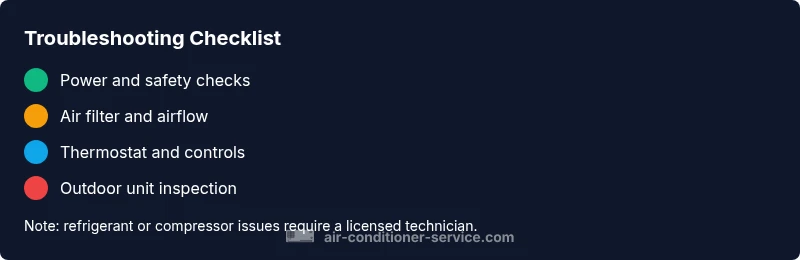
- Diagnosis path: power check → airflow check → thermostat check → outdoor unit check → refrigerant or electrical inspection.
- Solutions: reset breakers, clean or replace filters, recalibrate or replace thermostat, clear airflow obstructions, and call a pro for refrigerant or major electrical issues.
Air Conditioner Service analysis shows that following a structured diagnostic flow reduces unnecessary service calls and speeds up restoration of comfort. By documenting symptoms along the way, you gain a clear history to share with a technician if needed.
Step-by-step: Fix the most common cause (power and airflow)
Power and airflow problems are the most common culprits for a non-working AC. This section walks you through practical actions in a safe sequence. Start with power, then verify airflow, and finally confirm control settings.
-
Power check: Ensure the outdoor disconnect and main breaker are ON. Use a non-contact tester to confirm at the service panel. If you find a tripped breaker, reset it and observe for a few minutes. If it trips again, there may be an overload or short that requires professional diagnosis. Tip: If multiple breakers feed the unit, identify the correct one by tracing from the outdoor disconnect.
-
Breaker cleanup and fuses: Replace blown fuses and remove any corrosion on terminals. Turn the power OFF before touching connectors. If a fuse keeps blowing, stop and call a licensed electrician or HVAC tech. Tip: Keep spare fuses of the correct rating on hand and store in a labeled container.
-
Air filter check: Remove and inspect the filter; replace if dirty or discolored. A clean filter improves airflow and efficiency. Reinstall correctly ensuring a snug seal. Tip: Mark a reminder on your calendar to replace filters every 1-3 months depending on use and household conditions.
-
Thermostat verify: Confirm the thermostat is set to COOL, not HEAT, and that the setpoint is several degrees below room temperature. If it still doesn’t respond, test by resetting the thermostat or replacing batteries if it’s not hard-wired. Tip: If you have a Wi-Fi thermostat, reboot the device and re-sync with the HVAC system after replacement.
-
Outdoor unit inspection: Look for leaves, grass clippings, or other debris blocking fins and airflow. Clear debris, trim nearby vegetation, and gently spray the condenser coil with a garden hose from a safe distance. Do not use high pressure near fins. Tip: Allow 2 feet of clearance around the unit for proper airflow.
-
Re-test: Restore power and run the system for 10-15 minutes. Listen for normal fan and compressor operation. If you hear unusual noises or the unit still doesn’t start, the issue may be the capacitor, contactor, or refrigerant circuitry, which require professional service.
-
When to step back: If the unit remains non-operational after these steps, stop and call a pro. DIY work on electrical components or refrigerant lines can be dangerous and may void warranties.
Tip: Document the exact symptoms, breaker status, and any sounds you heard to aid the technician.
Step-by-step: Fix the thermostat and sensor issues
Thermostat and sensors play a critical role in efficient operation. Miscalibration or a failing sensor can prevent cooling even when power is available. This section covers how to diagnose and correct thermostat-related issues.
-
Check sensor alignment: Some units have a temperature sensor tucked behind the return air grille. Ensure it isn’t displaced or covered by insulation. If misaligned, gently reposition to the recommended location. Tip: Do not push the sensor into contact with warm surfaces.
-
Calibration test: If your thermostat seems stubborn, test with a known-good thermometer nearby to confirm accurate readings. For digital thermostats, perform a factory reset and reconfigure the settings. Tip: Record your preferred schedule and cooling setpoints before resetting to restore after the test.
-
Battery replacement: If the thermostat uses batteries, replace them with fresh, high-quality cells. Low power can cause intermittent response or timeouts. Tip: Use the same brand and avoid mixing old and new batteries.
-
Wiring inspection: With power off, inspect thermostat connections for loose or corroded wires. If you’re not confident, call a pro to avoid damage or shock. Tip: Take a photo of the wiring before disconnecting to aid reassembly.
-
Re-test control responsiveness: After adjustments, return the system to COOL, set an appropriate temperature, and observe how the outdoor unit responds. If the unit still won’t engage, you may have a control board or sensor fault requiring professional service.
-
When to replace: If the thermostat frequently misreads or fails to communicate with the HVAC system, replacement may be the most cost-effective solution.
Tip: Upgrading to a smart thermostat can improve responsiveness and energy management without increasing complexity for service calls.
Maintenance tips to prevent future failures
Preventive maintenance reduces the chances of sudden outages and helps your air conditioner last longer. Incorporate these simple practices into your routine to keep the system reliable and efficient.
- Schedule regular filter changes and coil cleanings. A clean filter reduces strain on the blower and improves cooling efficiency.
- Inspect the condensate drain line to prevent water backups and mold growth. Clear any blockages with a safe, approved cleaner.
- Keep the area around the outdoor unit free of debris, plants, and stored items. Adequate clearance improves heat exchange and reduces energy use.
- Inspect ductwork for leaks and seal with appropriate materials. Sealed ducts improve cooling distribution and reduce energy waste.
- Monitor refrigerant levels only with a licensed professional. Refrigerant leaks are a sign of a service issue that requires a certified technician.
- Schedule a professional tune-up annually. A pro can check refrigerant pressures, electrical connections, and compressor health more comprehensively.
These practices are practical and cost-effective, helping you maintain comfort while avoiding avoidable outages. Remember that some tasks, like refrigerant handling and major electrical work, require a licensed technician for safety and compliance.
When to call a professional and how to choose a good one
Some problems demand professional expertise. If you encounter any of the following, it’s time to call a licensed HVAC technician: persistent tripping of breakers, refrigerant leaks, unusual noises, ice on coils after basic maintenance, or repeated system failures after basic fixes. A qualified technician can diagnose and repair electrical components, motor and compressor issues, and refrigerant-related problems safely and up to code.
How to choose a good pro:
- Look for a licensed, insured HVAC contractor with a clear written estimate.
- Check recent reviews and request references. Ask about their experience with your unit type and refrigerant.
- Request a diagnostic report with itemized parts and labor. Compare this with other quotes to ensure you’re not paying for unnecessary work.
- Ensure they follow safety standards and wear personal protective equipment during service.
- Confirm warranty terms on parts and labor and any follow-up support after service.
If you want to ensure you’re prepared, Air Conditioner Service can guide you on what to ask and how to interpret a technician’s assessment. A well-chosen pro minimizes downtime and protects your home from safety risks.
Quick recap and next steps
With a structured approach, you can quickly identify whether the problem is a simple power or airflow issue or a more complex system fault that needs a professional. Remember to prioritize safety, document symptoms, and escalate to a pro when needed. Proper maintenance and timely repairs will keep your home comfortable and energy-efficient even in peak season.
Steps
Estimated time: 60-90 minutes
- 1
Power down and verify safety
Turn off the main breaker and outdoor disconnect. Use a non-contact tester to confirm no live voltage on accessible parts. This protects you from shock and avoids accidental startup during inspection.
Tip: Always assume wires are live until tested. - 2
Check power and breakers
Inspect the main panel and any GFCI/AFCI devices feeding the AC. If a breaker has tripped, reset it and observe for a few minutes. If it trips again, a deeper fault is likely present.
Tip: Note which circuit feeds the outdoor unit. - 3
Inspect thermostat and controls
Set to cooling and confirm the setpoint is below room temperature. If you use a programmable thermostat, run through a quick short cycle to verify response.
Tip: If using a wifi thermostat, reboot after adjustments. - 4
Evaluate the air filter
Remove and inspect the filter. Replace if dirty or discolored. A clean filter improves airflow and cooling performance.
Tip: Keep spare filters on hand for quick changes. - 5
Check the outdoor unit area
Clear debris, leaves, and vegetation from around the condenser. Rake back plants to provide at least 2 feet of clearance. Check fins for damage.
Tip: Never poke fins with metal objects. - 6
Test run and observe
Power the system back on and run for 10–15 minutes. Listen for compressor engagement and airflow. If the unit remains silent or sounds abnormal, note the symptoms for the technician.
Tip: Record any unfamiliar noises or smells for the tech.
Diagnosis: Air conditioner won't start or cool
Possible Causes
- highPower issue or tripped breaker
- mediumClogged air filter reducing airflow
- mediumThermostat missettings or faulty thermostat
- lowOutdoor unit blocked or dirty coils
Fixes
- easyCheck main power switch and circuit breaker; reset if tripped
- easyReplace or clean the air filter; ensure proper seating
- mediumTest thermostat, replace batteries or faulty unit
- mediumClear debris around outdoor unit and clean condenser coils; ensure clearance
Common Questions
What is the first thing I should check if my air conditioner is not working?
Begin with safety, then check power, thermostat, and the air filter. If these basics don’t restore function, proceed through the diagnostic flow.
Start with safety, then power, thermostat, and filter. If it still won’t run, follow the step-by-step flow to diagnose.
Why won’t my AC cool even when it’s on?
Possible refrigerant issues, a blocked condenser, or a faulty compressor. If basic checks don’t fix it, a licensed technician should inspect refrigerant and electrical components.
If cooling is poor after basic checks, refrigerant leaks or compressor problems may be involved—call a pro.
Is it safe to reset the thermostat?
Yes. Power down briefly, then power up and reconfigure. If issues persist, consider replacing batteries or the thermostat.
You can reset the thermostat, but watch for recurring issues that may indicate a bigger problem.
How often should I replace the air filter?
Typically every 1-3 months depending on usage and household conditions. Check the manufacturer’s guidelines for your model.
Change the filter every month or two during heavy use to keep air flow steady.
When should I replace my air conditioner?
If the system is frequently breaking down, requires costly repairs, or is significantly less efficient, replacement may be more cost-effective.
If frequent repairs pile up or efficiency drops, it may be time to replace the unit.
Is it safe to operate the outdoor unit during rain?
Yes, rain itself isn’t dangerous for the unit, but avoid standing water near electrical connections and ensure the unit is properly protected and grounded.
Rain isn’t a problem for the outdoor unit, but avoid water around electrical points.
Watch Video
The Essentials
- Start with safety and basic checks when AC won't run
- Power and airflow issues are most common causes
- Follow a diagnostic flow to avoid unnecessary repairs
- Know when to call a licensed pro for refrigerant or electrical work
- Document symptoms to help technicians diagnose faster