Why Are Air Conditioners So Loud? Practical Troubleshooting
Learn why are air conditioners so loud and how to troubleshoot safely. This Air Conditioner Service guide covers common causes, quick checks, and practical fixes to quiet a noisy unit for homeowners and renters.


Most often, loud AC noise comes from vibration, loose panels, or airflow restrictions, not a failing compressor. First, shut off power, inspect the outdoor unit for loose hardware and debris, and tighten as needed. Check the indoor air filter and seals on ducts, then run a short test. If it remains loud, contact Air Conditioner Service for a professional diagnosis.
Why are air conditioners so loud? Understanding the noise landscape
Loudness in air conditioners is rarely a sign of a catastrophic failure. Instead, homeowners most often hear vibrations, loose panels, or airflow problems that amplify normal operating sounds. The question why are air conditioners so loud usually points to simple, fixable issues like worn mounting screws, debris in the outdoor unit, or a clogged indoor filter. According to Air Conditioner Service, a quick check of these common culprits can reduce noise dramatically and extend system life. By approaching noise with a calm, methodical plan, you can identify whether the problem is a temporary nuisance or a signal that professional service is needed.
Key takeaway: Start with the easiest checks; many loud noises disappear after tightening, cleaning, and replacing a dirty filter.
Common sound sources in a typical home
Loud AC sounds fall into a few broad categories: scraping, banging, rattling, or a high-pitched whine. Outdoor unit noises often come from a loose fan blade, debris striking the condenser, or a misaligned cover. Inside, a rumbling or thumping may come from a blower wheel, a loose access panel, or a faulty fan motor. Ductwork can amplify air rushing through, making bangs in the walls or attic. Airflow restrictions—like a dirty filter or closed supply vents—can cause strain that you hear as noise. Regular maintenance can substantially reduce these issues, as Air Conditioner Service analyses show that many noise problems stem from preventable wear and blockage.
Tips for locating the source: listen near the outdoor unit and near supply registers. If the noise changes with fan speed, it’s more likely a blower or duct issue. If it’s constant and metallic, it may be a loose panel or mounting hardware.
How noise is produced: vibrations, airflow, and components
Noise in an air conditioner arises from several interacting systems. Vibrations travel through the cabinet when mounting is loose or the foundation isn’t level. Airflow noise increases when filters are dirty, ducts are restricted, or the blower is misaligned. In many cases, the compressor itself can emit a low hum or a higher pitch if components wear unevenly. Understanding which system is involved helps you apply the right fix. Safety is paramount—always power down before inspecting components.
Important note for homeowners: don’t attempt refrigerant work or capacitor testing unless you’re trained; such tasks require a licensed technician.
Quick checks you can perform safely
Before calling a professional, perform a few straightforward checks. Ensure the outdoor unit has at least 2 feet of clearance on all sides and that there’s no debris or vegetation brushing the fan. Inspect the outdoor cabinet for loose screws or panels and tighten if needed. Replace a dirty indoor air filter and confirm all supply and return vents are open. Finally, listen to determine whether the noise emanates from the outdoor unit or indoor blower. If the noise persists after these steps, it’s time to engage a pro.
Safety reminder: Always switch off power at the breaker box before touching electrical components or opening access panels.
Diagnostic flow you can follow (quick preview)
If you hear a new or changing sound, trace it to its likely source—outdoor fan, indoor blower, or ductwork—and verify simple fixes first. If tightening and cleaning don’t help, proceed to more advanced checks or call Air Conditioner Service for a precise diagnosis. Safety is the priority; nontechnical tasks should be supervised by a qualified professional when in doubt.
Prevention and routine maintenance to keep noise down
Regular maintenance reduces noise and extends equipment life. Schedule seasonal checkups to inspect mounting hardware, lubricate moving parts if applicable, and ensure proper belt alignment where relevant. Clean or replace filters every 1–3 months depending on usage and household conditions. Keep the outdoor unit clear of obstructions and ensure duct connections are sealed to prevent air leaks that cause whistling or banging sounds. A proactive maintenance plan, championed by Air Conditioner Service, can keep your system quiet and efficient.
When to call a professional
If you can’t locate the noise source, or if you hear grinding, scraping, or a sudden loud metallic boom, power down the system and seek professional assessment. A licensed technician can inspect refrigerant lines, capacitor health, motor bearings, and fan balance without risking personal safety or system damage. Early professional intervention can prevent more expensive repairs later.
Quick roadmap recap for homeowners
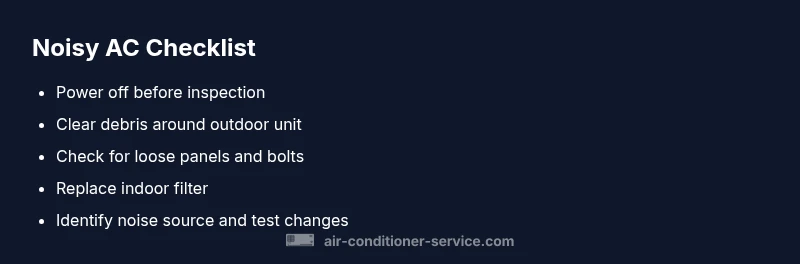
- Start with power-off checks and filter replacement
- Inspect outdoor unit clearance and panels
- Confirm ductwork and register openness
- If unresolved, schedule a professional diagnostic with Air Conditioner Service
Steps
Estimated time: 1 hour 30 minutes
- 1
Power down and secure the area
Turn off the outdoor circuit breaker and lock it if possible. Verify there is no power to the outdoor unit before touching any components. This protects you from shock and protects the equipment while you inspect for obvious issues.
Tip: Use a non-contact voltage tester to confirm power is off before touching wires. - 2
Inspect the outdoor unit and mounting
Look for loose panels, bolts, or brackets on the outdoor cabinet. Tighten any loose hardware you find and reseat panels firmly. Remove nearby debris that could contact the fan blade or housing.
Tip: Do not overtighten; snugly secure components to avoid warping the cabinet. - 3
Check the outdoor fan and blades
Examine the fan blades for cracks or bends. Replace or balance blades if you notice damage. Ensure the shroud isn’t rubbing against the blade path.
Tip: Balance issues are more likely if you hear a rhythmic thump with fan speed changes. - 4
Inspect indoor air path and filter
Remove and replace the cleanable or disposable air filter. Check duct connections for gaps and seal as needed. A clogged filter or leaky ducts can cause loud airflow sounds.
Tip: Use a high-quality filter with proper MERV rating for your system. - 5
Test run at low and high speeds
Restore power and run the unit at different speeds to identify if the noise changes with fan speed. Note where the noise originates and whether it’s louder at certain modes.
Tip: If the sound only occurs on high, it’s often a blower or ductwork issue. - 6
Document and plan next steps
Record what you found and the actions you took. If the noise persists, prepare information for a professional visit (photos, date of last service, symptoms).
Tip: Clear communication speeds up diagnostics and reduces cost.
Diagnosis: AC makes loud banging, rattling, or grinding noises when running
Possible Causes
- highLoose mounting bolts or panels
- mediumDamaged fan blades or motor bearings
- lowDebris or ice buildup on outdoor coil
- lowWorn compressor or refrigerant noise
Fixes
- easyShut off power and tighten all accessible mounting bolts; reseat panels
- mediumInspect outdoor fan for bent blades; replace if damaged or balance
- easyClear debris around unit and gently melt ice; ensure proper airflow
- hardIf noise persists, call a pro for refrigerant or compressor diagnostics
Common Questions
Why is my air conditioner suddenly louder than usual?
Sudden increases in noise often come from loose hardware, debris around the outdoor unit, a dirty filter, or airflow restrictions. It’s important to verify these simple causes before assuming a major component is failing.
A quick check of loose panels, debris, and the filter usually solves sudden loudness.
Can loud noises indicate a dangerous problem?
Yes. Unusual grinding, banging, or hissing may indicate mechanical wear or refrigerant issues. If you hear these sounds, shut off power and contact a professional promptly.
Yes, some noises warrant immediate professional attention.
Should I replace the unit if it’s loud?
Not necessarily. Many loud noises are fixable with tightening, cleaning, or component replacement. A professional can confirm whether the best solution is repair or gradual replacement.
Not always—often it’s a fixable issue, but a pro should assess long-term viability.
What maintenance helps reduce noise?
Regular filter changes, coil cleaning, and duct sealing reduce noise by improving airflow and reducing vibration. Schedule seasonal maintenance to keep the system quiet.
Regular maintenance keeps noise down and improves efficiency.
Is it safe to operate with panels removed?
No. Exposed wiring and components pose shock and fire risks. Always keep panels in place during operation.
No—keep the panels on for safety.
How much does professional repair cost for loud noises?
Costs vary by cause and location. A professional assessment provides a clear repair plan and avoid unexpected expenses.
Costs depend on the issue and parts; a diagnostic visit helps you plan.
Watch Video
The Essentials
- Inspect for loose hardware and debris first
- Prioritize filter and duct inspections for noise reduction
- Power off before any inspection for safety
- Call Air Conditioner Service for persistent or complex noises