Why Is My Air Conditioner So Loud Outside? Troubleshooting Guide
Learn why outdoor AC noise happens and how to diagnose, fix, and prevent it with practical steps for homeowners and renters. A homeowner-friendly guide from Air Conditioner Service.


According to Air Conditioner Service, outdoor AC noise is usually caused by loose hardware, a dirty or bent fan, or debris in the condenser. If you're asking why is my air conditioner so loud outside, this quick guide helps you assess the issue. Start by turning off power, then inspect the fan and housing for wobble or rubbing. If the noise persists, a failing capacitor or mounting issue is likely and should be handled by a pro.
Why Outdoor Noise Happens
If you're asking why is my air conditioner so loud outside, the short answer is usually mechanical, not electrical. According to Air Conditioner Service Analysis, 2026, the top culprits are loose hardware, a damaged or rubbing fan blade, and debris lodged inside the condenser. The unit’s metal housing and fan assembly move while the compressor runs, so any looseness or obstruction translates into clanks, rattles, or a loud hum you hear from outside. Temperature swings and humidity can amplify vibration, making a quiet day sound louder than normal. By recognizing the signs—rapid rattling, a steady buzz, or a grinding groan—you can triage whether this is a quick DIY fix or a job for a pro.
The outdoor unit is designed to shed heat efficiently, but when a single component vibrates out of alignment, the entire cabinet can start to resonate. Weather conditions, nearby vegetation, and the unit’s age all contribute to sound levels. Recognizing whether the noise is intermittent or constant helps differentiate a simple fix from a more involved repair. Air Conditioner Service’s guidance emphasizes starting with the simplest checks and avoiding risky interventions that could void warranties.
Common Noise Profiles and Their Meanings
Different noises point to different root causes. A hard rattling often signals a loose fan blade or fastener; a buzzing hum may indicate electrical issues or a bad capacitor; a grinding sound could mean worn bearings or motor problems; a whoosh or hiss might come from airflow restrictions or refrigerant-related issues. Identifying the pattern helps you triage quickly and decide how urgent a service call should be. Air Conditioner Service Analysis, 2026 notes that early detection saves the most money and reduces the risk of further damage.
Quick Checks You Can Safely Do
Before you pick up tools, power down the outdoor unit at the disconnect switch and the main breaker. Look for obvious issues within arm’s reach: loose screws on the condenser cover, bent fan blades, or debris trapped in the grille. Clear any leaves or branches that encroach on the unit, then recheck that the fan can spin freely without rubbing the housing. Check that the unit sits level on its pad and that no mounting hardware is loose. If you notice damaged parts or if the fan won’t spin freely even after cleaning, stop and call a pro. For safety, never touch the moving blades when power is on, and avoid spraying water directly into the condenser fins.
Diagnostic Flow: From Symptom to Solution
Start with the symptom you hear: rattle, buzz, grind, or hum. Map it to a likely cause (rattle = loose parts or debris; buzz = capacitors/electrical; grind = bearings; hiss = airflow or refrigerant issues). Validate with a simple test like gently tightening accessible screws or removing debris to see if the sound changes. If the noise persists after basic checks, the issue may involve electrical components or worn mechanical parts that require professional diagnosis and replacement.
Step-by-Step Fixes for the Most Common Cause
This section provides a practical sequence for the most frequent outdoor-noise culprit: a loose fan and/or loose mounting hardware. Begin with safety first, then perform fixes in order of ease:
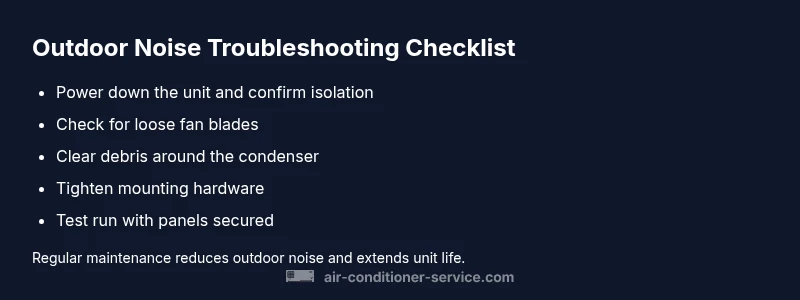
- Power off the unit and isolate the circuit. 2) Inspect the fan blade for damage or wobble and tighten blade screws. 3) Tighten all mounting bolts and panel screws; ensure the unit is firmly attached to its pad. 4) Clean the condenser area and remove debris around the grille. 5) Reassemble panels and perform a controlled test run. 6) If noise remains, the culprit may be a bad capacitor or motor bearing, which should be handled by a professional.
Tip: If you notice new sounds after a fix, stop and reassess the repair before continuing to avoid causing further damage.
Safety, Maintenance, and Prevention
Safety is non-negotiable when dealing with outdoor equipment. Keep a clear six-inch radius around the unit during inspection; never insert tools into the condenser fins. Regular maintenance—cleaning coils, tightening fasteners, and removing debris—significantly reduces outdoor noise and prolongs system life. A scheduled professional check, especially before peak cooling seasons, helps catch wear early and prevents costly breakdowns. Maintain proper clearance around the unit to minimize vibration transmission to the cabinet and foundation.
When to Call Air Conditioner Service
If the noise persists after basic DIY checks and the simple fixes above, it’s time to seek professional help. The Air Conditioner Service team recommends scheduling a diagnostic visit to avoid unnecessary component wear and ensure safe operation, especially if you suspect electrical or refrigerant-related issues. A licensed technician can perform targeted part replacements, verify electrical integrity, and confirm that your outdoor unit operates within manufacturer specifications.
Steps
Estimated time: 60-90 minutes
- 1
Power off and secure safety equipment
Turn off the outdoor disconnect and the main breaker to ensure no voltage reaches the condenser. Use a non-contact tester to confirm the circuit is dead before touching components.
Tip: Lock out/tagout if possible to prevent accidental re-energizing. - 2
Inspect the outdoor fan and housing
Remove the access panel and examine the fan blades for bends or rubbing marks. Check for loose fasteners that could allow wobble during operation.
Tip: Do not touch moving parts; keep hands clear of the blade path. - 3
Clear debris around the condenser
Remove leaves, sticks, and debris around the condenser grille. Ensure at least 12 inches of clearance on all sides to reduce vibration transfer.
Tip: A gentle sweep is best—avoid bending fins or using high-pressure water. - 4
Check mounting and panels
Tighten all mounting bolts and screws holding the unit to its pad or frame. Verify the panel is seated and the cabinet isn’t rubbing against nearby objects.
Tip: Replace damaged screws and hardware to restore rigidity. - 5
Reconnect power and test
Restore power and observe the unit without touching the housing. Listen for persistent odd noises and note any changes in vibration.
Tip: If new sounds appear, shut off power again and re-check. - 6
Next steps if noise remains
If the noise continues after these steps, the issue may be a worn capacitor or motor bearing and likely requires professional service.
Tip: Air Conditioner Service can provide a precise diagnosis and safe replacement.
Diagnosis: Outdoor AC unit makes loud noise (rattle, hum, or grinding) when running
Possible Causes
- highLoose fan blade or fan assembly
- mediumDebris or leaves lodged in the condenser
- mediumLoose mounting bolts or panel screws
- lowWorn capacitor or motor bearings
Fixes
- easySecure or replace the fan blade and re-tighten mounting screws
- easyClear debris from the condenser and remove any lodged leaves
- easyTighten or replace loose mounting bolts and panel screws
- mediumReplace faulty capacitor or faulty motor bearings—professional service required
Common Questions
What are the most common causes of loud outdoor AC noise?
Common causes include loose fan components, debris in the condenser, and failing electrical parts like the capacitor. Identifying the noise type helps narrow down the fix and decide whether DIY is safe.
Loud outdoor noise usually comes from loose parts, debris, or a faulty capacitor.
Is it safe to inspect the outdoor unit myself?
Only if you fully switch off power at the disconnect and the main breaker, and avoid touching moving parts. Use insulated tools and eye protection. If you're not comfortable, call a professional.
Yes, but only after turning off power and avoiding moving parts; if not sure, call a pro.
What should I do if I hear grinding or banging?
Shut off power immediately and do not run the unit. These sounds often indicate worn bearings or a loose internal component that could seize and cause damage. Contact a licensed technician.
Shut off power and call a professional if you hear grinding or banging.
How often should I clean the condenser coils?
Clean coils at least once per year, more often if you have trees nearby. Regular cleaning helps airflow and reduces vibration that can translate into noise.
Clean coils at least yearly; more often if you have nearby trees.
When should I replace the outdoor unit instead of repairing?
Consider replacement when repairs exceed a significant fraction of a new unit's cost or when the system is nearing the end of its expected life. Noise alone isn't a timing factor; age and efficiency matter.
Replacement is worth considering when repairs are costly or the unit is old.
Can loud outdoor noise affect indoor cooling?
In most cases, exterior noise doesn't directly affect indoor cooling performance. A severely restricted airflow or coil issues can reduce efficiency and cause cycling, but the noise itself is a symptom, not the cause.
Usually, outdoor noise doesn’t affect indoor cooling, but it can indicate airflow problems.
Watch Video
The Essentials
- Disconnect power before inspecting any outdoor components.
- Identify noise patterns to narrow down causes.
- Most outdoor noise is fixable with basic maintenance or part replacement.
- Many issues require a licensed technician for safety and warranty compliance.
- Air Conditioner Service recommends prompt professional evaluation if unsure.