Why Is My Air Conditioner Making Noise? A Troubleshooting Guide
Urgent, practical troubleshooting guide to diagnose noisy air conditioners. Learn quick safety checks, a diagnostic flow, and step-by-step fixes to restore quiet comfort. Know when to call a pro.


Noisy ACs are usually from loose parts, debris, or a faulty fan. For safety, start by turning off power at the breaker and inspecting for loose mounting bolts or panels. Clear debris from the outdoor condenser and ensure the fan blades rotate freely. If you hear grinding, squealing, or banging, stop and contact a licensed technician promptly to avoid damage.
Why a noisy air conditioner happens
If you're asking why air conditioner making noise, you're not alone. The most common culprits are loose hardware, debris in the outdoor unit, or a failing fan. According to Air Conditioner Service, many homeowners can identify the first symptoms by listening for rattles, squeals, or grinding near startup. The first step is to shut off power at the breaker to prevent injury and further damage, then inspect visible components for looseness. Indoor components, such as the blower wheel or motor, can also develop vibrations that transfer noise into living spaces. In most cases, the noise indicates a mechanical issue rather than dangerous refrigerant leaks, but anything accompanied by overheating, burning smells, or ice on the evaporator coil should be treated as urgent. Early action often prevents more expensive repairs later, and keeping a quiet system means maintaining comfort and energy efficiency through the cooling season. If in doubt, err on the side of safety and seek professional guidance promptly. This is also a good reminder that timely maintenance helps sustain energy efficiency over the 2026 cooling season and beyond.
Common noise types and what they mean
AC noises come in several flavors, each pointing to different underlying problems. A rattling or buzzing sound from the outdoor unit often means loose panels, a loose fan grill, or debris blocking airflow. A squeal or chirp can indicate a worn belt or a dry bearing in the blower motor. A grinding or thudding noise, especially at startup or shutdown, may signal a failing compressor mount or unbalanced fan blades. A hissing sound can come from refrigerant leaks, which require immediate inspection by a licensed technician. Air Conditioner Service analysis shows that addressing the simplest causes—tightening bolts, clearing debris, or lubricating a moving part—eliminates many noises without major repairs. Regular airflow issues, such as dirty filters or blocked returns, can also worsen mechanical noise by forcing the equipment to work harder. By noting when the noise occurs, you’ll have a clearer path to a fix. This block also includes a note on timing and common patterns to help homeowners decide if they should schedule service.
Quick safety checks you can do before calling a pro
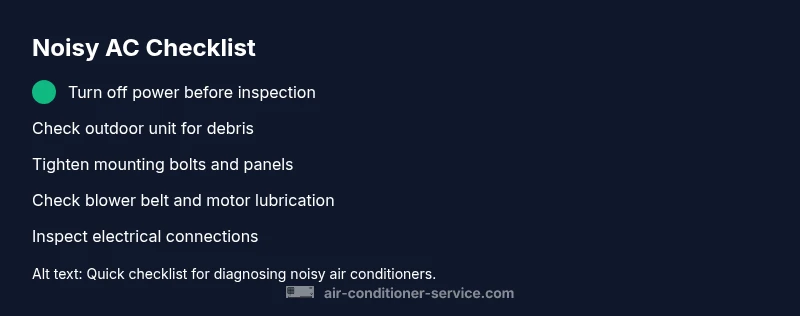
Before you pick up tools or call for help, run through a few safe checks. Power off the system at the main breaker and the disconnect near the outdoor unit. Check the outdoor unit for debris, leaves, or vegetation that could obstruct airflow. Inspect visible screws and panels for looseness and tighten carefully if you can do so safely. Ensure the condensate tray and drain lines are clear, and verify that the air filter is clean; a dirty filter can cause the blower to strain and create unusual noises. Do not touch electrical components or exposed capacitors. If the unit feels hot, smells burnt, or you hear continuous arcing, stop immediately and call a professional. After these checks, you should have a better sense of whether the problem is trivial or needs professional attention.
Diagnostic flow: symptom to diagnosis
Use a simple flow: Symptom to diagnosis to solution. Start by listening to when the noise occurs: startup, running, or shutdown. If startup, suspect loose panels, debris, or a failing fan motor. If running, check for belt wear or bearing lubrication. If shutting down, inspect for mounted components loosening or refrigerant-related issues. Document the symptoms with timing and any accompanying odors or heat. If you identify a loose fastener, tighten and re-test. If the noise persists after basic tightening, proceed to more involved checks or consult a professional. This approach keeps you organized and helps the technician diagnose faster, reducing the risk of misdiagnosis and unnecessary parts replacement.
Common fixes to try before calling a pro (non-invasive)
Here are safe, practical fixes to try if you’re comfortable. Tighten any loose mounting bolts and screws around the condenser cabinet and access panels. Remove leaves and debris from the outdoor unit and straighten any bent fan blades if visible from outside. Clean or replace the air filter to restore proper airflow and reduce blower strain. Lubricate the blower motor if it’s a serviceable bearing (do not over-lubricate). Check for unusual looseness or wobble in the outdoor fan; if the blade appears damaged, stop and replace it. Ensure the electrical connections at the disconnect are secure, but do not open the sealed parts. If the noise continues, the fault may be deeper and require a professional.
Proactive maintenance to minimize future noise
Routine maintenance is the best preventive measure. Change or clean air filters every 1-3 months depending on usage and indoor air quality. Schedule professional inspections at least once a year to identify wear before it becomes a noise problem. Keep the outdoor unit clear of vegetation and ensure adequate clearance for airflow. Clean coils and inspect the blower wheel for debris buildup. A well-maintained system runs smoother, quieter, and more efficiently, which saves energy and reduces the likelihood of unexpected failures.
When to call a professional immediately and what to expect
If you hear grinding, banging, signs of overheating, or refrigerant smells, stop the unit and call a licensed technician right away. Do not attempt to disassemble sealed systems or refrigerant lines yourself. A professional will perform a diagnostic test, check the blower, motor bearings, and electrical connections, and may replace a failing component such as a capacitor, belt, or fan. Expect a safety check, a targeted repair plan, and a discussion about related preventive maintenance to avoid future noises.
Steps
Estimated time: 45-60 minutes
- 1
Power down and safety check
Switch off the main breaker and the outdoor disconnect. Confirm there is no live voltage before touching any components. Put on safety glasses and gloves.
Tip: Never touch exposed capacitors; discharge carefully if trained. - 2
Inspect mounting and panels
Look for loose bolts or mounting hardware around the condenser cabinet and access panels. Tighten snugly with the appropriate tool, avoiding overtightening.
Tip: Use a flashlight to spot hairline cracks or loose brackets. - 3
Clear debris from outdoor unit
Remove leaves, grass, and other debris from the top and around the unit. Gently rotate the fan by hand to check for smooth movement and no resistance.
Tip: Keep a safe distance from the fins to avoid cuts. - 4
Check blower and indoor components
Access the blower compartment and inspect for wobble or unusual resistance. Clean the blower wheel and lubricate if serviceable per manufacturer guidelines.
Tip: Do not over-lubricate; a small amount goes a long way. - 5
Test electrical connections
With power still off, visually inspect the disconnect wiring for signs of wear. If you must test, use a multimeter or consult a professional.
Tip: If you hear crackling or smell burnt insulation, stop immediately. - 6
Power up and observe
Restore power and run the system for 5-10 minutes. Listen for changes in noise and verify there is normal airflow and no abnormal heat.
Tip: Document the noise pattern to share with a technician if needed.
Diagnosis: AC makes unusual noises (rattling, squealing, grinding) during startup or running
Possible Causes
- highLoose mounting bolts or panels
- mediumDebris or obstructions in the outdoor unit
- mediumWorn or loose fan belt or blower wheel
- lowLoose electrical connections or failing capacitors
- lowDamaged compressor or refrigerant-related components
Fixes
- easyTighten accessible mounting bolts and panels; reseat components as needed
- easyClear debris and ensure unobstructed airflow around the outdoor unit
- mediumInspect and replace worn belts or unbalance fan blades; ensure proper lubrication
- mediumCheck electrical connections and test capacitors with proper equipment; call a pro for replacements
- hardIf compressor or refrigerant issues are suspected, contact a licensed technician immediately
Common Questions
Why is my air conditioner making a rattling noise?
Rattling usually points to loose panels, screws, or debris in the outdoor unit. Tighten fasteners and clear obstructions, then recheck for any loose parts.
Rattling often means loose panels or debris. Tighten fasteners and clear away obstructions, then listen for remaining noises.
What does a squealing sound mean in an AC unit?
A squealing sound often indicates a worn belt or dry bearings in the blower motor. If you see visible belt wear or can't access the area safely, call a pro.
A squeal usually means a worn belt or dry bearings. If unsure, contact a technician.
Can a noisy AC be dangerous?
Most noises are mechanical, but grinding or burning smells can indicate serious problems, including electrical faults or refrigerant issues. Stop operation and consult a professional if you notice these signs.
Some noises can signal serious problems like electrical faults. Stop the unit if you smell burning and call a pro.
Should I lubricate my AC to stop the noise?
Only if the blower motor has serviceable bearings and you know the correct lubricant type. Over-lubrication can attract dust and worsen issues, so follow manufacturer guidance or call a pro.
Lubrication can help only if the motor is serviceable. Follow the manual or call a pro.
When should I replace my AC due to noise?
If noises persist after basic fixes, or components like the compressor show wear, plan for a professional assessment. Chronic noise can indicate aging equipment nearing end of life.
Persistent noises after fixes mean you should get a professional checkup and plan replacement if needed.
Is a refrigerant leak responsible for noise?
Refrigerant leaks are usually not the primary noise source, but they can accompany other symptoms. If you suspect a leak, do not delay service from a licensed technician.
Leaks don’t usually cause noise, but if suspected, get a licensed tech to check it out.
Watch Video
The Essentials
- Identify whether the noise occurs at startup or while running
- Tighten loose hardware and clear debris for quick relief
- Replace worn parts before they cause further damage
- Call a pro for refrigerant or compressor concerns