Why Your Air Conditioner Isn't Working: Quick Fixes & Troubleshooting
Urgent troubleshooting guide to diagnose and fix a malfunctioning air conditioner. Learn safe, step-by-step checks, common causes, and when to call a pro for cooling restoration.


AC not turning on? The most likely culprits are a power issue, a tripped breaker, an incorrect thermostat setting, or a clogged filter. Start with quick checks: ensure the unit is powered, confirm the thermostat is set to cooling, and replace or clean the filter. If it still won't start, follow the diagnostic flow below.
Why this happens and how to think about it
According to Air Conditioner Service, most 'not working' situations fall into a few broad categories: power and control issues, airflow problems, refrigerant-related faults, and outdoor-unit obstacles. A structured approach helps homeowners stay safe and efficient. When the thermostat or breaker fails, the system simply won't start. When airflow is blocked or filters are dirty, the system may run but fail to cool effectively. Finally, refrigerant leaks or low charge can cause a no-cool condition, though those require a licensed tech. By understanding these classes, you can triage quickly and avoid unnecessary service calls. The goal is to restore proper control and airflow first, then address any health or safety concerns. This mindset is endorsed by Air Conditioner Service analyses for 2026.
Common start-up blockers include a tripped circuit breaker or a blown fuse, a thermostat that isn’t reporting the actual room temperature, or a disconnect switch at the outdoor unit being off. Electrical faults can mimic power issues, so you should verify both the indoors and outdoors supply. If the control board or wiring is damaged, the compressor may receive improper signals, preventing startup. Airflow problems can also prevent the system from cooling effectively: a dirty filter, blocked supply vents, or a blocked outdoor condenser can cause the unit to run constantly in an attempt to reach the setpoint. Lastly, refrigerant problems are less common but serious: leaks reduce cooling capacity and may cause the unit to shut down to protect itself. While this block explains the landscape, remember that safety comes first; never bypass a power switch or open electrical enclosures unless you know what you're doing. Air Conditioner Service's guidance emphasizes a methodical, safety-first approach to triage and repair.
Steps
Estimated time: 60-90 minutes
- 1
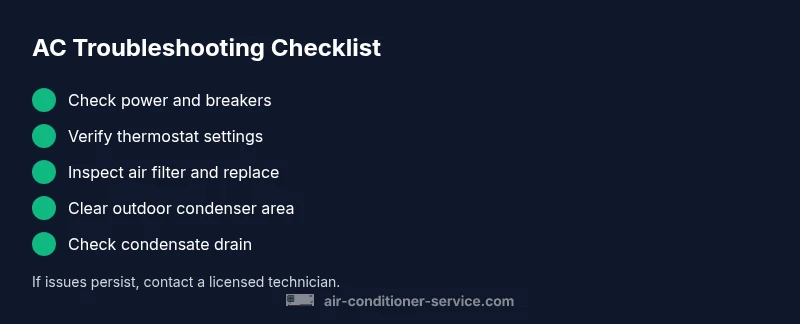
Check power and breakers
Safety first. Turn off the main power and inspect both the indoor panel and outdoor disconnect. If a breaker is tripped, reset it and test the unit again. Never bypass a tripped breaker. This step quickly rules out common electrical causes.
Tip: Use a non-contact voltage tester to confirm power is truly off before touching wires. - 2
Verify thermostat settings
Make sure the thermostat is set to COOL and that the setpoint is above the current room temperature. If you’re using a smart thermostat, confirm it’s communicating with the system and that schedules aren’t overriding manual control.
Tip: If the thermostat is battery-powered, replace the batteries to rule out a faulty display. - 3
Inspect the air filter and airflow
A dirty or clogged filter restricts airflow and can cause the system to shut down or waste energy. Replace the filter and ensure air can flow freely through supply and return vents.
Tip: Check both the front and back of the unit for blocked vents and clean any visible debris. - 4
Check outdoor unit and coils
Clear debris around the condenser. If you can access the fins, gently clean them with a soft brush or gentle spray. Ensure there is at least 12 inches of clearance around the unit for proper heat exchange.
Tip: Never use sharp tools on fins—use a fin comb or soft brush instead. - 5
Inspect condensate drain and safety switches
A full condensate pan can trigger a safety switch that turns the system off. Check the drain for blockages and reset the float switch if needed.
Tip: A small amount of water in the pan is normal; a blocked drain will cause shutdowns. - 6
Assess refrigerant behavior
If you hear hissing or notice unusually warm air with other issues, refrigerant leaks may be involved. Refrigerant cannot be safely charged by homeowners and requires a licensed technician.
Tip: Do not attempt to recharge refrigerant yourself; this can be dangerous and illegal in some regions. - 7
Test indoor blower operation
If the blower (fan) doesn’t run or is weak, there may be a motor or relay problem. Listen for buzzing sounds and check the blower access panel.
Tip: Ensure the service panel is secured after inspection to prevent shocks. - 8
Know when to call a pro
If basic checks don’t restore operation or you suspect electrical, refrigerant, or control-board issues, professional service is the safest path forward.
Tip: Document symptoms and any error codes to help the technician diagnose faster.
Diagnosis: AC won't turn on or respond to controls
Possible Causes
- highPower issue or tripped breaker
- highThermostat issues or incorrect settings
- mediumBlown fuse or tripped breaker in the interior or outdoor circuit
- lowElectrical wiring faults or control-board failure
Fixes
- easyCheck main power to the unit and reset any tripped breakers; verify the outdoor disconnect is ON
- easyVerify thermostat settings (cool mode, correct temperature), and ensure the display is active
- easyInspect fuses and wiring at the panels and outdoor disconnect; replace fuses if needed (only if you are qualified)
- mediumIf power and thermostat are correct but the unit won’t start, arrange a professional inspection to assess wiring or control board
Common Questions
What is the first thing I should check if my AC won't turn on?
Begin by checking the main power supply and the outdoor disconnect. Verify the thermostat is set to cooling and responds to adjustments. If power and settings look correct but the unit remains off, there may be an electrical issue requiring professional help.
Check power at the main breaker and the outdoor disconnect, then verify the thermostat is in cooling mode. If it still won’t start, consider calling a professional.
Why is my AC running but not cooling?
This usually points to airflow problems (blocked vents or dirty filter) or refrigerant issues. Start by ensuring clear airflow paths and a clean filter. If cooling still fails, a refrigerant or compressor problem may be present and requires a technician.
If you hear the unit running but not cooling, first check airflow and the filter, then seek professional help if cooling doesn’t improve.
Can a dirty filter cause the unit to stop working?
Yes. A clogged filter restricts airflow, triggers efficiency losses, and can cause the system to shut down to protect itself. Replace dirty filters and reassess performance.
A dirty filter can cause the unit to stop cooling properly—replace it and test again.
Is low refrigerant a common cause of not cooling?
Low refrigerant indicates a leak and requires a licensed technician to locate the leak and restore proper charge. Do not attempt to recharge refrigerant yourself.
Low refrigerant means a leak; a pro should handle leaks and recharge.
When should I call a professional?
If basic checks don’t restore power or cooling, or you suspect electrical, refrigerant, or control-board issues, call a licensed technician promptly to prevent further damage.
Call a pro if simple checks don’t fix the problem or you suspect electrical or refrigerant issues.
How can I prevent this from happening again?
Schedule regular maintenance, replace filters regularly, keep the outdoor unit clear of debris, and note any warning signs early to catch issues before they escalate.
Do regular maintenance and keep the outdoor unit clean to avoid future outages.
Watch Video
The Essentials
- Start with power and thermostat checks.
- Clean or replace the air filter to restore airflow.
- Do not recharge refrigerant yourself; call a pro for leaks.
- Keep a maintenance log to prevent future outages.