Air Conditioner Buzzing Noise Troubleshooting Guide
Urgent, practical steps to diagnose and fix a buzzing air conditioner. Safe DIY checks, common culprits, and when to call a pro for lasting relief.


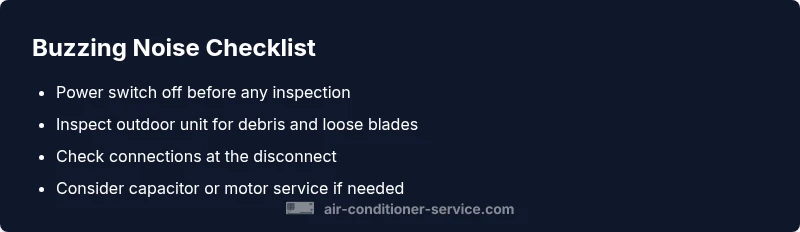
Your buzzing noise is most likely due to a loose part in the outdoor condenser or a failing capacitor. Quick fixes include turning off power, checking for loose fan blades or debris in the outdoor unit, and ensuring the electrical disconnect is secure. If the sound continues, do not operate the system and contact a licensed technician.
What a buzzing noise means
When the air conditioner is making a buzzing noise, it often points to a mechanical or electrical issue rather than a simple airflow problem. At a high level, buzzing indicates vibration, arcing, or a component stirring when it shouldn't. According to Air Conditioner Service, a buzzing sound is a common sign that something in the outdoor condenser or the connected wiring is not behaving typically. This is not something you should ignore, especially in hot weather when the system has to work harder. The sooner you identify the source, the lower the risk of further damage and costly repairs. Pay attention to where the sound originates (outdoor unit vs. indoor blower), whether the noise happens only when the unit starts or runs, and whether it coincides with electrical switching. A quick audit now can save you bigger headaches later.
Immediate safety steps you should take
Safety comes first. Before you do any checks, switch off power to the AC at the main disconnect or breaker. Do not poke around inside the electrical cabinet with the power on. If you smell burning, hear sizzling, or notice scorch marks, leave the area and call a licensed electrician or HVAC technician immediately. Once power is off, you can inspect for obvious issues like loose screws on access panels, debris in the outdoor unit, or visibly loose fan blades. If you see a loose fan blade, do not run the unit; contact a pro to re-balance or replace it. Keep pets and children away from the unit while you work. Air Conditioner Service notes emphasize immediate shutdown to prevent shock or fire risk.
Identify whether the noise comes from the indoor or outdoor unit
Begin by listening closely with the unit powered down. A buzzing captured predominantly from the outdoor condenser often points to the fan, a loose wire, or a capacitor in the outdoor circuit. If the indoor blower or air handler makes the noise, the problem may involve bearings, a noisy motor, or ductwork vibrations. The location can guide you toward the most likely culprit: outdoor unit issues tend to be louder and more persistent in hot weather; indoor noises may change with fan speed or air filter condition. Air Conditioner Service analysis suggests outdoor components are the frequent culprits for buzzing in peak season, but every system is different, so verify across both units.
Common culprits by area: outdoor unit, indoor blower, ductwork
Outdoor unit: The most common buzzing sources are a loose fan blade, a failing capacitor, or loose electrical connections at the disconnect. Debris like leaves or sticks can also jam the fan or bend blades, creating an audible vibration. Indoor blower: Bearings or worn motor bushings can generate a buzzing along with a whine when starting up. Ductwork: Loose mounting screws or expanding ducts can create a buzz that travels through the vents. Regular maintenance reduces these risks and helps you spot wear before it becomes a failure.
Safe, do-it-yourself checks you can perform
With power off, inspect the outdoor unit for obvious issues: secure all screws on the fan housing, look for loose wiring at the disconnect, and clear debris around the condenser fins. Gently spin the outdoor fan by hand to check for binding or wobble. If you notice a rough bearing or a loose blade, stop and call a technician. Check the indoor air handler access panel for loose screws and listen for changes when you lightly tap the cabinet—if the noise shifts, there may be a loose component or accessory making contact. Do not attempt capacitor replacement unless you are trained; capacitors store dangerous electrical energy.
When to suspect capacitors, fans, or bearings and what to do
Capacitors often fail with a buzzing or humming sound and can cause the compressor to struggle starting. A failing outdoor fan motor or rotor bearing can also produce a rhythmic buzz or grind. If you suspect a faulty capacitor or motor, do not operate the unit; these parts can pose a safety risk and may damage the compressor. A licensed HVAC technician can perform a capacitor test, confirm motor health, and replace components as needed. Regular maintenance, including capacitor checks, can extend the life of your outdoor unit and reduce unexpected buzzing.
A maintenance plan to prevent buzzing in the future
Create a simple annual maintenance routine: replace or clean the air filter every 1-3 months, inspect the outdoor unit for debris and secure all mounting hardware, and schedule professional inspections before peak season. Keep the area around the outdoor unit clear of plants and clutter, and ensure the electrical disconnect is accessible and intact. Regular lubrication (where specified by the manufacturer) and belt/wingnut checks on the blower can reduce vibration and noise. Document any changes you notice to help a technician diagnose future issues quickly.
Steps
Estimated time: 60-90 minutes
- 1
Power down the system
Turn off the outdoor disconnect and switch off the circuit breaker for the AC. Confirm there is no power to the unit before touching any components.
Tip: Use a non-contact voltage tester to verify power is out. - 2
Inspect the outdoor unit
Remove the fan grille and visually inspect for loose blades, bent parts, or debris. Gently wiggle the blades to check for excessive play.
Tip: Do not force any moving parts; if unsure, stop and call a pro. - 3
Check electrical connections
Inspect the electrical disconnect at the outdoor unit for looseness or corrosion. Tighten any accessible screws and reseat connectors with the power off.
Tip: If you see burnt marks or melted insulation, stop and seek professional help. - 4
Test operation safely
Restore power briefly and listen from a safe distance for changes in the buzzing. If it persists or worsens, shut off power again and prepare for professional service.
Tip: Do not touch live wires while the unit is energized. - 5
Inspect indoor blower access (if accessible)
Open the indoor access panel and check for loose mounting screws or a visibly worn belt or bearing. Do not attempt lubrication unless the manufacturer allows it.
Tip: A rattling inside the cabinet is a sign to call a tech. - 6
Document and plan professional help
Note when the buzzing occurs, whether it’s tied to startup, and any accompanying smells or changes in airflow. Schedule a pro visit if you’re unsure.
Tip: Having a clear symptom log speeds up diagnosis. - 7
Prevent future buzzing
Establish a regular maintenance routine: filter changes, outdoor unit clearing, and annual professional checks before peak season.
Tip: Maintenance saves energy and reduces unexpected failure.
Diagnosis: Air conditioner is making a buzzing noise
Possible Causes
- highLoose or vibrating outdoor fan blade
- highUnsecured electrical disconnect or loose wiring
- mediumFailing outdoor capacitor
- lowDebris near outdoor condenser or indoor blower obstruction
- mediumBearing wear or motor fault in the indoor blower
Fixes
- easyPower off and tighten outdoor fan screws; remove debris from the unit
- easySecure disconnect and verify tight wiring connections; replace any damaged wiring
- mediumReplace a faulty capacitor (done by a qualified tech)
- hardClear obstructions and consider bearing/motor service if noise persists
- mediumSchedule professional inspection for indoor blower components if needed
Common Questions
What does a buzzing sound from my AC usually mean?
Buzzing typically indicates a mechanical vibration or electrical issue, often involving the outdoor condenser—such as a loose fan blade or a failing capacitor. Indoor components can also contribute if bearings or motors are worn.
Buzzing often means a mechanical or electrical issue in the outdoor unit, like a loose fan or bad capacitor.
Is buzzing dangerous for my AC system or home safety?
Yes, buzzing can indicate an electrical problem or a failing part that could cause overheating or a short. Stop using the unit until inspected and avoid touching live components.
Buzzing can be dangerous, so avoid using the unit and have it checked by a professional.
Can I fix a buzzing noise myself?
Some safe checks are possible, like clearing debris and tightening visible screws with power off. Most component failures, especially capacitors and motors, require a licensed technician.
You can do basic safety checks, but for capacitor or motor issues, call a pro.
What should I check first if I hear buzzing?
First, switch off power and inspect the outdoor unit for debris and loose blades, then check the disconnect and visible wiring. If the noise persists, contact a professional.
Power off, check outdoor unit for debris and loose parts, and call a pro if it continues.
Will replacing the capacitor fix the buzzing?
Replacing a capacitor can resolve buzzing caused by a failed capacitor, but it’s a job for a qualified HVAC technician due to high voltage and charging risks.
Replacing the capacitor can help, but it’s a job for a licensed tech.
How long should I wait before calling a professional?
If basic checks don’t eliminate the noise or you notice burning smells, use the professional service promptly. Prompt diagnosis prevents further damage.
If basic checks don’t fix it or you smell burning, call a professional right away.
Watch Video
The Essentials
- Diagnose by location: outdoor unit buzzing points to fans, capacitors, or wiring.
- Safety first: power off completely before any inspection.
- Call a pro for capacitor or motor work to avoid shocks and further damage.
- Maintain regularly to prevent future buzzing and extend unit life.