Why Air Conditioners Have Water: An Urgent Troubleshooting Guide
Discover why your AC has water and how to address moisture issues quickly. Practical checks, safe fixes, and when to call a pro. Air Conditioner Service explains moisture basics and immediate actions.


Water around or dripping from your air conditioner is not always a malfunction, but it often signals a drainage or airflow issue. Start with the basics: check the condensate drain and pan, inspect the filter, and ensure proper airflow. If you see ice, unusual noises, or persistent leaks, shut off power and contact Air Conditioner Service for professional help.
Why does a air conditioner have water? The science behind condensation
At its core, moisture around an AC is often condensation. If you search for the phrase why air conditioner have water, you'll find that many homeowners misunderstand the phenomenon. In most climates, the indoor evaporator coil cools air and removes humidity. When warm, humid air contacts the cold coil, water vapor condenses on the coil and drains away through the condensate line. This is a normal part of the dehumidification process. However, when the condensation has nowhere to go or the coil is blocked, water can pool inside the pan or leak through seams. The key is to distinguish normal drainage from a fault that causes excess moisture or improper drainage. According to Air Conditioner Service, moisture management is a sign of a healthy system when managed correctly, but persistent water warrants a check.
Normal vs. abnormal moisture: what to watch for
Not all water means a disaster. In hot, humid weather, a small amount of condensation near the drain is expected. What matters is the location, frequency, and amount of moisture. Water pooling under the outdoor unit or dripping inside the house may indicate a blocked line, a full pan, or a coil freeze-thaw cycle. If the water track changes with the unit’s running cycle, it’s often a signal to inspect drainage and airflow. Air Conditioner Service emphasizes watching for sudden surges in moisture which can hint at a hidden leak or a failing component.
Common causes of water leaks in AC systems
Water leaks usually come from one of several culprits. A clogged condensate drain line is the most frequent offender, followed by a dirty or blocked air filter that reduces airflow and causes coil frosting or over-condensation. Ice on the evaporator coil is another common scenario, which melts and creates water when the unit runs again. Cracked condensate pans, improper installation, or inadequate slope of the drain line can also lead to leaks. Each cause changes the fix, from simple line clearing to component replacement. Knowing these causes helps homeowners prioritize safer, lower-cost fixes.
The condensate drain and pan: how moisture is supposed to be handled
Most modern AC systems use a condensate pan to catch moisture from the evaporator coil and a drain line to carry it away. The line should slope slightly downward and be free of obstructions. If the line is clogged, water may back up into the pan and spill. Pan cracks or rust also allow leaks. Inspecting the drain line and pan during routine maintenance can prevent unexpected floods. Ensuring clean, unobstructed drainage is one of the simplest, most effective moisture controls you can perform safely.
How to safely inspect the condensate drain, pan, and filter
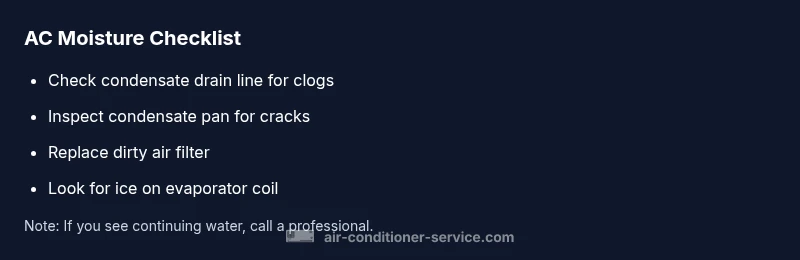
Before you touch anything, power down the unit at the breaker. Start with the air filter: a clogged filter reduces airflow and can trigger condensation issues. Remove and replace if dirty. Next, follow the condensate drain line: look for clogs or standing water, and clear debris with a flexible, non-metallic tool. If you can access the condensate pan, inspect for cracks or warping. Use a flashlight and wear gloves if needed. Keep a dry tray beneath the unit as a precaution while you work.
The role of ice and refrigerant problems in moisture
Ice on the evaporator coil is a major moisture disruptor. Frost forms when airflow is restricted or refrigerant is low, causing the coil to ice up; when the ice melts, a large amount of water can overwhelm the drainage system. Low refrigerant should be handled by a licensed technician, as it requires precise pressure measurements and potential refrigerant recovery. If you observe frequent icing, do not simply remove ice; inspect airflow and check refrigerant levels with professional guidance.
Preventing moisture buildup through maintenance
Preventive maintenance reduces the risk of water problems. Replace disposable or washable filters per schedule, keep outdoor coils clean, and ensure the condensate drain line is clear. Check the unit’s tilt and drainage slope to guarantee gravity drainage functions properly. In humid climates, consider a simple dehumidifier in the living spaces to reduce monthly moisture load on the AC. Regular checks help you catch issues before they escalate.
When to call Air Conditioner Service and what to expect
If the water problem persists after basic checks, or you notice refrigerant smells, buzzing noises, or electrical arcing, stop and call a professional. Air Conditioner Service can provide a comprehensive diagnosis, including drain system cleaning, pan repair or replacement, coil inspection, and refrigerant handling. Early professional intervention can prevent costly damage and ensure safe operation.
Summary: turning moisture into a safe, healthy operation
Moisture around an air conditioner is not automatically a failure, but it is a warning sign. By understanding condensation, drainage, and airflow, homeowners can safely perform initial checks, perform simple fixes, and determine when to escalate to professional service. Keeping the drainage path clear and ensuring good airflow are the two most effective practices to prevent water-related issues.
Steps
Estimated time: 60-90 minutes
- 1
Power off the system
Turn off the air conditioner at the thermostat and switch off the corresponding breaker. This prevents shocks or further damage while you inspect components.
Tip: Double-check the main panel to ensure no components remain energized. - 2
Inspect condensate drain line for clogs
Locate the condensate drain line and run a thin, flexible tool through it to clear any blockage. If feasible, flush with warm water and observe drainage.
Tip: Have a bucket ready for any wastewater. - 3
Check condensate pan for leaks or cracks
Carefully inspect the pan under the evaporator for cracks or signs of corrosion. Seal small cracks or replace the pan if damage is evident.
Tip: Do not attempt to seal a large crack with tape. - 4
Replace or clean the air filter
Remove the filter housing and replace a dirty filter with a new one of the same rating. A clean filter improves airflow and reduces condensation risk.
Tip: Note the filter type and orientation when reinserting. - 5
Check evaporator coil and ice buildup
Look for frost or ice on the evaporator coil. If present, allow the system to thaw with the fan off, then start again and observe. Persistent icing requires professional assessment of refrigerant and airflow.
Tip: Never chip ice off a live coil with tools. - 6
Test operation and monitor drainage
Turn the system back on and watch the condensate line for steady flow and the pan for any new leaks. Listen for unusual noises during operation as a sign of misalignment.
Tip: Keep a log of any new moisture or noises for the technician. - 7
Call a professional if issues persist
If water continues to appear after these steps, or you detect refrigerant odors, contact a licensed technician. Ongoing moisture can indicate more serious problems.
Tip: Do not delay professional evaluation for refrigerant or electrical concerns.
Diagnosis: Water dripping from indoor AC or pooling under unit
Possible Causes
- highClogged condensate drain line
- highDirty air filter reducing airflow
- mediumIce on evaporator coil due to low refrigerant or restricted airflow
- lowPan cracks or overflow due to aging
- lowImproper installation or improper drainage slope
Fixes
- easyUnclog condensate drain line and flush with water
- easyReplace dirty air filter and ensure proper seal around filter access
- hardThaw ice on coil and restore airflow; if ice recurs, check refrigerant and airflow quality
- mediumInspect condensate pan for cracks; seal or replace as needed
- easyVerify unit is level and drain line slopes correctly; remove debris from drainage area
Common Questions
Why is there water dripping from my air conditioner?
Water dripping from an AC usually points to drainage or airflow problems. Common causes include a clogged condensate drain, a full pan, or a dirty filter that reduces airflow. Ice on the coil due to poor airflow or low refrigerant can also melt into water. Start with drainage and airflow checks, and call a pro if issues persist.
Water dripping from your AC is often a drainage or airflow issue. Start with the drain, pan, and filter, then call a pro if it continues.
Is condensation water harmful to my home?
Condensation itself is not dangerous, but persistent moisture can indicate faulty drainage or airflow problems that may lead to mold or water damage. Address the root cause promptly and ensure proper drainage to keep indoor air quality safe.
Condensation isn’t dangerous by itself, but ongoing moisture can lead to mold or damage if not fixed.
What causes a clogged condensate drain line?
A clogged condensate drain line is usually caused by algae, mineral buildup, or debris that accumulates over time. A slow drain can back up and spill water into the pan. Regular maintenance helps prevent clogs.
Clogs come from buildup and debris; regular maintenance keeps it flowing.
Can a dirty filter lead to water leaks?
A dirty filter reduces airflow and can cause the evaporator coil to ice up. When the ice melts, it creates excess condensate that the drain line may not handle, leading to a leak. Replace filters regularly to prevent this.
Yes, a dirty filter can cause ice and extra water leaks.
When should I call a professional for AC moisture problems?
Call a professional if water persists after basic checks, if you hear buzzing or smell refrigerant, or if you suspect refrigerant leaks. A licensed tech will diagnose refrigerant levels, coil conditions, and drainage integrity.
Call a pro if moisture continues after simple checks or you suspect refrigerant issues.
Watch Video
The Essentials
- Inspect condensate drainage first to solve moisture issues
- Replace dirty filters to restore airflow and prevent frost
- Ice on coils signals airflow or refrigerant problems
- Call a professional for persistent moisture or refrigerant concerns