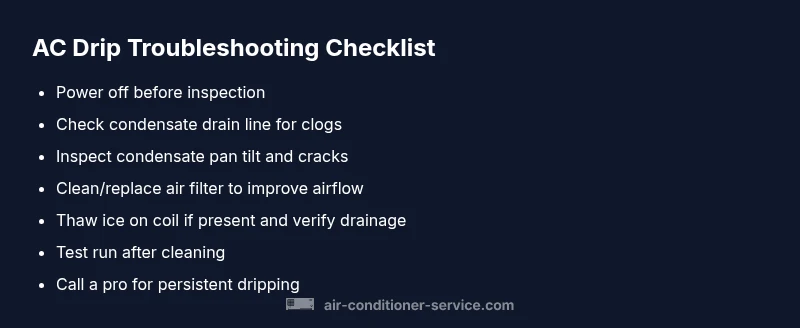
How to Troubleshoot Why Your Air Conditioner Drips Water
Urgent guide to diagnose and fix AC water drips. Learn common causes, safe steps, when to call a pro, and prevention tips to keep condensate issues from returning.


Most likely the condensate drain line is clogged or the condensate pan is overflowing. Start by turning off power, inspect the drain line for blockages, and check the pan under the evaporator coil for standing water. If you see ice, leaks, or persistent dripping, shut down and call a pro.
The Drip Dilemma: Why this happens
If you’ve ever wondered, "why doesn't my air conditioner drip water?", you’re not alone. According to Air Conditioner Service, a dripping indoor unit usually points to condensate handling issues rather than a refrigerant problem. The evaporator coil produces condensate as it cools the air; if that condensate can’t drain properly, water backflows and leaks. The most common culprits are a clogged drain line, a full or misaligned condensate pan, or a blocked air filter reducing airflow and prompting coil icing. In humid climates, even minor blockages can cause noticeable dripping. Quick action often resolves the problem, but persistent dripping can lead to water damage or mold, so prioritize safety and timely fixes.
- Common causes include a blocked drain, overflowing pan, improper slope, or limited airflow.
- A minor ice buildup on the evaporator can melt and drip as the system cycles.
- If you smell mold or see discoloration around the drip area, treat it as a warning sign and inspect further or seek professional help.
Air Conditioner Service emphasizes that early diagnosis saves time and prevents costly damage, especially in homes with ceiling or wall cavities that can accumulate moisture over time.
description_on_page_within_md
Steps
Estimated time: 45-60 minutes
- 1
Power off and locate the drainage path
For safety, switch off the thermostat and at the breaker. Find the indoor unit’s condensate drain line and drainage pan. Confirm there is a visible slope toward the drain and ensure the pan is not cracked.
Tip: Use a flashlight to follow the drain line and avoid stepping on wet surfaces. - 2
Inspect the condensate drain line for blockages
Check for visible clogs in the drain line. If the line is accessible, use a wet/dry vacuum to suction out the blockage from both ends. Avoid forcing debris deeper into the line.
Tip: Do not use sharp objects that could puncture the line. - 3
Check the condensate pan and tilt
Inspect the pan for cracks and ensure it sits level with the drain outlet. Retain the pan’s tilt toward the drain line to prevent standing water.
Tip: If the pan is damaged, replace it to avoid repeated leaks. - 4
Examine the evaporator coil and air filter
A clogged filter reduces airflow and can cause coil icing. Replace the filter if dirty and clean any frost or ice from the coil with a soft cloth after thawing.
Tip: Regularly changing the filter every 1–3 months can prevent future drips. - 5
Check for ice and thaw the coil if needed
If you detect ice on the coil, turn off the unit and let it melt naturally. Once thawed, verify airflow is adequate and the filter is clean.
Tip: Do not try to chip away ice aggressively; allow natural melt to avoid damaging components. - 6
Test the drainage path and run a brief cycle
Reconnect power and run a 10–15 minute test cycle to observe drainage. Watch for water discharge from the drain line and note any recurring dripping.
Tip: If water continues to drip after the test, proceed to professional help.
Diagnosis: Visible water pooling around the indoor air handler or dripping from vents.
Possible Causes
- highClogged condensate drain line
- highOverflowing condensate pan or improper pan tilt
- mediumIce on evaporator coil due to restricted airflow or refrigerant issues
- lowBlocked or dirty air filter reducing airflow
- lowDrain pump failure (in systems with pumps)
Fixes
- easyUnclog the condensate drain line and trap; use a wet/dry vacuum on the drain or pour a safe enzyme/bio-clean solution then flush with water.
- easyInspect and correct condensate pan placement and tilt; ensure it slopes toward the drain line by a small amount.
- easyTurn off the unit, thaw any ice on the evaporator coil, and replace or clean the air filter to restore airflow.
- mediumIf a condensate pump is present, test operation and clear any obstructions or replace the pump if malfunctioning.
- hardIf ice recurs or you suspect a refrigerant or major airflow problem, contact a licensed technician for a refrigerant inspection or coil replacement.
Common Questions
Why is water dripping from my indoor air handler?
Water dripping from the indoor unit is usually due to condensate issues: a clogged drain line, an overflowing or misaligned condensate pan, or reduced airflow causing coil condensation. Ice on the evaporator can also melt and drip water. Start with the drain and pan first and inspect airflow.
Dripping usually means condensate drainage is blocked or the pan isn’t draining properly. Check the drain line and pan first, then airflow.
Is it dangerous if my AC drips water?
Drips can lead to water damage and mold growth if left unchecked. They are rarely a refrigerant leak but still require prompt attention to protect your home. If you notice persistent drips, inspect safely and call a pro if unsure.
A drip can cause mold and damage if ignored, so check the drainage path and don’t delay professional help if it persists.
Can I fix a clogged drain line myself?
Yes, you can clear minor clogs with a wet/dry vacuum and a safe drain cleaner recommended for condensate lines. Avoid harsh chemicals and always power down the unit before starting.
You can try to clear a clog with a vacuum, but if you’re unsure, it’s best to call a pro.
What should I do if the condensate pan is full?
Turn off the unit, empty the pan carefully, and inspect for cracks. Reposition or replace a damaged pan and ensure the drain line is clear to prevent a repeat overflow.
Empty the pan, check for cracks, and ensure the drain line is clear before testing again.
When should I call a professional for dripping AC?
If you have cleared the drain and pan but water still drips, or you notice ice, unusual smells, or refrigerant concerns, it’s time to contact a licensed technician.
Call a pro if dripping continues after basic checks or if you see ice and suspect a coil or refrigerant issue.
How can I prevent future drips?
Regular maintenance, clean filters, proper drain slope, and annual service from a qualified technician reduce drip risk. Keep the area around the indoor unit dry and check the drain line yearly.
Keep filters clean and schedule yearly maintenance to prevent drips from recurring.
Watch Video
The Essentials
- Identify and clear a clogged condensate drain line
- Ensure condensate pan and coil airflow are correct
- Don’t ignore persistent dripping — could indicate mold risk
- Call Air Conditioner Service if you still see dripping after basics