Where Air Conditioner: Practical Troubleshooting Guide
A practical, step-by-step guide to diagnose and troubleshoot common air conditioner problems. Learn safety basics, DIY checks, maintenance tips, and when to call Air Conditioner Service for professional help.


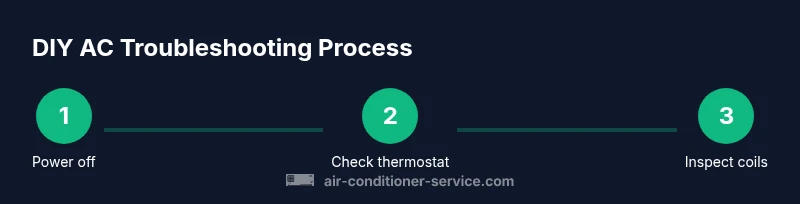
According to Air Conditioner Service, troubleshooting begins by identifying common failure points and safety steps. Start with power, thermostat settings, and clean/replace filters. Check for blocked outdoor units, verify refrigerant levels, and inspect condensate drainage. If problems persist, we recommend consulting a professional to avoid safety risks and unnecessary damage. This quick approach helps homeowners decide whether DIY fixes are feasible or if a pro is needed.
Understanding the basics of an air conditioning system
An air conditioner moves heat from inside your home to the outdoors using a refrigerant cycle, a compressor, and an indoor blower. The main components include the thermostat, the air handler or furnace blower, the evaporator coil, the outdoor condenser unit, and the refrigerant lines connecting them. When everything works, a simple sequence occurs: the thermostat calls for cooling, the indoor blower circulates air, the evaporator absorbs heat, the refrigerant carries it outside to be released, and the cycle repeats. Homeowners who understand these basics can better identify where problems originate. Common symptoms include warm air blowing from vents, a unit that won't start, unusual noises, ice on the coils, or high energy bills. Each symptom points to a different subsystem: power and controls, air flow, refrigerant balance, or outdoor airflow. Before you begin, make a quick plan: confirm you can safely access the outdoor unit, locate the thermostat, and locate the main electrical panel. If you’re not sure about handling electrical components, consider pausing and reading this guide to avoid shocks.
Common Reasons an AC Won't Start
Not starting can be caused by simple issues that you can verify quickly. A tripped circuit breaker or blown fuse cuts power to the outdoor condenser and indoor blower. A thermostat with incorrect settings, a dead battery, or a miscalibrated sensor may fail to call for cooling. Other culprits include safety switches that prevent operation when cabinets are accessed or the unit is loose, obstruction at the outdoor unit, or a coil iced up from low airflow. To diagnose, check the thermostat mode (cooling), confirm power at the electrical panel, and look for obvious signs of damage or blocking debris around the unit. If none of these checks reveal a cause, the problem could be more complex, such as a faulty contactor, capacitor, or refrigerant issue that requires a licensed technician.
Safety First: Power, Electrical, and Breakers
Electrical safety is non-negotiable when working with an air conditioner. Start by turning off power at the main breaker and, if applicable, at the outdoor disconnect. Use a non-contact voltage tester to verify there is no energy on wires you will touch. Wear safety glasses and insulated gloves, and keep children or pets away from the work area. Never bypass safety devices or operate a unit with damaged wiring. If you ever smell burning or see melted insulation, stop immediately and call a professional.
DIY Troubleshooting Steps You Can Try
- Power down and verify safety as described above. Gather your tools and set up a well-lit workspace.
- Test thermostat communication and setpoints, then try a quick reset of the thermostat and HVAC controller by cycling power.
- Inspect and replace the air filter if dirty, and clear vents for proper airflow.
- Check the outdoor unit for debris and ensure adequate clearance and clean fins.
- Inspect the circuit breakers and fuses; reset if safe and observe for repeated trips.
- If you’re comfortable, peek at the indoor blower and confirm it runs when the AC is commanded on.
- Do not attempt refrigerant work; if the system does not start after these steps, proceed with professional service.
Diagnosing Not-Cooling Symptoms
If the unit runs but air remains warm, the problem often lies with airflow, refrigerant, or the outdoor heat exchange. Start with filters and ducts, verify the indoor temperature drop across the evaporator, and measure the temperature difference between supply and return airflow. A clogged filter or blocked ducts reduces cooling; a dirty outdoor coil reduces heat transfer; a refrigerant leak reduces cooling capacity. If you're not sure, use a temperature gauge to check Delta T and note the results for your technician.
Cleaning and Maintenance That Help
Regular maintenance can prevent most common issues. Schedule seasonal tune-ups, replace filters on schedule, clean the outdoor condenser by removing debris, and keep the area around the unit clear. Clean the evaporator coil inside the air handler to improve heat absorption. Make sure condensate drains are clear and run freely; a blocked drain can trigger safety switches. A simple cleaning routine can extend system life and efficiency.
When to Call a Professional
You should call a licensed HVAC technician if you find refrigerant leaks, if you hear buzzing or burning smells, if breakers trip repeatedly, or if the unit still does not start after basic troubleshooting. Refrigerant work, electrical repairs beyond basic testing, and component replacements such as capacitors or contactors require certification and proper safety practices. A professional visit can prevent further damage and ensure code compliance.
Cost-Saving Maintenance Habits
Develop a routine that fits your schedule and budget. Schedule an annual or biannual professional inspection to catch issues early, and pair it with DIY maintenance like filter changes and outdoor coil clearing. Buy high-quality replacement filters to maximize lifespan and energy efficiency. Consider a smart thermostat that learns patterns and optimizes cooling, which can reduce energy use and extend system life.
Safety Checklist Before Any Work
- Turn off the main power and disconnect at the thermostat or disconnect switch.
- Wear safety glasses and insulated gloves; avoid working alone.
- Use a test meter to confirm no voltage on touched components.
- Keep a clear workspace; remove clutter and water sources around the unit.
- Do not touch refrigerant lines or attempt to recharge; call a pro if you suspect leaks.
- Recheck for proper airflow after any cleaning or part replacement.
Tools & Materials
- Digital multimeter(Test voltages, continuity; set to AC mode for electrical checks)
- Screwdriver set (Phillips and flathead)(Sizes #1–#3 for electrical panels and components)
- Voltage tester or non-contact tester(Quick check before touching wires)
- Gloves (electrical safety)(Wear insulated gloves when working near energized parts)
- Safety glasses(Protect eyes from debris or sparks)
- Flashlight or headlamp(Good lighting for tight spaces)
- Replacement air filter(Have on hand if the filter is dirty)
- Vacuum with brush attachment(Clean dust from coils and blower area)
- Duct/coil brush(If accessible, helps dislodge debris)
- Shop towels or rags(Wipe spills, condensate, or moisture)
- Masking or electrical tape(Temporary labeling or cord management)
- Thermometer (infrared or contact)(Check supply/return air temperature difference)
Steps
Estimated time: 60-90 minutes
- 1
Power off and verify safety
Begin by turning off power at the main breaker and at the thermostat. Use the digital multimeter to confirm there is no voltage on wires you plan to touch. If you’re unsure about electrical work, pause and read this guide to avoid shocks.
Tip: Lockout/tagout if available and double-check that the outdoor unit won’t energize while you inspect. - 2
Check the thermostat and settings
Confirm cooling mode is selected, the fan is set to Auto or On as appropriate, and the setpoint is well below room temperature. If you have a programmable thermostat, temporarily set a fixed temperature to test response. Consider replacing an old, unreliable thermostat.
Tip: If the thermostat is far from the unit or in direct sun, relocate or replace for accurate readings. - 3
Inspect the air filter and airflow
A dirty filter restricts airflow and can prevent cooling. Remove and inspect the filter; replace with the correct size and type if dirty or discolored. Check supply and return air vents for obstructions and ensure fans circulate air.
Tip: Set a reminder to replace filters every 1–3 months depending on usage. - 4
Inspect outdoor unit and coil
Clear debris from around the outdoor condenser. Remove leaves, grass, or weeds and ensure adequate clearance and clean fins. Inspect the condenser fins and use a fin comb to straighten any bent fins. A clean coil improves heat transfer and efficiency.
Tip: Never hit the fins with a hammer; use proper fin care tools. - 5
Check circuit breakers, fuses, and safety switches
Locate the main disconnect and panel, verify no breakers are tripped, and reset if safe. If a breaker trips again, investigate possible overloads or faulty wiring. Do not bypass safety devices.
Tip: When resetting, turn the breaker fully off first, then back on, and observe for immediate trips. - 6
Evaluate the contactor and capacitors
A buzzing contactor or a swollen capacitor can prevent the unit from starting. If you’re comfortable, carefully inspect for signs of damage, and test capacitors with the multimeter or a dedicated tester. Replace only with the same capacitance rated part.
Tip: Capacitors can hold a dangerous charge; discharge carefully or leave to a pro. - 7
Check condensate drain and float switch
A clogged condensate drain can trigger safety switches and prevent startup. Inspect the condensate line for clogs and clear with a flexible brush. Test the float switch by pouring water and ensuring the safety switch resets.
Tip: Always use non-flammable cleaners and avoid chemical drain openers near electrical components. - 8
Assess refrigerant-related issues
Refrigerant leaks or low levels require licensed service. Do not attempt to recharge or seal leaks yourself. If you suspect refrigerant issues, call a professional and note recent service history.
Tip: Handling refrigerant without certification is illegal in many areas.
Common Questions
Why won't my AC start?
Power issues, tripped breakers, or thermostat settings cause most not-start conditions. Check the breaker, fuse box, and thermostat first.
Most not-start problems come from power, breakers, or thermostat settings. Start with those.
How often should I replace the air filter?
Most systems perform best with a filter change every 1–3 months, depending on the filter type and indoor conditions.
Change your filter every 1 to 3 months depending on usage.
Can I recharge refrigerant myself?
Refrigerant handling requires a licensed technician. Do not attempt to recharge or seal leaks yourself.
Refrigerant work should be done by a pro.
My AC runs but doesn’t cool well—what should I check?
Check airflow (filters and ducts), thermostat calibration, outdoor coil cleanliness, and refrigerant leaks. If issues persist, call a pro.
If it runs but won’t cool, check filters, thermostat, and outdoor coil; consider a professional check for leaks.
Is it safe to troubleshoot electrical components?
Electrical work can be dangerous. Always power down, wear safety gear, and know when to stop and call a pro.
Electrical work is risky; stay safe and call a professional if unsure.
When should I call a professional for an AC problem?
If the issue involves refrigerant leaks, electrical faults beyond your skill, or repeated breaker trips, contact a licensed technician.
If it involves refrigerant or electrical faults beyond your skill, call a pro.
Watch Video
The Essentials
- Shut off power before any inspection.
- Start with thermostat, power, and filters.
- Clear the outdoor area and check airflow.
- Do not attempt refrigerant handling.
- Document issues and seek professional help when needed.