Air Conditioner Repair: Troubleshooting and DIY Fixes
A comprehensive, step-by-step guide for diagnosing and repairing common air conditioner problems at home. Learn safe troubleshooting, maintenance tips, and when to call a professional to keep your cooling system efficient.


By the end of this guide you'll be able to diagnose common air conditioner repair issues and perform safe, practical fixes at home. You'll learn how to inspect air filters, verify airflow, test electrical components, and identify signs you should call a pro. According to Air Conditioner Service, starting with basic maintenance can dramatically reduce callouts and save repair costs.
Understanding how air conditioners fail
Air conditioners are complex systems that combine electrical, mechanical, and refrigerant subsystems. When performance declines, it’s tempting to assume a single culprit, but most problems arise from a few root causes: clogged air filters reducing airflow, dirty evaporator or condenser coils, wiring or thermostat issues, and refrigerant leaks. Before you reach for tools, confirm basic safety: power off the unit at the breaker and never touch live components. Regular maintenance, including filter replacement and coil cleaning, can dramatically extend the life of your system. In this section we’ll explore common failure modes, how they manifest in everyday home use, and practical steps you can take to diagnose where trouble is coming from. The goal is to help homeowners and renters decide whether a simple fix is worth your time or if a technician should take over. This is especially important for air conditioner repair projects where refrigerant handling or high-voltage connections are involved, which should be left to licensed professionals when beyond basic capabilities.
Visual and sensory cues to inspect
Start with a visual check of the outdoor condenser and indoor cabinet. Look for debris, leaves, or plants blocking airflow, and ensure at least 2 feet of clearance around the outdoor unit. Listen for unusual noises like buzzing, grinding, or rattling, and note odors that may indicate electrical or mold issues. Feel the air coming from supply vents: if it’s warmer on one side or significantly weaker, there’s a potential airflow or compressor problem. Inspect the condensate drain for clogs, and check for any ice on the refrigerant lines or evaporator coil, which signals airflow or refrigerant flow problems. Documentation of symptoms helps you and any technician diagnose the issue more quickly and accurately. This section emphasizes practical checks you can perform safely before professional intervention for air conditioner repair.
Safe troubleshooting best practices
Safety first remains the guiding principle. Always power down the system at the breaker and use a non-contact voltage tester to verify no live circuits before touching any components. Wear eye protection and gloves, keep pets and children away, and work in a well-lit area. Never bypass safety switches or jump components to test function. Use a flashlight to inspect difficult-to-reach corners and take photos or notes of the wiring layout and control panels. If you smell burning or notice melted insulation, stop immediately and call a pro. These best practices help prevent injuries and further damage during air conditioner repair tasks and set a foundation for more advanced diagnostics if needed.
Non-invasive maintenance that prevents failures
Regular maintenance is the best defense against frequent breakdowns. Replace or clean air filters every 1–3 months depending on usage and filter type, and clean the outdoor condenser coils with a gentle stream of water from the top down to avoid pushing debris into the fan. Vacuum the blower housing and duct openings to remove dust, and inspect ductwork for loose connections or leaks. Keep the area around the outdoor unit clean and free of clutter, trim vegetation, and ensure the unit is level. Schedule annual professional maintenance to catch wear and tear that homeowners might miss. These preventive steps reduce the risk of air conditioner repair needs and improve overall efficiency.
Diagnosing cooling failure: flow of checks
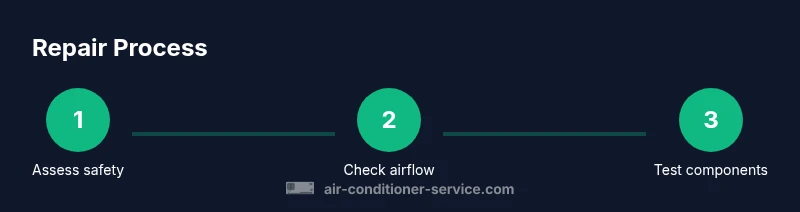
Begin with the thermostat: confirm mode, temperature setpoint, and battery status. Verify indoor fan operation by feeling air at several supply vents and listen for consistent airflow. Check the outdoor unit’s power: ensure the disconnect or breaker is on and the outdoor fan engages. If the fan runs but cooling is weak, inspect for ice on the evaporator coil and check the refrigerant lines for obvious leaks or signs of damage. If you hear a compressor hum but no cooling, the issue may be refrigerant-related or a high-pressure fault. This structured approach helps isolate whether the problem is airflow, electrical, refrigerant, or mechanical in nature.
When to involve professionals and what to expect
Some tasks should only be performed by licensed technicians. Refrigerant handling, refrigerant charging, sealed-system diagnostics, electrical repairs beyond basic wiring, and compressor replacement require specialized tools and certifications. If basic checks do not restore cooling or you encounter refrigerant signs, schedule a professional inspection. A typical visit includes a diagnosis, explanation of the findings, and a range of repair options with cost estimates. You can speed the process by having model and serial numbers handy, noting symptoms, and sharing any recent changes in your system or environment. This section helps homeowners decide when to escalate air conditioner repair to a pro.
Common mistakes that void warranties
Common pitfalls include opening sealed panels beyond the access door, attempting refrigerant handling without credentials, bypassing safety devices, using incorrect parts, and neglecting to follow manufacturer maintenance recommendations. DIY fixes that fail to address root causes can void warranties and create safety risks. Always consult the manual for warranty terms and seek professional service when the task involves high risk or complex systems. Taking careful, documented steps and avoiding unverified shortcuts protects both your equipment and your warranty coverage.
Energy efficiency and repair considerations
Repair decisions influence energy efficiency. Fixes that restore proper airflow, coil cleanliness, and thermostat calibration can significantly improve efficiency and lower operating costs. If a repair involves replacing a critical component such as a capacitor, contactor, or fan motor, ensure the replacement matches the original specification and complies with local codes. After any repair, recheck airflow, temperature consistency, and condensation. Higher-efficiency performance often coincides with well-maintained ducts and clean coils, which reduces the load on the compressor and helps your system run more reliably for longer.
Documentation and record-keeping
Maintain a simple maintenance log that includes dates of cleanings, part replacements, and any observations or symptoms. Record the model and serial number, service provider, and costs. Take clear photos of wiring and components before disassembly to assist future technicians. Keep receipts and warranty documents in a single file or digital folder for quick reference. Regular documentation helps you track the health of your air conditioner over time and supports future air conditioner repair decisions.
Tools & Materials
- Gloves (work gloves)(Protect hands from sharp edges and hot surfaces)
- Screwdriver set(Phillips and flat-head; used for access panels)
- Multimeter(Check voltage, continuity, and resistance safely)
- Flashlight(Illuminates dark corners and interior components)
- Vacuum with nozzle(Clear dust from blower housing and coils)
- Soft brush or cloth(Gently clean coils and surfaces)
- Capacitor/replacement parts (as rated)(Only if you know the exact rating and safety precautions)
- Mask or respirator(Protect from dust during cleaning)
Steps
Estimated time: Estimated total time: 45-60 minutes
- 1
Power down and secure area
Turn off the thermostat and switch off the outdoor unit breaker. Confirm the system is de-energized with a non-contact tester before touching any components.
Tip: Always double-check with a tester before handling wires. - 2
Inspect and clean the air filter
Remove the filter and assess its condition. If it's dirty, clean or replace it according to manufacturer guidance. A clogged filter reduces airflow and efficiency.
Tip: A clean filter can improve cooling performance within minutes. - 3
Check outdoor unit clearance and coils
Ensure at least 2 feet of clearance around the condenser. Remove loose debris and gently clean coils with a soft brush or light rinse.
Tip: Keep outdoor area free of plants that can shed debris into the coils. - 4
Test airflow from multiple vents
With the system on, feel the airflow at several supply vents. Compare strength and temperature, noting any weak spots that indicate duct or blower issues.
Tip: Record vent temperatures for later comparison after any fix. - 5
Inspect thermostat and wiring
Check that the thermostat is set correctly and that wires are firmly connected. Look for loose or damaged insulation that could cause miscommunication with the unit.
Tip: Consider replacing old batteries in the thermostat if applicable. - 6
Look for ice on coils and refrigerant lines
If you see ice forming on the evaporator coil, turn off the unit and allow it to thaw. Ice points to airflow issues or refrigerant problems that require pro attention.
Tip: Do not attempt to thaw with heat sources; allow natural melt with unit off. - 7
Check electrical components with a multimeter
Carefully test accessible fuses, contactors, and wiring for continuity and correct voltage. Look for signs of wear or burning.
Tip: Only test components you can safely access; avoid live circuits. - 8
Inspect condensate drain and line
Ensure the condensate drain is clear and not overflowing. A blocked drain can cause increased humidity and trigger safety switches.
Tip: Flush with a small amount of water to verify flow; do not force with tools. - 9
Make a repair decision and plan next steps
If the issue remains after these checks, decide whether a simple fix is possible or if professional service is needed. Gather data (symptoms, tests, photos) to share with a technician.
Tip: When in doubt, contact a professional to avoid risky mistakes.
Common Questions
What is the first sign my AC needs repair?
Common early signs are weak cooling, uneven temperatures, or unusual noises. If these persist after basic maintenance, proceed with troubleshooting or call a pro.
Common signs include weak cooling or strange noises. Start with basic maintenance and seek professional help if problems persist.
Can I fix refrigerant leaks myself?
Refrigerant handling is restricted to licensed technicians. A leak should be diagnosed with proper equipment and refilled by a pro.
Refrigerant leaks require licensed technicians. Do not attempt to fix refrigerants yourself.
How long should I wait after resetting a breaker?
If a breaker trips, wait a few minutes before resetting once, and observe; if it trips again, unplug and call a professional.
Wait a few minutes, then reset once. If it trips again, call a pro.
Is it safe to clean the outdoor condenser ?
Yes, with the unit powered off, remove debris and rinse gently; avoid pressure washing coils.
Power off first, remove debris, and rinse gently from the outside in.
When should I replace air filters?
Check monthly; replace every 1-3 months depending on usage and filter type.
Check monthly and replace every 1-3 months.
Watch Video
The Essentials
- Power safety first—shut off power before touching components
- Start with simple maintenance before complex diagnostics
- If you hear unusual noises, pause and assess electrical components
- Call a pro for refrigerant, compressor, or sealed-system issues
- Keep records of maintenance and repairs for future reference