Air Conditioner Problems: Quick Troubleshooting Guide
Urgent, practical guide to diagnosing and fixing common air conditioner problems. Learn safe DIY checks, a step-by-step plan, and when to call a pro to keep your home cool.


Most likely air conditioner problems stem from a dirty filter, blocked condensate drain, or thermostat issues. Quick fix: replace the disposable or washable filter, clear the drain line, and verify the thermostat is set correctly. If you still notice weak cooling, odd noises, or cycles on/off, there may be a refrigerant leak or electrical fault—call a professional.
Why air conditioner problems happen
Air conditioners fail or perform poorly for a handful of reasons, and most homeowners can spot the symptoms early if they know what to look for. The keyword here is prevention: regular maintenance reduces the risk of sudden breakdowns. According to Air Conditioner Service, the most common problems start small and snowball when left unchecked. When you understand the root causes, you can act quickly and minimize discomfort during hot weather. The phrase air conditioner problems covers a wide range of scenarios—from weak cooling and noisy operation to icing on the coils and unexpected shutdowns. In this section, we’ll outline typical culprits and what you can do right away to verify or rule them out. The goal is to empower you to make informed decisions, protect your home, and avoid unnecessary service calls. By recognizing the signs early, you can reduce downtime and stay ahead of costly repairs.
Common symptoms and what they mean
Different symptoms map to different underlying issues. If the outside unit is not running, check for a tripped circuit breaker, a blown fuse, or a loose contact in the disconnect switch. If the indoor temp is far from the thermostat setting, you may have a refrigerant imbalance, a dirty filter, or a faulty thermostat. Short cycling—the unit turning on and off frequently—often signals an airflow restriction or a thermostat issue. Ice forming on the evaporator coil means restricted airflow or low refrigerant; that requires immediate action to prevent compressor damage. If you hear loud banging or screeching, don’t ignore it; it could signal a failing fan motor or loose belt. Understanding these symptoms helps you decide whether to DIY safe checks or call a professional. Keep track of when each symptom occurs to help the technician diagnose faster.
Quick checks you can do safely
- Inspect the air filter: If it’s dirty or discolored, replace it with a correct-size filter. A clogged filter reduces airflow and makes the system work harder.
- Check the outdoor unit: Clear leaves, grass, and debris from around the condenser. Ensure at least two feet of clearance for proper airflow.
- Verify thermostat settings and power: Confirm the thermostat is set to cooling mode and at a reasonable temperature. Check the breaker and reset if needed.
- Look for ice on refrigerant lines: If you see frost, turn the system off and let it thaw; if ice returns after restart, call a pro.
- Listen for unusual noises after power restoration: Squeals, clanks, or hums may indicate a loose belt or faulty motor that needs inspection.
Diagnostic flow: turning symptoms into diagnoses
Start with the simplest explanations and move to more complex ones. If cooling is weak, the most common cause is airflow restriction from a dirty filter or blocked outdoor unit. If the unit won’t start at all, check power, fuses, and breakers first. If there are odd noises, inspect fan components and motors. Ice on coils points to airflow or refrigerant issues. If you suspect refrigerant problems, do not attempt a recharge—refrigerant handling requires a licensed technician. This flow helps you categorize symptoms quickly and decide between DIY fixes and professional service.
Step-by-step: deep-dive fixes for the most common cause
In most homes, the top fix is addressing airflow and cooling inefficiency. Start by replacing the air filter, then inspect the outdoor unit for debris and ensure unobstructed airflow. If the problem persists, cleanse the condensate drain and recheck the thermostat and wiring connections. For cooling that remains weak after these steps, the issue may lie with refrigerant levels or a failing compressor, which requires professional service. Throughout this process, always disconnect power before touching electrical components and never bypass safety switches or fuses.
TIPS & WARNINGS: safety and common mistakes
Safety comes first. Never work on live electrical components or refrigerant lines. Do not attempt to recharge refrigerant yourself—this requires licensed technicians and proper equipment. Avoid using metal tools that can nick copper tubing. When in doubt, schedule a professional diagnosis, especially if you notice refrigerant smells, hissing sounds, or ice on lines that keeps returning. Regular maintenance, including filter changes and annual professional checkups, reduces the likelihood of unexpected breakdowns and keeps your system running efficiently.
Prevention and long-term care to avoid future problems
The best defense against stubborn air conditioner problems is proactive maintenance. Schedule a seasonal check, replace filters every 1–3 months during heavy use, clean the outdoor unit, check for refrigerant leaks, and keep the thermostat calibrated. Use a programmable thermostat to optimize cooling without overworking the system. Clean coils and inspect electrical connections yearly. With consistent care, you’ll notice fewer disruptions, lower energy bills, and improved comfort during peak heat.
Quick win checklist you can print and follow
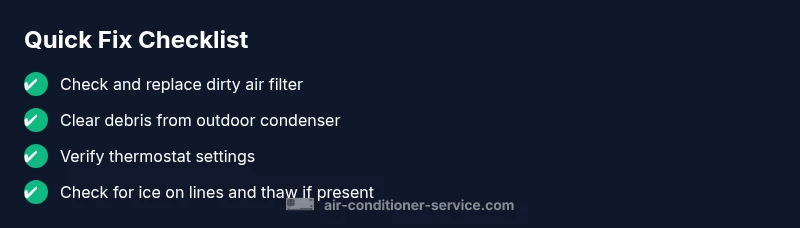
- Check and replace the air filter. 2) Clear debris from the outdoor condenser. 3) Verify thermostat settings and power. 4) Look for ice on refrigerant lines and thaw if present. 5) Listen for unusual noises and address loose components promptly. 6) Schedule a preventive maintenance visit at least once a year. 7) Call a pro if you detect refrigerant leak signs or electrical smells.
When to call a professional: knowing your limits
If you cannot identify or safely fix the issue after completing the quick checks, or if the unit continues to underperform, it’s time to call a licensed HVAC technician. Refrigerant handling, electrical work, and compressor failures require professional training and equipment. The sooner you bring in a pro for persistent problems, the less risk of further damage and higher repair costs.
Steps
Estimated time: 25-45 minutes
- 1
Power check
Confirm the thermostat is on cooling mode and check the main breaker. If the breaker tripped, reset it and test the system again. Power issues are a frequent cause of startup failures.
Tip: Never bypass a tripped breaker; investigate the underlying issue before resetting. - 2
Inspect and replace filter
Locate the air filter housing and remove the old filter. If dirty or clogged, replace with the correct size and rating. A clean filter restores airflow and efficiency.
Tip: Note your filter size and MERV rating for easy future replacements. - 3
Clear condensate drain
Locate the condensate drain line and check for blockages. Use a recommended cleaner or an unobtrusive method to clear the line. This prevents water damage and odor issues.
Tip: Never use sharp objects in the drain; a clog can cause overflow and damage. - 4
Thermostat check
Ensure the thermostat display is readable and correctly set. If the reading seems off, recalibrate or replace the batteries. A misreading can lead to mistuned cooling.
Tip: If you have a smart thermostat, confirm app settings align with the unit’s mode. - 5
Outdoor unit check
Inspect the outdoor unit for debris and ensure at least two feet of clearance. Remove any buildup and rinse lightly if allowed by the manufacturer.
Tip: Keep plants trimmed back to prevent future blockages. - 6
Assess refrigerant and electrical
If cooling is still weak after the above checks, suspect refrigerant leaks or electrical faults. Do not attempt to recharge refrigerant; contact a pro for safe handling.
Tip: Document any unusual smells or noises to share with the technician.
Diagnosis: Unit not cooling adequately
Possible Causes
- highDirty air filter restricting airflow
- highOutdoor condenser blocked or dirty
- mediumThermostat issues or incorrect settings
- lowLow refrigerant due to a leak
Fixes
- easyReplace or clean the air filter and clean the outdoor unit area for airflow
- easyClear debris around the condenser and check for proper clearance
- easyTest and calibrate the thermostat, replace batteries if needed, and ensure correct wiring
- hardIf refrigerant leak is suspected, call a licensed professional for refrigerant handling and repair
Common Questions
What are the most common air conditioner problems homeowners face?
Dirty filters, blocked condensate drains, thermostat miscalibration, and outdoor unit obstructions are the most frequent culprits. Addressing these quickly can restore comfort and efficiency.
Common issues are dirty filters, blocked drains, and thermostat problems. Fix these first to restore cooling.
Can a dirty filter cause the AC to stop cooling?
Yes. A clogged filter reduces airflow, making the system work harder and can lead to overheating and reduced cooling performance.
A dirty filter reduces airflow and cooling efficiency; replace it to improve performance.
How do I reset my thermostat properly?
Check the manual for a reset procedure or remove power for a few minutes to reset. Reconfirm settings after power restoration to ensure correct cooling mode and temperature.
Reset the thermostat according to the manual, then recheck the cooling settings.
Is it safe to recharge refrigerant myself?
No. Refrigerant handling requires a licensed technician and proper equipment. A leak must be repaired first and verified with proper charging procedures.
No—refrigerant work is for professionals only.
How often should I schedule AC maintenance?
Aim for at least one professional check annually, with more frequent checks during high-use seasons to maintain peak efficiency.
Have a yearly professional check, more often if you use AC heavily.
What safety precautions should I follow during DIY checks?
Always switch off power at the breaker before touching components. Avoid contact with refrigerant lines and electrical panels; call a pro for anything beyond basic filter and airflow checks.
Turn off power before any work and avoid refrigerant or electrical touch-ups.
Watch Video
The Essentials
- Start with simple checks: filter, airflow, thermostat
- Address outdoor airflow and refrigerant issues with care
- Call a pro for leaks or electrical problems
- Prevent future issues with annual maintenance