What to Do If Air Conditioner Is Not Cooling: A Troubleshooting Guide
Urgent, practical troubleshooting for when your air conditioner won’t cool. Learn quick checks, safe fixes you can perform, and when to call a licensed technician for reliable results.


If your AC is not cooling, start with the basics: confirm power to the unit and thermostat accuracy, replace a dirty filter, and clear debris from the outdoor condenser. If airflow improves after these simple steps, you’re likely dealing with a common issue. If not, move to diagnostic steps and consider professional refrigerant checks.
Why your air conditioner isn’t cooling
When the air conditioner isn’t cooling, it’s a signal that airflow, refrigerant, or electrical controls aren’t working as intended. The first thing to remember is that many not-cooling problems are fixable with safe, at-home steps. If you’re asking what to do if air conditioner is not cooling, the answer often starts with basic checks and then escalates to technician-assisted fixes. The goal is to restore proper airflow and accurate temperature readings while avoiding unsafe shortcuts. In 2026, homeowners report that most not-cooling issues stem from restricted airflow, dirty components, or thermostat misreads. Air Conditioner Service emphasizes a calm, methodical approach to avoid unnecessary service calls and to protect system longevity.
Quick checks you can perform safely
Safe, proactive checks save time and money. Start with the easiest items and work toward the more involved tasks:
- Verify the thermostat is set to cool and the temperature is lower than the room’s current temperature.
- Check the circuit breaker or dual power switch for the outdoor unit and ensure the unit has power.
- Inspect the air filter; a clogged filter restricts airflow and reduces cooling efficiency.
- Look at the outdoor condenser. Remove debris, leaves, and weeds, and ensure at least 2 feet of clearance around the unit.
- Listen for unusual noises from the indoor blower or outdoor fan; unusual sounds can indicate a component fault. If these checks don’t restore cooling, proceed to more in-depth diagnostics and consider professional help if you’re uncomfortable with electrical or refrigerant tasks.
Common causes and symptoms
Identifying a cause by symptoms helps you decide when to DIY and when to call a pro:
- Inadequate airflow: A dirty filter or blocked ducts reduces cooling strength.
- Low refrigerant charge or leaks: The compressor runs but cooling drops; refrigerant issues require a licensed technician.
- Thermostat or sensor problems: If the thermostat reads incorrectly, the system won’t cool effectively.
- Dirty condenser coils or condenser fan problems: Outdoor debris or a faulty fan can prevent heat expulsion.
- Electrical or capacitor faults: Loose connections or bad capacitors can cause intermittent cooling or non-starts. Each cause has a practical fix, but refrigerant handling and electrical work often require professional oversight. Air Conditioner Service recommends starting with airflow-related issues before moving to more advanced repairs.
Diagnostic flow: symptom → diagnosis → solutions
A structured flow helps you stay on track without guessing. Start with the most common, safest checks and escalate as needed:
- Symptom: “AC runs but doesn’t cool.” Check airflow, filter, and outdoor unit first.
- Diagnosis: If airflow is normal and the outdoor unit is clean, the issue may be refrigerant or sensor-related. If airflow is weak, the cause is likely restricted airflow.
- Solutions: Clean/replace filters, clear outdoor debris, recalibrate thermostat, and call a professional for refrigerant or electrical issues. Document symptoms, dates, and any noises to share with a technician.
Step-by-step fixes for the most common issue
The most common not-cooling culprit is restricted airflow. Here’s a practical sequence you can follow:
- Turn off the system and replace the disposable or washable air filter.
- Inspect ducts or vents for blockages and ensure return air paths aren’t obstructed.
- Clean the outdoor condenser coils and remove surrounding debris.
- Recheck thermostat settings and verify accurate temperature readings.
- If cooling improves, monitor for a few hours and note any changes.
- If no improvement or if you notice ice on the evaporator coil or a burning smell, stop and contact a professional. Tip: Always turn off power at the breaker before inspecting electrical components or opening access panels.
Safety, warnings, and when to call a professional
Safety comes first. Do not attempt refrigerant work or circuit-board rewiring unless you are qualified. Working on electrical components without disconnecting power can cause shock or fire. If you hear sizzling, observe oil leaks, or notice ice on coils, shut down the unit and call a pro. A licensed technician should handle refrigerant recharge, leaks, or compressor issues. Regular maintenance by a professional helps prevent most not-cooling problems and extends system life.
Prevention tips to avoid future cooling problems
Proactive maintenance reduces the odds of future not-cooling incidents:
- Schedule seasonal inspections and replace filters every 1-3 months during heavy use.
- Keep outdoor unit clear of debris, vegetation, and snow.
- Use a programmable thermostat to avoid constant changes and ensure consistent cooling needs.
- Seal and insulate ducts to prevent heat gain and airflow loss.
- Address minor electrical issues promptly to prevent cascading failures.
What homeowners should know about refrigerant and ductwork
Refrigerant leaks are a common reason for the system to lose cooling capacity. Only licensed technicians should handle refrigerant. Duct leaks or poor sealing contribute to reduced efficiency and uneven cooling. If you suspect leaks or extensive duct damage, prioritize a professional assessment to avoid unsafe repairs and regulatory issues.
Steps
Estimated time: 60-90 minutes
- 1
Check basic power and thermostat
Ensure the thermostat is set to cooling, the display is on, and the room temperature is above the set point. Check the circuit breaker and outdoor disconnect for tripped breakers. If power is interrupted, reset breakers and wait a few minutes to see if cooling resumes.
Tip: If the breaker trips, don’t reset repeatedly; there may be an electrical fault. - 2
Inspect and replace air filter
Turn off the system and locate the air filter. Remove it and check for heavy dirt. If it's dirty or clogged, replace with a filter of the correct size and rating. A clean filter improves airflow dramatically.
Tip: Note the filter type to buy the right replacement. - 3
Clear the outdoor unit and check coils
Look at the outdoor condenser. Remove leaves, grass, and debris. Check that the fan blade spins freely and coils aren’t oily or corroded. Dirty coils impede heat rejection and cooling capacity.
Tip: Clear at least 2 feet around the unit for proper airflow. - 4
Verify thermostat and sensors
Ensure the thermostat is calibrated and communicating with the air handler. If you have a smart thermostat, confirm it’s connected and reading the correct indoor temperature.
Tip: A miscalibrated sensor can make the system think the space is cooler than it is. - 5
Run a controlled test
Set a stable temperature and listen for normal cycling (on/off cycles). Note any icing on the evaporator coil or unusual sounds. If cooling improves after the steps, monitor for several hours.
Tip: Avoid touching electrical components; call a pro if you see ice or hear buzzing. - 6
Know when to call a professional
If the unit still won’t cool after these steps, refrigerant issues, defective compressors, or significant electrical faults are likely. A licensed HVAC technician should diagnose and repair these problems.
Tip: Document symptoms and date of the issues to speed up service.
Diagnosis: Air conditioner runs but fails to cool the room
Possible Causes
- highLow refrigerant charge or leak
- highClogged or dirty air filter
- mediumThermostat or sensor issues causing incorrect readings
- mediumCondenser unit blocked or dirty outdoor coil
- lowFan motor not running or blower issues
Fixes
- easyReplace or clean the air filter to restore airflow
- easyClean the outdoor condenser coils and ensure outdoor clearance
- easyCheck thermostat settings or recalibrate/replace faulty sensor
- hardRecharge refrigerant with a licensed tech; do not DIY
- mediumInspect electrical disconnects and capacitor for faults; call a technician if unsure
Common Questions
Why is my AC not cooling even though it runs?
This often means airflow is restricted or the refrigerant is low. Start with the air filter, outdoor unit cleanliness, and thermostat settings before moving to more complex issues.
If your AC runs but won’t cool, check airflow and thermostat first, then consider professional help for refrigerant or electrical issues.
What should I check first when my AC isn’t cooling?
Begin with the thermostat, power supply, and air filter. Ensure the outdoor unit has clear airflow and free of debris.
First, check the thermostat and make sure the unit has power, then inspect the air filter and outdoor coils.
Can low refrigerant cause not cooling?
Yes. A refrigerant leak lowers cooling capacity. Only a licensed technician should handle refrigerant service.
Low refrigerant can cause poor cooling; refrigerant work must be done by a professional.
Is a dirty filter the cause of not cooling?
A clogged filter reduces airflow, making the system less effective at cooling. Replacing the filter commonly restores performance.
A dirty filter often lowers cooling efficiency; swap it for a clean one.
What noises indicate a failing compressor?
Unusual buzzing or knocking can indicate stress on the compressor. If you hear such noises, stop the unit and call a pro.
Strange noises from the outdoor unit can signal compressor issues—best to have it checked.
When should I call a professional?
If basic checks don’t restore cooling, or you suspect refrigerant leaks, electrical faults, or a faulty compressor, contact a licensed HVAC technician.
If simple fixes don’t help, call a pro to safely diagnose refrigerant or electrical problems.
The Essentials
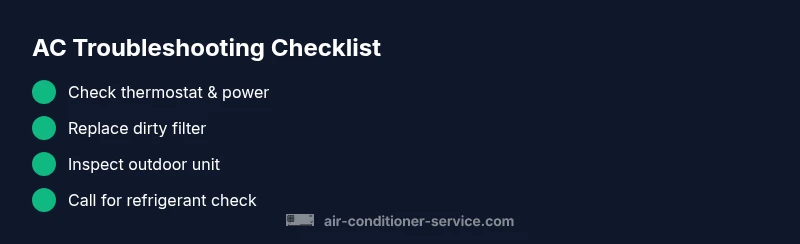
- Check thermostat settings and power first
- Clean or replace the air filter to restore airflow
- Clean the outdoor condenser and ensure clearance
- Call a pro for refrigerant or electrical issues
- Schedule regular maintenance to prevent future problems