What to Do When Air Conditioner Is Not Working: Urgent Troubleshooting Guide
Practical, urgent steps for homeowners and renters to diagnose why an AC isn’t working, with safe at-home checks, a diagnostic flow, step-by-step fixes, and guidance on when to call a pro.


The most common reason an AC won't start is a power issue or a tripped breaker. Check the thermostat and set to cool, then inspect the outdoor unit and indoor air filter. Ensure the disconnect switch is on and the circuit breaker is not tripped. If it still won’t start, reset the thermostat and call a professional.
What to do right now if your air conditioner won't start
If you’re asking what to do when air conditioner is not working, start with the simplest checks first. A lot of Startup failures come from power, thermostat, or airflow issues rather than a failed compressor. According to Air Conditioner Service, the fastest way to confirm whether the problem is electrical is to verify that the unit is receiving power and that the thermostat is calling for cooling. Begin by checking the thermostat display; if it’s off, replace batteries if needed or switch to a known-good setting. Next, inspect the outdoor disconnect switch and the indoor circuit breaker or fuse panel. A tripped breaker or blown fuse is a frequent culprit. Finally, look at the air filter—if it’s clogged, airflow to the evaporator can be restricted, causing the system to shut down or blow warm air. If you find a clear power or thermostat issue, fix it and re-test the system before proceeding with deeper checks.
Common causes of AC not turning on
There are several plausible reasons your AC won't start. The most common are simple power or thermostat problems; a tripped circuit breaker or blown fuse can cut power to the unit without any visible sign. A dirty or blocked air filter can also trigger an automatic shutdown to protect the system. Refrigerant issues or a frozen evaporator coil can lead to the unit failing to deliver cool air, though these are typically accompanied by other symptoms. Outdoor unit obstructions or a dirty condenser coil can reduce airflow and cause overheating. Finally, a failed outdoor contactor or capacitor is a frequent electrical fault in many systems. Understanding these causes helps you prioritize checks and avoid unnecessary parts replacement.
Safety-first guidelines you should follow
Safety is non-negotiable when dealing with electrical components and refrigerant systems. Always start by turning off power at the main breaker before touching any wiring or outlets. Do not attempt refrigerant handling yourself unless you are a licensed technician. Keep children and pets away from the work area, and wear eye protection if you are inspecting exposed components. If you notice burnt smells, buzzing noises, or visibly damaged wiring, stop immediately and contact a professional. Air Conditioner Service emphasizes safety as the foundation of any troubleshooting effort.
Diagnostic flow you can apply at home
A clear, step-by-step diagnostic flow helps prevent guessing. Start by confirming power and thermostat demand, then inspect airflow-related issues like filters and indoor returns. If power and airflow look good, check outdoor unit operation (fan, condenser, and wiring). If the outdoor unit runs but no cooling is produced, refrigerant and indoor coil conditions become more likely culprits. Throughout, keep a log of what works and what doesn’t to inform the technician if you call one. Remember, if you’re ever unsure, it’s safer to pause and seek professional help.
Step-by-step guide: power and thermostat fixes
- Verify the thermostat is calling for cooling and set to a comfortable temp. 2) If the thermostat is electronic, try a reset or replace batteries. 3) Confirm the air handler and outdoor unit share a common power source. 4) Check the indoor unit for a tripped breaker or blown fuse and reset/replace as needed. 5) If the display is blank, test the control wire connections at the furnace/air handler. 6) After any reset, wait a few minutes for the system to reboot before re-testing. 7) If the thermostat is old or non-functional, consider upgrading to a programmable model.
Step-by-step guide: electrical components and fuses
- Turn off power at the main breaker before inspecting any wiring. 2) Inspect the outdoor disconnect switch; ensure it’s firmly ON. 3) Check the interior electrical panel for a blown fuse or a tripped breaker and reset or replace as needed. 4) Look for loose or corroded connections and tighten or clean safely. 5) If you have a capacitor or contactor in the outdoor unit, examine for signs of swelling or burn marks; do not touch live components. 6) Restore power and test the system. 7) If fuses continue to blow or breakers trip, call a professional.
Step-by-step guide: airflow and refrigerant considerations
- Inspect and replace a clogged air filter; a dirty filter can stop airflow and trigger shutdowns. 2) Ensure returns and supply vents are not blocked by furniture or debris. 3) Check the outdoor condenser for debris, dirt, and obstructions; clean gently with a garden hose. 4) Look for ice on the evaporator coil; if present, turn the system off and let it defrost for 24 hours. 5) If the outdoor unit is running but the indoor coil is iced, there may be airflow restriction or refrigerant issues that require a licensed tech.
Safety warnings and professional help: when to call a pro
When basic checks don’t restore cooling, or you detect electrical burning smells, loud pops, or refrigerant concerns, stop and call a professional. Handling electrical components or refrigerant without proper training can be dangerous and illegal in many areas. Air Conditioner Service recommends scheduling a diagnostic visit if you’re not trained in electrical work or HVAC refrigerant handling. A pro can safely verify refrigerant levels, test compressors and capacitors, and diagnose issues beyond simple maintenance.
Prevention tips to avoid future outages
Regular maintenance helps prevent surprises. Change or clean filters every 1–3 months, especially during peak season. Schedule professional inspections twice a year if you rely heavily on cooling. Keep the outdoor unit clear of leaves, weeds, and debris, and ensure proper clearance around coils. Use a programmable thermostat to avoid unnecessary operation. Invest in a simple annual service plan to catch refrigerant, electrical, and airflow problems early. Consistent upkeep reduces the likelihood of unexpected breakdowns and extends system life.
What to expect from a professional service
A licensed technician will inspect electrical connections, test the thermostat and control circuits, check refrigerant charge, and evaluate the outdoor unit for faults. They’ll quantify airflow, diagnose coil frost, and confirm condensate drainage is functioning. Expect a written assessment with recommended repairs and a clear estimate. If refrigerant replacement is needed, price will depend on refrigerant type and system capacity. Air Conditioner Service notes that proactive maintenance often reduces the risk of late-year outages and improves efficiency.
Steps
Estimated time: 30-60 minutes
- 1
Check power and thermostat
Ensure the thermostat calls for cooling and is set to an active temperature. Confirm the unit is receiving power from the outlet or wiring. If the thermostat is digital, perform a simple reset.
Tip: Always start with the easiest checks before opening panels. - 2
Inspect the electrical disconnect and breakers
Locate the outdoor disconnect and confirm it’s ON. Check the main breaker and any fuses in the panel; reset tripped breakers and replace blown fuses if needed.
Tip: Never bypass a blown fuse or reset a breaker repeatedly without identifying the cause. - 3
Test and replace the air filter
Remove and inspect the filter; if dirty or discolored, replace with one suitable for your system. A clean filter improves airflow and compressor efficiency.
Tip: Mark a recurring reminder to check filters every 4–6 weeks during heavy use. - 4
Check outdoor unit visibility and airflow
Clear debris and ensure at least 2 feet of clearance around the condenser. Verify the fan spins freely and there are no obstructions.
Tip: Gently clean fins with a soft brush; avoid bending fins with force. - 5
Look for ice on the evaporator or refrigerant issues
If you see ice on the coil, turn the system off and allow defrosting for a few hours. If icing recurs, refrigerant issues require a pro.
Tip: Never chip away at ice while the system is powered on. - 6
Test system restart and monitor performance
Reconnect power and observe whether the unit starts and cools within 10–15 minutes. Listen for abnormal noises or buzzing.
Tip: Document the date and results for future service visits. - 7
Assess signs of electrical faults
Check for burnt smells, scorch marks, or warm components. If any are present, stop and call a professional.
Tip: Unsafe to touch live electrical parts; prioritize safety. - 8
Evaluate indoor airflow and return vents
Ensure supply and return vents aren’t blocked by furniture. Poor airflow can mimic a non-working system.
Tip: Balanced airflow helps prevent coil frosting and helps efficient cooling. - 9
Document and plan service
If problems persist, log symptoms, dates, and any sounds or smells. Schedule a professional diagnostic with your preferred service.
Tip: Provide the technician with your symptom log for faster diagnosis. - 10
Consider professional help
If you’re uncomfortable with electrical work or refrigerant handling, contact Air Conditioner Service for a safety-certified inspection and repair.
Tip: Professional help often prevents further damage and safer outcomes.
Diagnosis: AC won't turn on
Possible Causes
- highPower issue (outlet, cord, or switch)
- highTripped breaker or blown fuse
- mediumThermostat misconfiguration or faulty sensor
- mediumClogged air filter causing restricted airflow
- lowOutdoor unit clearance or condenser obstruction
Fixes
- easyCheck power at the outlet, reset the disconnect switch, and ensure the unit is plugged in
- easyReset the circuit breaker or replace a blown fuse; verify the outdoor disconnect is ON
- easyReset or recalibrate the thermostat; replace batteries if needed
- easyReplace a dirty air filter and ensure return air has access; inspect ductwork if applicable
- easyClear debris from around the outdoor unit and check that condenser coils are clean
Common Questions
Why won’t my air conditioner turn on even though it’s plugged in?
Common causes include a tripped breaker, a blown fuse, or a thermostat issue. Start by checking power at the outlet and verifying the disconnect switch is ON. If power is present but the unit still won’t start, check the thermostat settings and resets.
Common causes are tripped breakers, blown fuses, or thermostat issues. Start with power checks and thermostat resets, then consider professional help if the problem persists.
What should I check if the thermostat display is blank?
Replace batteries if needed, confirm the display is powered by the thermostat’s circuit, and reset the thermostat. If it remains blank, the thermostat may be faulty and require replacement.
If the thermostat shows nothing, try new batteries and a reset. If it stays blank, the thermostat might need replacing.
My AC runs but doesn’t cool. What’s wrong?
Possible causes include a dirty air filter, blocked returns, refrigerant issues, or a dirty condenser. Start with filter replacement and outdoor cleaning, then check refrigerant and call a pro if cooling remains insufficient.
If it runs but won’t cool, check the filter and outdoor unit first, then refrigerant or a professional diagnosis if needed.
Is ice on the evaporator coil a refrigerant leak sign?
Ice can indicate restricted airflow or a refrigerant issue. Do not operate the system with ice; turn it off to defrost, then check airflow and call a pro if it refreezes.
Ice on the coil often means airflow problems or refrigerant issues; turn off to defrost and consult a pro if it recurs.
Can I fix electrical components myself?
Electrical work can be dangerous. If you’re not trained, don’t attempt repairs beyond basic resets. Hire a licensed technician for wiring, capacitors, or contactors.
Electrical fixes should be handled by a pro; avoid DIY if you’re not trained.
When should I call a professional for an AC issue?
Call a pro when basic checks don’t restore cooling, you hear buzzing or smells of burning, or you suspect refrigerant or electrical problems. A professional can diagnose safely and efficiently.
If simple checks fail or you suspect refrigerant or electrical issues, it’s time to call a professional.
Watch Video
The Essentials
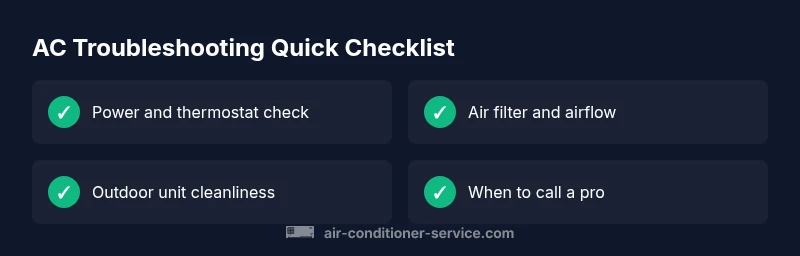
- Start with power and thermostat checks to rule out simple issues.
- Replace dirty filters and clear outdoor obstructions for airflow.
- If electrical or refrigerant issues arise, call a pro.
- Document symptoms to speed up professional diagnosis.
- Implement regular maintenance to prevent future outages.