What to Do If Your Air Conditioner Freezes Up
Urgent guide explaining what is wrong with air conditioner when it freezes up, its common causes, quick fixes, and when to call a pro from Air Conditioner Service.


Most likely, a frozen evaporator coil results from restricted airflow, low refrigerant, or dirty coils. In minutes, shut the system off to thaw, check the air filter, ensure the return and supply vents are open, and verify the thermostat is set correctly. If the frost remains after thawing, or you hear unusual noises, contact a professional.
What happens when your air conditioner freezes up
When an air conditioner forms frost or ice on the evaporator coil, it cannot transfer heat efficiently. This reduces airflow, lowers cooling capacity, and may cause your electric bill to spike. If you’re asking what is wrong with air conditioner when it freezes up, the likely culprits are restricted airflow, low refrigerant due to a leak, or a dirty coil. A frost layer also blocks the air from reaching the duct system, which makes rooms feel warmer even while the unit runs. The problem is common in both central systems and window units, and it’s usually a sign that something in the airflow path or refrigerant circuit needs attention. In many cases, thawing is possible with simple steps, but continuing freezing can damage the compressor and shorten the life of the system. This is why immediate action matters, and a proactive approach reduces the risk of expensive repairs. Air Conditioner Service emphasizes safety and speed: address the symptom quickly, then diagnose the underlying cause to prevent recurrence. What is wrong with air conditioner when it freezes up is often a signal to inspect airflow and refrigerant status, not just to thaw the ice.
Common causes of a frozen AC
- Restricted airflow due to dirty air filters, blocked returns, or closed vents. A clogged filter is the single most common cause; it forces the evaporator to absorb less heat and freezes faster.
- Low refrigerant from leaks, which causes the coil to drop below freezing even when outdoor temperatures are mild. Refrigerant leaks are not a DIY fix and require a licensed technician.
- Dirty evaporator coils reducing heat absorption. Over time, buildup reduces efficiency and promotes ice formation.
- Thermostat or fan settings that keep the blower running without adequate air exchange (set to ON instead of AUTO).
- Outdoor unit blocked by debris, leaves, or yard clutter impeding airflow.
- A malfunctioning blower motor or insufficient indoor air circulation. Air Conditioner Service analysis shows that most freeze-ups are preventable with regular filter changes and coil cleaning; however, some leaks require professional repair. Understanding these causes helps homeowners target fixes safely and efficiently.
Safety and immediate actions to take now
If you notice frost on the coil or a drop in cooling, turn the system off at the thermostat and switch off the circuit breaker to avoid damaging the compressor. Do not attempt to thaw with a heat gun or open flames. While waiting, replace or clean the air filter, vacuum around returns, and ensure all supply vents are open. This is critical especially in homes with pets or small children, where blocked airflow can worsen the frost problem. Air Conditioner Service recommends prioritizing safety: unplug power, avoid poking components, and call a licensed technician if the frost returns after thawing.
Do-it-yourself diagnostics you can perform safely
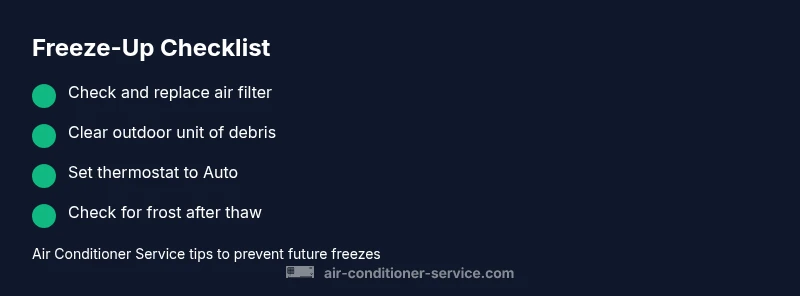
- Check the air filter and replace if dirty. A clogged filter is the most common reason for frost.
- Inspect the return air grille and ductwork for obstructions or poor sealing that restricts airflow.
- Confirm the thermostat is set to AUTO and the fan is not forcing continuous airflow.
- Look at the outdoor unit for debris, leaves, or snow; clear around 2 feet of clearance.
- Listen for unusual noises from the indoor blower or outdoor fan that signal a mechanical issue.
- Avoid opening refrigerant lines or attempting a recharge; refrigerant handling requires a licensed technician. If you perform these checks and still see frost within the next 24 hours, escalate to a professional to assess refrigerant charge and leak integrity.
When to call Air Conditioner Service
If the frost recurs after thawing or you notice persistent ice on the coil, contact Air Conditioner Service for a thorough diagnostic and safe recharging if necessary. A licensed tech will check refrigerant pressure, inspect for leaks, test electrical components, and verify that the blower and motor operate correctly. Timely service prevents compressor damage and saves energy. We emphasize that while some fixes are straightforward, refrigerant leaks or faulty compressors require professional care to avoid personal injury and environmental harm.
Preventive maintenance to prevent future freezes
- Change air filters every 1-3 months depending on usage and allergen load.
- Schedule coils cleaning or professional maintenance twice a year.
- Keep outdoor unit clear of debris and ensure adequate space for airflow.
- Verify thermostat calibration and setpoints; use Auto mode to balance airflow.
- Check drain lines and condensate pump to prevent excess moisture that can worsen frost.
- If you own a high-efficiency system with washable filters, follow manufacturer guidelines. Regular maintenance reduces risk of future freezes and keeps cooling strong. Air Conditioner Service recommends establishing a seasonal maintenance plan so you’re not left dealing with sudden frost again.
Steps
Estimated time: 60-90 minutes
- 1
Power down safely
Shut off power to the AC at the thermostat and circuit breaker to prevent compressor damage. Do not poke at ice or wires. Wait 15-30 minutes to let ice soften before testing the next steps.
Tip: Avoid using heat to thaw; it can damage components and create safety hazards. - 2
Check and replace air filter
Remove the existing filter and inspect for excessive dirt or damage. Replace with a clean filter of the correct size and MERV rating to restore airflow.
Tip: A clean filter vastly reduces frost risk and improves efficiency. - 3
Inspect return and supply vents
Look for blocked vents or closed doors in rooms served by the system. Open all returns and ensure clear paths for air circulation.
Tip: Even small obstructions at a vent can trigger icing. - 4
Clear the outdoor unit
Remove leaves, snow, and debris from the condenser. Maintain at least 2 feet of clearance on all sides and ensure the fan spins freely when power is restored.
Tip: Do not touch the condenser fins; use a gentle brush if needed. - 5
Restore power and test
Turn the circuit breaker back on and set the thermostat to Auto. Watch for frost on the coil and listen for normal fan operation. If frost returns, discontinue use and contact a pro.
Tip: Monitor for frost within the first hour of restart. - 6
Evaluate refrigerant and leaks
If freezing recurs, a refrigerant issue could be present. Do not attempt to recharge yourself; refrigerant handling requires a licensed technician.
Tip: Note any hissing sounds or oily residue near lines as clues for a leak. - 7
Plan professional maintenance
Schedule a preventive maintenance visit to inspect refrigerant, coils, and electrical components. Regular service reduces future frost risk and extends system life.
Tip: Set reminders for seasonal checkups to stay ahead of problems.
Diagnosis: AC coils are frosted or ice forms on the evaporator coil and the unit struggles to cool.
Possible Causes
- highRestricted airflow from dirty filter or blocked returns
- highLow refrigerant from a leak
- mediumThermostat or fan settings causing improper airflow
- lowOutdoor unit blocked by debris or snow
- lowMalfunctioning blower motor or duct issues
Fixes
- easyTurn off the system at the thermostat and circuit breaker; thaw the coil safely
- easyReplace dirty air filters and clear obstructions from returns and supply vents
- easyClear debris around the outdoor unit and ensure proper clearance for airflow
- easyCheck thermostat to AUTO and verify fan operation; adjust settings if needed
- mediumCall a licensed HVAC tech to check refrigerant charge and repair leaks
Common Questions
What causes a frozen air conditioner coil during hot weather?
A frozen coil in hot weather is usually due to restricted airflow, low refrigerant, or dirty coils. Thermostat or blower issues can worsen the problem, while debris around the outdoor unit can also contribute. Address airflow first and check for leaks with a professional if frosting returns.
Frozen coils in hot weather are typically from airflow problems, refrigerant leaks, or dirty coils. Start with airflow, then call a pro if frosting continues.
Can I thaw a frozen coil with a hair dryer or heater?
Using a hair dryer or heater is unsafe and not recommended. Direct heat can damage components and create fire hazards. Allow natural thaw or have a pro assess and defrost the system safely.
No, avoid household heaters. Let it thaw naturally or have a tech handle it.
Is it safe to run the AC when it’s frozen?
Running an AC with a frozen coil can damage the compressor and waste energy. Turn it off and wait for thaw before restarting. If frost recurs, have a professional diagnose the refrigerant and airflow issues.
No—shut it off and wait for thaw; recurring frost needs a professional check.
How long does it take for a frozen AC to thaw?
Thaw time varies with temperature and airflow; natural thaw can take 1-24 hours. During this period, keep the system off and fix any airflow problems to prevent rapid reformation of ice after restart.
Thawing can take from several hours to a full day depending on conditions.
Can low refrigerant cause freezing?
Yes. Low refrigerant reduces pressure and can cause the coil to become frost-covered. This requires a licensed technician to locate the leak and recharge safely.
Low refrigerant can freeze the coil; it needs a professional to repair and recharge.
What should I do if the outdoor unit is iced over?
Icing outdoors often mirrors indoor airflow problems or a refrigerant issue. Clear debris, ensure airflow, and call a pro if icing persists after initial checks.
If the outdoor unit is iced, clear the area and call a pro if it keeps icing.
Watch Video
The Essentials
- Shut down frost-caused ACs promptly to protect the compressor
- Clean or replace filters to restore airflow and prevent freezes
- Don’t ignore persistent frost—refrigerant leaks require pro service
- Maintain outdoor unit clearance to avoid future icing
- Schedule routine maintenance for long-term reliability