What Causes an Air Conditioner to Freeze Up and How to Fix It
Learn why an air conditioner freezes up and how to diagnose and fix common causes safely. This practical guide covers airflow, filters, coils, refrigerant, and when to call a pro.


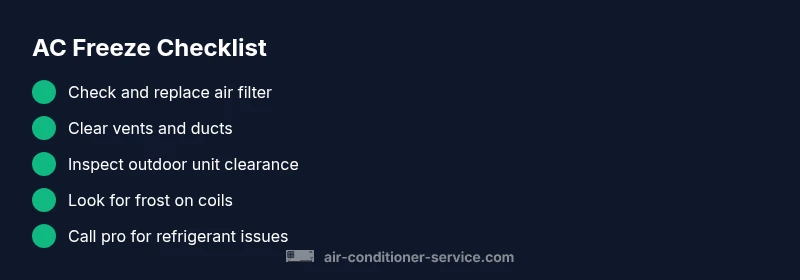
Most AC freeze-ups start with restricted airflow. A dirty air filter, blocked vents, or a dusty evaporator coil starves the coil of warm air, causing it to frost over. Start by replacing the filter, clearing obstructed ducts, and ensuring the outdoor unit has good airflow. If the problem continues, avoid using the unit and call a pro.
Understanding the Problem: what causes air conditioner to freeze up
When your AC freezes, you can feel warm air in the room but notice frost on the refrigerant lines or a frost-covered evaporator coil. This ice buildup reduces airflow and can stop cooling. The question, what causes air conditioner to freeze up, points to several interrelated culprits: restricted airflow, low refrigerant, and humidity or temperature conditions that promote icing. In most homes, the first clue is a visibly frosted evaporator coil after running the unit on a hot day. Quick checks include inspecting the air filter, making sure vents are open, and ensuring the outdoor condenser area is clear. If you can’t identify or fix the cause quickly, turn off the system to prevent damage and call a professional. In the meantime, keep doors open to allow air to circulate and avoid pushing the system to run with heavy icing.
Common Causes in Detail
Restricted airflow from a dirty filter, closed registers, or blocked return ducts is the most frequent trigger. A dirty evaporator coil also reduces heat exchange, inviting ice formation on contact with cold refrigerant. Low refrigerant levels (often due to a leak) prevent proper heat absorption, encouraging icing, while outdoor conditions such as high humidity and heat increase the risk. Finally, a misbehaving blower, faulty thermostat, or improper wiring can create icing conditions. Each cause requires a different corrective path, and the right sequence is essential to avoid icing again.
Diagnosing the Issue at Home
Start with the simplest checks: confirm the air filter is clean, vents are open, and the outdoor unit is free of debris. Listen for the indoor blower and check if the air feels cool rather than cold in many cases. Look for frost on the evaporator coil or along refrigerant lines. If you notice persistent icing after cleaning the filter, inspect for restricted airflow inside the ductwork and verify the blower is operating normally. If you suspect a refrigerant issue, do not open the system—refrigerant leaks require a licensed technician. Document any unusual sounds or smells to help the technician diagnose quickly.
Safety Warnings and When to Call a Pro
Safety first: always turn off power at the breaker before inspecting the system. Frost can indicate refrigerant issues that require specialized handling. Do not attempt to repair refrigerant leaks or replace components beyond your skill level. If ice persists after basic checks, or you hear hissing, smell a chemical odor, or notice an obvious refrigerant leak, call a licensed HVAC technician immediately. A pro can assess refrigerant levels, inspect for leaks, and verify electrical components to prevent further icing.
Prevention Tips to Avoid Future Freeze-Ups
Maintain clean air filters and replace them every 1–3 months during peak cooling. Schedule professional preventative maintenance at least once a year to clean coils, test airflow, verify refrigerant integrity, and inspect electrical connections. Keep the outdoor condenser clear of leaves, grass, and debris with at least 18 inches of clearance on all sides. Ensure supply vents remain open and unobstructed, and use a programmable thermostat to prevent overly cold or hot cycles that stress the system. Regular checks help catch issues before ice forms.
Steps
Estimated time: 60-90 minutes
- 1
Power off and locate the air filter
Turn off the thermostat and circuit breaker. Locate the air filter in the return-air path and inspect for dirt. A blocked or dirty filter is the most common cause of restricted airflow.
Tip: Replace the filter with the correct size and consider a higher-MERV filter only if airflow remains strong. - 2
Replace the filter and clean the area
Install a new filter, ensuring it slides in the right direction. Vacuum nearby vents and wipe away dust from the blower compartment to improve airflow.
Tip: Do not run the system while the filter is removed. - 3
Check indoor airflow and vent openness
Return air must flow freely to the evaporator. Open all registers and ensure nothing blocks the return grille.
Tip: Use a flashlight to inspect hard-to-see ducts for blockages. - 4
Inspect the outdoor unit for debris
Clear leaves, grass, and other debris from the condenser. Ensure at least 18 inches of clearance and remove any accumulated snow in winter.
Tip: Keep plants well away from the unit to avoid future blockages. - 5
Assess the evaporator coil for frost
If frost persists, avoid running the unit. Frost may indicate low refrigerant or coil icing that needs professional diagnosis.
Tip: Do not attempt to chip off ice; let a pro assess indoor coil icing. - 6
Call a professional if needed
If icing continues after basic checks, schedule service to test refrigerant and electrical components.
Tip: Document symptoms and any noises to aid the diagnosis.
Diagnosis: AC coil icing up during operation
Possible Causes
- highRestricted airflow from dirty filter or blocked vents
- mediumLow refrigerant due to a leak
- highDirty evaporator coil
- mediumBlocked outdoor condenser or poor airflow
- lowThermostat or blower problems
Fixes
- easyReplace the air filter and clear all returns/vents
- mediumClean the evaporator coil if accessible
- easyCheck outdoor unit clearance and clean debris
- hardIf still iced, check for refrigerant leaks and call a pro
- easyVerify blower operation and thermostat settings
Common Questions
What causes an air conditioner to freeze up?
ACs freeze when airflow is restricted, coils are dirty, or refrigerant is low. Humidity and heat worsen icing. Start with airflow checks and cleaning, then assess refrigerant with a pro if needed.
Common causes include restricted airflow, dirty coils, or refrigerant issues. Start with airflow and coil cleaning, and call a pro for refrigerant concerns.
Can a dirty filter cause freezing?
Yes. A clogged filter restricts airflow, causing the evaporator to ice over. Replace the filter and ensure proper airflow before testing again.
A dirty filter reduces airflow, leading to icing. Replace it and recheck airflow.
Is low refrigerant a common cause of freezing?
Low refrigerant reduces heat absorption and can lead to icing. This requires a licensed technician to repair leaks and recharge refrigerant.
Low refrigerant can cause icing and requires a professional to fix leaks and recharge.
Should I run my AC if it's frozen?
No. Running a frozen unit can damage the compressor. Turn it off and seek a diagnostic check.
No, turn it off to prevent damage and call a pro if unsure.
How can I prevent freezing in the future?
Maintain filters, clear vents, schedule yearly maintenance, and check that outdoor areas are clear of debris.
Keep filters clean and schedule annual maintenance to prevent future icing.
When should I call a professional?
If icing persists after basic checks or you suspect refrigerant leaks, contact a licensed HVAC technician.
Call a professional if icing persists or you suspect leaks.
Watch Video
The Essentials
- Fix airflow issues quickly to prevent icing.
- Don’t run a frozen system; power down and diagnose safely.
- Regular maintenance reduces freezing risk.
- Know when to call a pro for leaks or electrical faults.